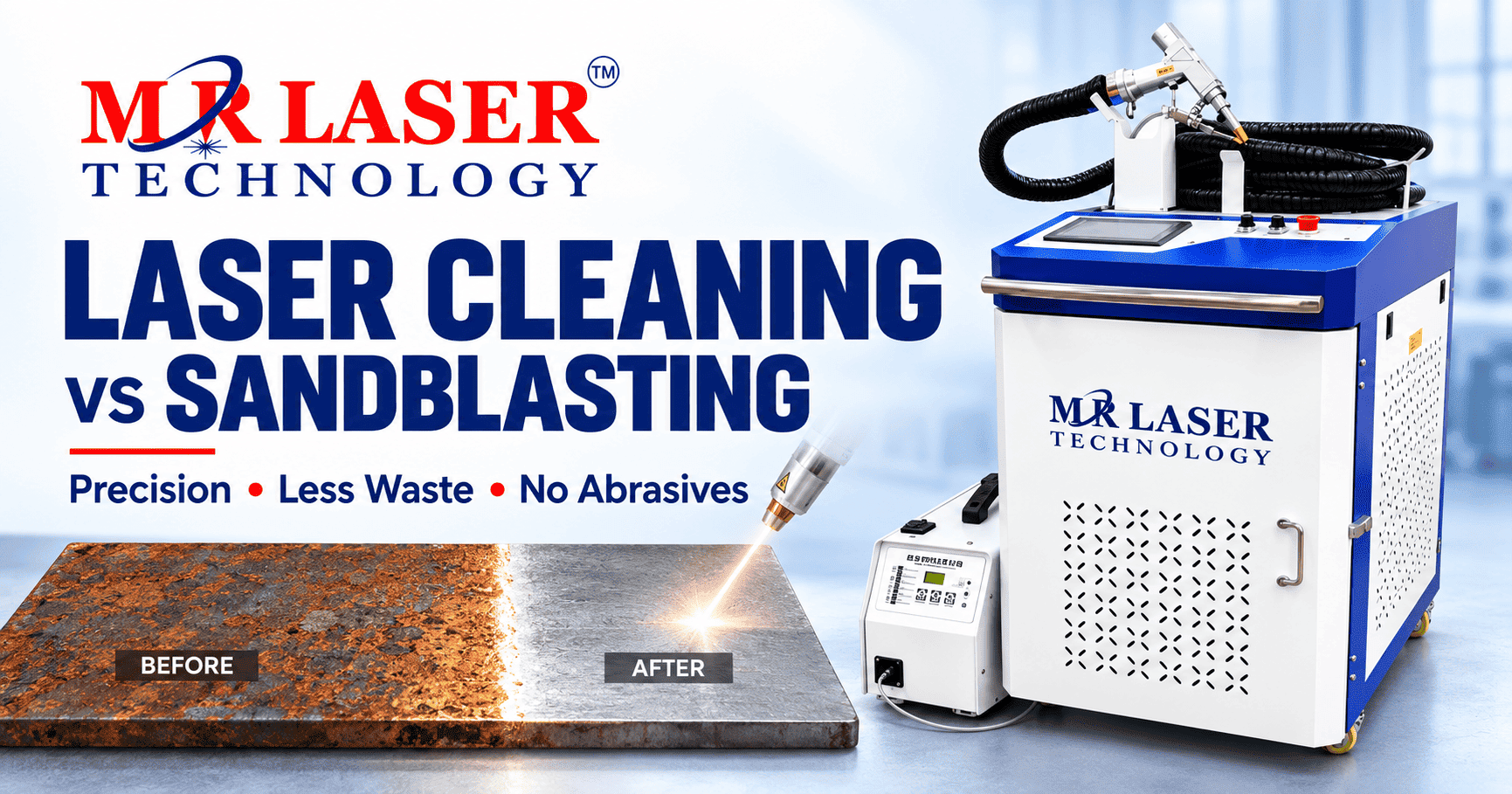
Why Laser Cleaning Machines Are Better Than Sandblasting
In the realm of surface preparation and restoration, choosing the right technology is paramount. For decades, sandblasting has been the go-to method for removing contaminants, rust, and old coatings. However, the advent and refinement of laser cleaning machines present a compelling, often superior, alternative. This article delves into why laser cleaning machines are increasingly outperforming traditional sandblasting, offering a more precise, efficient, and environmentally conscious solution for a variety of industrial and commercial applications.
While sandblasting has its merits, its abrasive nature, potential for material damage, and environmental drawbacks are significant concerns. Laser cleaning, on the other hand, leverages advanced technology to achieve remarkable results with minimal impact. Let's explore the key differences and the compelling reasons why laser cleaning machines are becoming the preferred choice.
Understanding the Technologies: Laser Cleaning vs. Sandblasting
To appreciate why laser cleaning machines are better than sandblasting, it's essential to understand how each process works and the fundamental differences in their mechanisms.
Sandblasting
Sandblasting is a mechanical process that propels abrasive material (like sand, glass beads, or metal grit) at high velocity against a surface using compressed air. This forceful impact erodes and removes contaminants, rust, paint, and other unwanted materials. It's effective for removing thick layers of stubborn debris and can create a surface profile for improved coating adhesion.
Laser Cleaning
Laser cleaning, also known as laser ablation, uses focused, pulsed laser energy to vaporize or sublimate contaminants from a surface. The laser beam precisely targets the unwanted material, converting it into gas without damaging the underlying substrate. This non-contact method is highly controlled and adaptable to delicate surfaces.
Key Advantages of Laser Cleaning Machines
The superiority of laser cleaning machines over sandblasting stems from a combination of technological advancements and practical benefits:
Precision and Control
Laser cleaning offers unparalleled precision. The laser beam can be focused to a very small spot, allowing for intricate cleaning of specific areas without affecting surrounding surfaces. This level of control is impossible with sandblasting, which is inherently broader and less discriminate.
Non-Contact Process
Being a non-contact method, laser cleaning eliminates the mechanical stress and potential for damage that sandblasting can inflict. There are no abrasive particles to embed into the material or cause micro-fractures, making it ideal for delicate substrates like composites, plastics, or thin metals.
Minimal Waste Generation
Sandblasting generates significant waste, including used abrasive media and dust, which can be hazardous and require specialized disposal. Laser cleaning vaporizes contaminants, leaving minimal residue (primarily the gaseous form of the contaminant) and no abrasive waste, making it an eco-friendly choice.
No Consumables Required
Sandblasting relies on a constant supply of abrasive media, which adds to the operational cost and logistical complexity. Laser cleaning requires no consumables, significantly reducing ongoing expenses and simplifying operations.
Material Preservation
The focused energy of a laser can be tuned to remove specific contaminants while leaving the base material completely intact. Unlike sandblasting, which can alter surface texture or even remove base material, laser cleaning preserves the integrity and original finish of the substrate.
Reduced Health Risks
Sandblasting produces airborne dust and debris, posing significant respiratory and health risks to operators and requiring extensive personal protective equipment (PPE). Laser cleaning produces no dust clouds, greatly enhancing workplace safety.
Versatility
Laser cleaning can be effective on a wide range of materials and contaminants, from rust and oils to paints and coatings. While sandblasting is also versatile, laser cleaning offers a gentler yet effective alternative for sensitive applications.
Applications Where Laser Cleaning Excels
The unique advantages of laser cleaning machines make them suitable for a broad spectrum of demanding applications:
Aerospace and Automotive
Cleaning critical components, removing old coatings from aircraft parts, degreasing engine components, and preparing surfaces for bonding or painting where precision and material integrity are vital.
Manufacturing and Metalworking
Removing rust, oxidation, oil, and weld spatter from metal parts before assembly or finishing. Preparing surfaces for powder coating or plating, ensuring optimal adhesion without mechanical abrasion.
Restoration and Conservation
Gently removing corrosion, grime, and historical coatings from delicate artifacts, statues, and historical structures without causing damage.
Electronics Manufacturing
Cleaning circuit boards, removing flux residues, and preparing components for assembly where precision and avoidance of electrostatic discharge are crucial.
Mold and Tool Cleaning
Removing residues from injection molds, dies, and industrial tools to restore their performance and extend their lifespan, all without altering the mold's surface characteristics.
Choosing the Right Laser Cleaning Machine
When considering a laser cleaning machine, several factors are crucial for ensuring you select a solution that meets your specific needs. The initial investment for laser cleaning equipment is typically higher than sandblasting systems, ranging from $3,000 to $33,000, but the long-term benefits often outweigh the upfront cost.
Application Requirements
Identify the types of contaminants you need to remove and the materials you'll be working with. Different laser systems are optimized for different tasks (e.g., heavy rust removal versus delicate surface cleaning).
Power and Wavelength
Laser power (measured in Watts) affects cleaning speed and capability. The wavelength of the laser influences how well it's absorbed by different materials and contaminants. Consult with manufacturers to determine the optimal specifications for your intended use.
Beam Quality and Focus
The quality of the laser beam and its ability to be focused precisely are critical for detailed cleaning and avoiding substrate damage. Look for systems that offer adjustable focus and beam shaping capabilities.
Safety Features
Ensure the machine comes with robust safety features, including interlocks, fume extraction (though minimal with laser cleaning, it's good practice), and appropriate PPE recommendations for the operator.
Ease of Use and Integration
Consider how easily the machine can be integrated into your existing workflow. Look for user-friendly interfaces and intuitive controls.
Supplier Support and Service
Partner with a reputable supplier who offers comprehensive training, technical support, and reliable after-sales service. Understanding the availability of spare parts and maintenance is also key.
Buyer Insight: Consider Long-Term ROI
While the upfront cost of a laser cleaning machine can be substantial compared to sandblasting, it's crucial to evaluate the total cost of ownership. Factors such as reduced waste disposal costs, elimination of consumables, lower risk of material damage and rework, increased operational efficiency, and enhanced safety often lead to a strong return on investment (ROI) over time.
MR LASER TECHNOLOGY: Your Partner in Laser Solutions
For businesses seeking advanced laser solutions, MR LASER TECHNOLOGY offers a range of high-performance laser machines designed for efficiency and accuracy. Established in 2018 and based in Ahmedabad, Gujarat, India, MR LASER TECHNOLOGY is dedicated to making sophisticated laser technology accessible and user-friendly for industry and research.
While MR LASER TECHNOLOGY specializes in laser marking, welding, and cutting machines, their expertise in laser systems means they understand the precision and power that laser technology brings to industrial processes. Their mission to create affordable and simple-to-use machines aligns with the growing need for effective, modern surface treatment solutions.
With a commitment to quality, signified by their ISO & CE Certified machines, and supported by certified technical experts and 24/7 customer support, MR LASER TECHNOLOGY aims to empower businesses with cutting-edge Indian-built machinery. If you are exploring laser-based solutions for manufacturing, marking, or cutting, MR LASER TECHNOLOGY can provide the expertise and technology to drive your operations forward.
Frequently Asked Questions About Laser Cleaning
Is laser cleaning suitable for all materials?
Laser cleaning is highly versatile and can be used on many materials, including metals, plastics, ceramics, and composites. However, the laser parameters must be carefully adjusted to match the material and contaminant to avoid damage. It's particularly beneficial for delicate or heat-sensitive materials where abrasive methods would cause harm.
Does laser cleaning remove rust effectively?
Yes, laser cleaning is very effective at removing rust and other forms of oxidation. The laser energy is absorbed by the rust layer, causing it to rapidly heat up and sublimate or detach from the base metal, which reflects the laser light. Heavier rust may leave a charred residue that needs to be wiped away after the process.
What is the environmental impact of laser cleaning compared to sandblasting?
Laser cleaning is significantly more environmentally friendly. It produces no abrasive dust or chemical waste, as contaminants are vaporized. Sandblasting, conversely, generates large volumes of dust and spent abrasive media, which can be hazardous and require proper disposal, posing a greater environmental burden.
Can laser cleaning create an anchor profile for coatings?
Yes, laser cleaning can create a sufficient micro-roughness on the surface, often referred to as an anchor profile, which is essential for the adhesion of subsequent coatings like paint or powder coating. The precise control of the laser allows for customized surface textures tailored for optimal bonding.
What is the typical lifespan of a laser cleaning machine?
Laser cleaning machines, with proper maintenance and operation, are designed for long-term use. The primary components, like the laser source, typically have a very long operational lifespan, often measured in tens of thousands of hours. The overall lifespan depends on usage intensity and adherence to manufacturer guidelines.
Conclusion: The Future of Surface Cleaning is Here
The comparison between laser cleaning machines and sandblasting clearly demonstrates a technological shift towards more advanced, precise, and sustainable methods. While sandblasting has served its purpose for years, its limitations in terms of material damage, waste generation, and safety are increasingly apparent in modern industrial environments.
Laser cleaning machines offer a cleaner, safer, and more controlled approach to surface preparation and contaminant removal. Their ability to preserve substrate integrity, eliminate consumables and waste, and provide exceptional precision makes them an indispensable tool for industries demanding high quality and efficiency. Investing in laser cleaning technology is not just adopting a new method; it's embracing a future where superior results are achieved with minimal environmental and material impact.
Ready to Upgrade Your Surface Treatment Process?
Explore the power and precision of laser technology. Contact MR LASER TECHNOLOGY to discuss your industrial laser machine needs and discover how their solutions can enhance your manufacturing, marking, or cutting operations.
Learn More at MR LASER TECHNOLOGY