What Is a UV Laser Marking Machine and Why Is It Used?
Discover what a UV laser marking machine is, its benefits, and applications for industrial marking needs in Ahmedabad. Learn how it enhances precision and effic
What is a UV Laser Marking Machine? — Overview
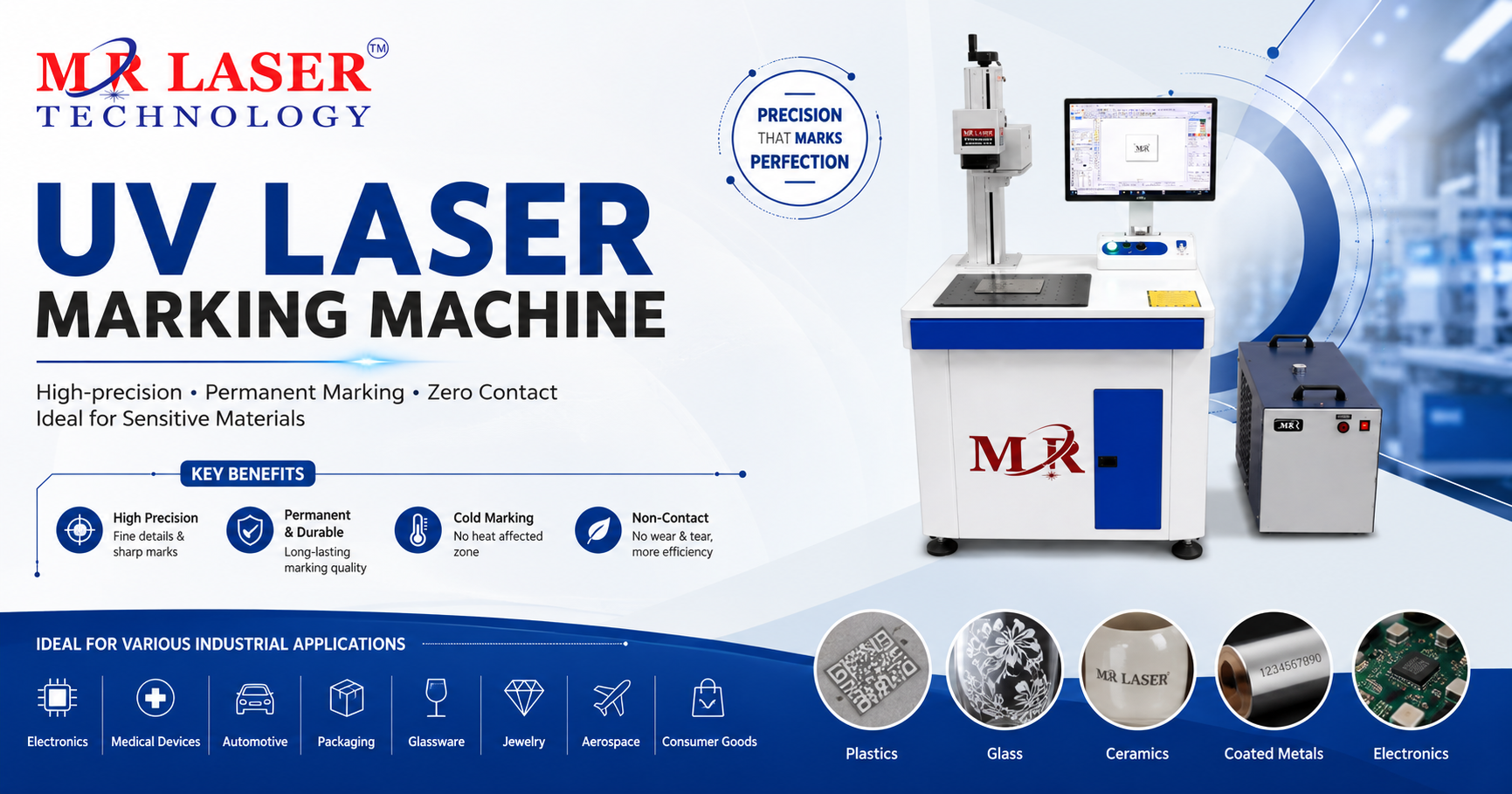
A UV laser marking machine utilizes ultraviolet (UV) light, typically at a wavelength of 355 nm, to create marks on a wide array of materials. Unlike fiber or CO2 lasers that rely on thermal effects to ablate or melt material, UV lasers work through a photochemical process. This means the UV light directly breaks the molecular bonds of the material surface, creating a mark without significant heat input. This "cold marking" capability is its defining characteristic, making it ideal for materials that are sensitive to heat or could be damaged by thermal processes.
Key Features and Technical Specifications
UV laser marking machines are engineered with specific features to ensure optimal performance and versatility:
- Wavelength: Operates at 355 nm, enabling photochemical marking.
- Pulse Duration: Short pulse durations minimize heat-affected zones (HAZ).
- Beam Quality: High beam quality allows for fine details and sharp marks.
- Power Options: Available in various power outputs (e.g., 3W, 5W, 10W) to suit different applications and material types.
- Marking Speed: Capable of high-speed marking for efficient production lines.
- Material Compatibility: Excellent for marking plastics, glass, ceramics, coated metals, and sensitive organic materials.
- Non-Contact Process: The marking is done without physical contact, reducing wear and tear on the machine and material.
- High Resolution: Achieves very fine and detailed markings, ideal for intricate designs and small text.
Industrial Applications and Use Cases
The unique capabilities of UV laser marking machines open up a broad spectrum of industrial applications, particularly where precision and material integrity are paramount:
- Electronics: Marking sensitive components like PCBs, semiconductors, and integrated circuits without causing damage.
- Medical Devices: Permanently marking instruments and implants with serial numbers, logos, and traceability codes that withstand sterilization processes.
- Automotive: Marking plastic parts, sensors, and electronic components where heat could cause deformation or failure.
- Packaging: High-contrast, permanent marking on plastic films, pharmaceutical packaging, and food containers.
- Glassware: Etching intricate designs, logos, or serial numbers onto glass products without thermal stress.
- Jewelry: Fine marking on precious metals and gemstones where minimal heat is essential.
- Aerospace: Marking components with critical identification and traceability information on various materials.
- Consumer Goods: Branding and serializing plastic casings, cosmetic packaging, and other consumer products.
How to Choose the Right UV Laser Marking Machine
Selecting the appropriate UV laser marking machine involves careful consideration of your specific operational needs. Here’s a checklist to guide your decision:
- Material Type: Identify the primary materials you need to mark. UV lasers excel on plastics, glass, and coated metals, but compatibility varies.
- Application Requirements: Determine the desired mark quality, depth, contrast, and permanence. Is it for branding, serialization, or traceability?
- Production Volume & Speed: Assess your throughput needs. Higher power and faster marking speeds are necessary for high-volume production lines.
- Marking Area Size: Consider the typical size of the items you will be marking and the required marking field.
- Integration Needs: Will the machine be a standalone unit or integrated into an existing production line?
- Software & Control: Evaluate the user-friendliness of the control software and its ability to handle complex designs and data input.
- Supplier Support: Look for a supplier with strong technical support, after-sales service, and readily available spare parts.
- Certifications & Compliance: Ensure the machine meets relevant industry standards and safety regulations.
Quality Standards and Compliance
When investing in a UV laser marking machine, verifying adherence to international quality standards is non-negotiable. Reputable manufacturers will ensure their machines comply with standards such as ISO 9001 for quality management systems. Electrical safety certifications like CE marking are also critical, indicating that the equipment meets health, safety, and environmental protection requirements for products sold within the European Economic Area. For specific industries, such as medical device manufacturing, compliance with FDA regulations or other industry-specific standards may also be necessary. Always inquire about the certifications your chosen machine holds and the quality control measures implemented during its manufacturing.
Why Mr Laser Technology's Experience and Capability Matters
At Mr Laser Technology, our extensive experience in the laser and CNC machine manufacturing sector, particularly within the industrial landscape of Ahmedabad and across India, translates directly into reliable and effective UV laser marking solutions. We understand the nuanced requirements of modern manufacturing, from the need for precision on delicate materials to the demand for robust traceability systems. Our manufacturing process emphasizes rigorous quality control at every stage, ensuring that each UV laser marking machine we deliver performs to the highest standards.
Our technical team comprises seasoned engineers with deep expertise in laser technology, enabling us to not only manufacture standard models but also to offer customized solutions tailored to your unique applications. This capability ensures that you receive a machine optimized for your specific materials, production volumes, and operational environment. We pride ourselves on building machines that are not just technologically advanced but also durable and reliable, backed by comprehensive after-sales support to guarantee your long-term satisfaction and operational efficiency.
Installation, Maintenance, and Care Tips
Proper installation and regular maintenance are key to maximizing the lifespan and performance of your UV laser marking machine.
- Installation: Ensure the machine is installed in a clean, dry, and well-ventilated environment, away from direct sunlight and excessive vibration. Proper grounding is essential for electrical safety and optimal performance.
- Power Supply: Use a stable and regulated power supply as specified by the manufacturer to prevent damage to sensitive electronic components.
- Cooling System: If your machine has a water-cooling system, regularly check the coolant level and quality, and clean the filters to prevent overheating.
- Lens and Mirror Cleaning: The optical components, especially the marking lens and mirrors, are critical. Clean them periodically using specialized optical cleaning solutions and lint-free wipes to maintain beam quality and marking accuracy.
- Ventilation: Ensure the exhaust system is functioning correctly to remove fumes and dust generated during the marking process, protecting both the machine and the operator.
- Software Updates: Keep the machine's control software updated to benefit from performance enhancements and bug fixes.
- Routine Checks: Perform daily visual inspections for any loose connections or unusual noises. Follow the manufacturer's recommended schedule for more in-depth maintenance checks.
Frequently Asked Questions
UV laser marking machines are highly versatile and can effectively mark a wide range of materials, including most plastics, glass, ceramics, silicon wafers, and coated metals. They are particularly suitable for materials that are sensitive to heat or can be easily damaged by thermal processes, offering high contrast and fine detail without causing discoloration or deformation.
The primary difference lies in the marking mechanism. Fiber and CO2 lasers use thermal energy to vaporize or melt material, which can cause heat-affected zones or material damage. UV lasers, however, use photochemical reactions at a molecular level. This "cold marking" process is non-thermal, making it ideal for heat-sensitive substrates where preserving material integrity is critical.
Yes, UV laser marking creates a permanent mark by altering the material's surface at a molecular level. This process results in high contrast and excellent durability, ensuring that the mark remains legible and resistant to abrasion, chemicals, and environmental factors over time, making it suitable for traceability and branding applications.
Key advantages include its ability to mark heat-sensitive materials without damage, its high precision for intricate details and small text, its excellent contrast on various substrates, and its non-contact nature which prevents material wear. The photochemical process also ensures a durable and permanent mark, crucial for quality control and product identification.
Absolutely. UV laser marking machines are designed for seamless integration into automated manufacturing environments. They can be equipped with various automation features, such as automated loading/unloading systems, rotary fixtures for cylindrical objects, and communication interfaces for integration with PLCs and factory management systems, enhancing efficiency and throughput.
Routine maintenance involves keeping the machine clean, ensuring proper ventilation, checking and cleaning optical components like lenses and mirrors, monitoring the cooling system (if applicable), and performing software updates. Following the manufacturer's recommended maintenance schedule for component checks and replacements is crucial for optimal performance and longevity.
Conclusion
For manufacturers in Ahmedabad and across Gujarat seeking to enhance product identification, ensure traceability, and maintain the integrity of their materials, a UV laser marking machine offers a sophisticated and highly effective solution. Its ability to perform precise, permanent, and non-thermal marking on a diverse range of substrates makes it an invaluable tool for industries ranging from electronics and medical devices to packaging and consumer goods. By understanding the unique capabilities of UV laser technology and carefully selecting a machine that aligns with specific operational needs, businesses can significantly improve their production quality and efficiency. Partnering with an experienced and capable supplier like Mr Laser Technology ensures you receive not only a high-quality machine but also the expert support necessary for successful implementation and long-term operation.
Get In Touch
Mr Laser Technology