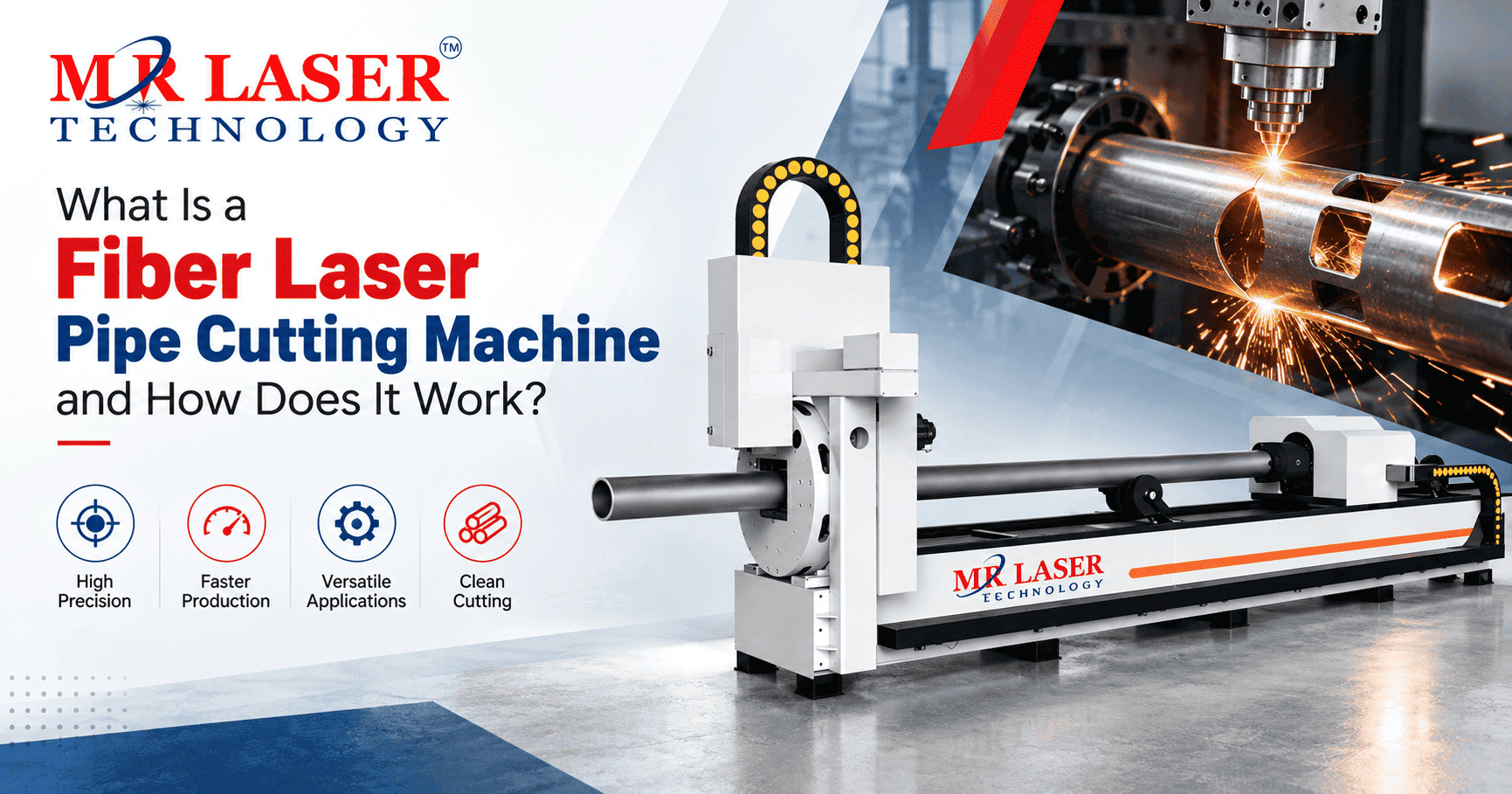
What Is a Fiber Laser Pipe Cutting Machine and How Does It Work?
In the demanding landscape of modern manufacturing, precision, speed, and versatility are paramount. For businesses working with metal tubes and pipes, the advent of fiber laser pipe cutting machines has revolutionized production processes. These advanced systems offer unparalleled accuracy and efficiency, enabling intricate cuts on a wide array of materials and profiles. Understanding what a fiber laser pipe cutting machine is and how it operates is crucial for any company looking to enhance its fabrication capabilities.
MR LASER TECHNOLOGY, a manufacturer based in Ahmedabad, Gujarat, India, offers robust Fiber Laser Pipe Cutting Machines designed to meet these industrial demands. With a commitment to quality, evidenced by ISO 9001:2015 and CE certifications, they bring over 8 years of experience and a track record of delivering over 1200 projects across India. This guide delves into the technology, its workings, benefits, applications, and essential considerations for prospective buyers.
Understanding the Fiber Laser Pipe Cutting Machine
A fiber laser pipe cutting machine is a sophisticated industrial system engineered to precisely cut metal pipes and tubes using a high-energy laser beam. Unlike traditional cutting methods, which often involve mechanical contact and can lead to material deformation or edge imperfections, laser cutting offers a non-contact, highly accurate, and efficient solution.
At its core, the machine utilizes a fiber laser generator, which produces a highly concentrated beam of light. This beam is then directed through a series of mirrors or a fiber optic cable to a cutting head. The cutting head contains focusing lenses that concentrate the laser beam to a very small spot size on the surface of the metal pipe. The intense energy of this focused beam generates extreme heat, rapidly melting, vaporizing, or burning through the metal along a pre-programmed path.
How the Cutting Process Works:
The operation involves several key stages:
- Laser Generation: The fiber laser source generates a powerful beam of light. Modern fiber lasers are known for their efficiency, reliability, and low maintenance compared to older laser technologies.
- Beam Delivery: The laser beam is transmitted to the cutting head, typically via a flexible fiber optic cable, allowing for greater maneuverability and integration with robotic systems or automated machinery.
- Focusing: Within the cutting head, lenses focus the laser beam to a precise point on the workpiece. The focal length and beam diameter are critical for achieving optimal cutting quality and speed.
- Material Interaction: As the focused beam strikes the metal pipe, it heats the material to its melting or vaporization point almost instantaneously.
- Assist Gas: An assist gas (such as oxygen, nitrogen, or compressed air) is precisely controlled and fed coaxially with the laser beam through the nozzle of the cutting head. This gas serves multiple purposes: it blows away molten material from the cut kerf, prevents re-solidification, cools the cutting zone, and can chemically react with the material (in the case of oxygen with steel) to enhance cutting speed and edge quality. The choice of gas and pressure depends on the material being cut and the desired edge finish.
- Motion Control: The cutting head or the pipe itself is moved along a programmed path using a high-precision CNC (Computer Numerical Control) system. This allows for the creation of complex shapes, holes, slots, and intricate patterns with exceptional accuracy.
The result is a clean, precise cut with minimal heat-affected zone (HAZ), burr-free edges, and high dimensional accuracy, often eliminating the need for secondary finishing operations.
Diverse Applications of Fiber Laser Pipe Cutting Machines
The precision, speed, and versatility of fiber laser pipe cutting machines make them indispensable in numerous industries. They are particularly adept at handling a wide variety of pipe shapes and materials, enabling manufacturers to produce complex components efficiently.
Metal Fabrication
Used for creating precise fittings, brackets, and structural components for construction, furniture, and general metalwork. Cutting round, square, and oval tubes for various assemblies.
Automotive Industry
Essential for producing exhaust systems, chassis components, and fluid/air delivery tubes where high precision and complex shapes are required for optimal performance and fit.
Aerospace
Cutting high-strength alloys and specialized tubes for aircraft structures, fuel systems, and other critical components demanding extreme accuracy and material integrity.
Medical Equipment
Manufacturing precise stainless steel or titanium tubing for surgical instruments, implants, and medical device frames where sterility and accuracy are vital.
Lighting and Design
Creating intricate decorative patterns, lighting fixtures, and architectural elements from various metal tubes and profiles.
Construction and Infrastructure
Fabricating structural elements, railings, support beams, and decorative features for buildings and infrastructure projects.
Key Benefits of Adopting Fiber Laser Pipe Cutting
Integrating a fiber laser pipe cutting machine into your operations yields significant advantages:
- High Precision and Accuracy: Achieve tight tolerances and complex geometries consistently, reducing errors and rework.
- Exceptional Speed and Efficiency: Significantly faster cutting speeds compared to traditional methods, leading to increased throughput and productivity.
- Versatility in Materials: Capable of cutting a wide range of metals, including stainless steel, carbon steel, aluminum, copper, brass, and titanium, in various thicknesses and alloys.
- Clean Cut Quality: Produces smooth, precise edges with minimal or no burrs, often eliminating the need for secondary deburring operations.
- Reduced Material Waste: The narrow kerf width and precise control minimize material loss, contributing to cost savings.
- Flexibility and Automation: Easily programmable for different designs and can be integrated with automated loading and unloading systems for fully automated production lines.
- Non-Contact Cutting: Eliminates mechanical stress on the material, preventing deformation, especially crucial for thin-walled tubes.
- Complex Shape Capability: Cuts intricate patterns, holes, notches, and profiles that would be difficult or impossible with conventional machinery.
Selecting the Right Fiber Laser Pipe Cutting Machine: A Buyer's Checklist
Choosing the appropriate fiber laser pipe cutting machine is a critical investment. Consider these factors to ensure you select a system that aligns with your production needs and budget:
Buyer Insight:
Don't just look at the laser power; consider the entire system's integration, software usability, and the manufacturer's support. A machine's true value lies in its uptime, ease of operation, and ability to consistently deliver quality parts for your specific applications.
Key Features and Considerations:
- Laser Power (Wattage): Higher wattage generally means faster cutting speeds and the ability to cut thicker materials. Common ranges are 1kW to 12kW and beyond. Match this to the thickness and type of metals you primarily cut.
- Working Area and Pipe Capacity: Ensure the machine can accommodate the lengths and diameters of pipes you need to process. Check maximum pipe diameter, length, and weight capacity.
- CNC Control System and Software: Look for user-friendly software with advanced nesting capabilities, automatic job setup, and compatibility with your CAD/CAM software. The controller should be robust and reliable.
- Cutting Head Technology: Features like automatic focusing, collision detection, and precise gas control contribute significantly to cut quality and machine longevity.
- Machine Structure and Stability: A heavy-duty, well-constructed frame ensures vibration-free operation, leading to higher precision and longer machine life. Consider the bed construction (e.g., welded steel structure).
- Assist Gas System: The machine's ability to precisely control different types and pressures of assist gases is crucial for optimizing cuts on various materials.
- Loading and Unloading Automation: Depending on production volume, consider options for automatic feeders, bundlers, and unloaders to maximize efficiency.
- After-Sales Support and Training: Reliable technical support, readily available spare parts, and comprehensive training are vital for minimizing downtime and maximizing your return on investment.
Quality Checks Before Purchase:
- Sample Cuts: Request sample cuts of your specific materials and shapes to evaluate edge quality, accuracy, and speed.
- Manufacturer Reputation and Certifications: Research the manufacturer's history, customer reviews, and verify their quality certifications (e.g., ISO 9001:2015, CE).
- Demonstration: If possible, arrange for a live demonstration of the machine in operation.
MR LASER TECHNOLOGY: Your Partner in Advanced Laser Cutting Solutions
For businesses seeking reliable and efficient fiber laser pipe cutting solutions, MR LASER TECHNOLOGY offers robust, high-quality machines manufactured in Ahmedabad, Gujarat, India. With a foundation built on over 8 years of industry experience, the company has successfully delivered more than 1200 projects, demonstrating a deep understanding of manufacturing needs across India.
MR LASER TECHNOLOGY's commitment to excellence is underscored by their adherence to stringent quality standards, with machines certified to ISO 9001:2015 and carrying CE certification. This ensures that clients receive equipment that is not only technologically advanced but also meets international benchmarks for quality and safety. Their Fiber Laser Pipe Cutting Machines are designed for precision, speed, and durability, catering to a wide spectrum of industrial applications and helping businesses achieve superior fabrication results.
Frequently Asked Questions (FAQ)
What is the primary advantage of fiber laser cutting over other methods for pipes?
The primary advantages include high precision, significantly faster cutting speeds, a clean edge finish often requiring no secondary operations, versatility across different metal types, and the ability to create complex geometries with minimal heat distortion due to its non-contact nature.
Can a fiber laser pipe cutting machine cut various pipe shapes?
Yes, these machines are designed to cut a wide variety of pipe shapes, including round, square, rectangular, oval, and other profiles, accommodating different wall thicknesses and materials.
What types of metals can be cut by a fiber laser pipe cutting machine?
They can efficiently cut most common metals, including stainless steel, carbon steel, aluminum, copper, brass, and titanium, among others.
What role does the assist gas play in the cutting process?
The assist gas (like oxygen, nitrogen, or air) is crucial for blowing away molten material from the cut kerf, preventing re-solidification, cooling the cutting zone, and improving the quality and speed of the cut. The type of gas used depends on the material being cut.
How important is the CNC control system?
The CNC control system is vital as it dictates the precision, complexity, and repeatability of the cuts. A user-friendly and capable CNC system with advanced software enhances productivity and allows for intricate designs to be executed flawlessly.
Ready to Enhance Your Pipe Cutting Capabilities?
Invest in a state-of-the-art Fiber Laser Pipe Cutting Machine from MR LASER TECHNOLOGY and transform your manufacturing efficiency and product quality. Discover how our ISO 9001:2015 certified and CE certified machines can meet your most demanding fabrication needs.
Explore Solutions with MR LASER TECHNOLOGY