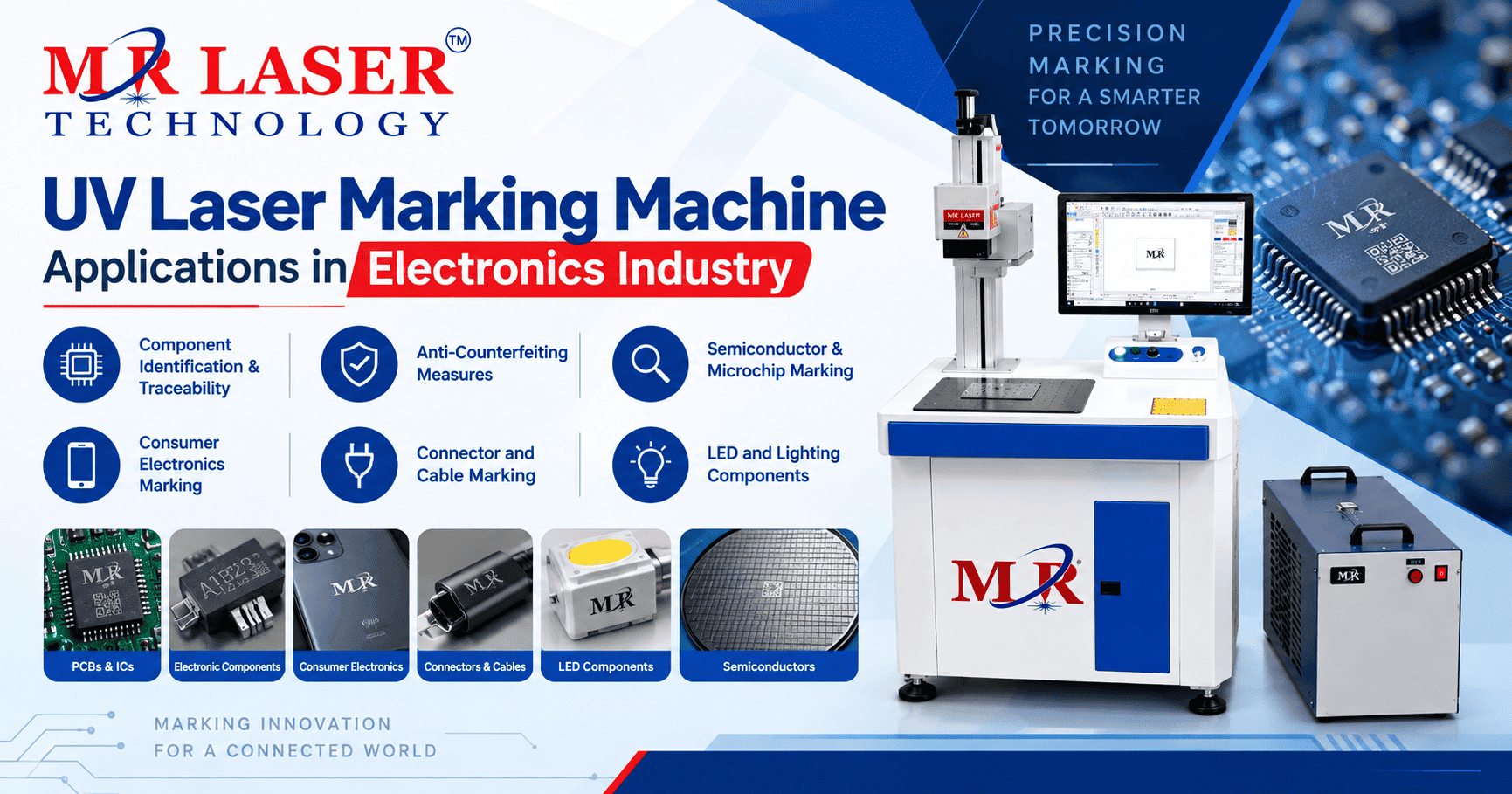
UV Laser Marking Machine Applications in Electronics Industry
The electronics industry operates at the forefront of technological innovation, demanding precision, reliability, and advanced manufacturing processes. In this landscape, clear and permanent identification of components is paramount for quality control, traceability, and preventing counterfeiting. UV laser marking machines have emerged as a critical technology, offering unparalleled capabilities for marking sensitive electronic parts without causing damage. MR LASER TECHNOLOGY, a manufacturer based in Ahmedabad, Gujarat, India, provides these advanced solutions, catering to the intricate needs of the electrical and electronics sector.
Understanding UV Laser Marking in Electronics
UV laser marking, often referred to as 'cold marking,' is a sophisticated process that utilizes ultraviolet light to alter the surface of a material. Unlike other laser technologies that rely on heat to ablate or engrave, UV lasers work by breaking molecular bonds. This photolytic process requires minimal heat input, making it exceptionally well-suited for marking delicate and heat-sensitive materials common in the electronics industry, such as plastics, semiconductors, and various component coatings.
The precision offered by UV lasers allows for the creation of extremely fine, high-contrast marks that are resistant to wear, chemicals, and environmental degradation. This permanence is crucial for ensuring that product information, serial numbers, batch codes, and logos remain legible throughout the product lifecycle. For manufacturers, this translates to enhanced traceability, improved inventory management, and robust anti-counterfeiting measures.
Key Applications of UV Laser Marking Machines
The versatility and precision of UV laser marking machines open up a wide array of applications within the demanding electronics sector. These machines are integral to modern manufacturing processes, ensuring that every component is accurately identified and tracked.
Component Identification & Traceability
Marking circuit boards (PCBs), integrated circuits (ICs), sensors, capacitors, and connectors with unique serial numbers, part numbers, and date codes. This ensures precise tracking from production to end-use, crucial for quality control and recalls.
Anti-Counterfeiting Measures
Applying intricate, hard-to-replicate marks, logos, or data matrices that verify authenticity. This is vital for protecting brand reputation and consumer trust in high-value electronic components and devices.
Semiconductor & Microchip Marking
Precisely marking microscopic components like semiconductor wafers, microchips, and other delicate semiconductor materials. UV lasers can achieve markings at resolutions often invisible to the naked eye, without causing thermal stress.
Consumer Electronics Marking
Applying branding, regulatory information, and identification marks on casings, screens, and internal components of smartphones, tablets, laptops, and other consumer electronics, often on plastics and glass.
Connector and Cable Marking
Marking connectors, cables, and wiring harnesses with essential identifiers for assembly and maintenance, ensuring correct connections and facilitating troubleshooting.
LED and Lighting Components
Marking LEDs, lighting fixtures, and associated components with specifications, serial numbers, and compliance marks, often on heat-sensitive plastics or coatings.
Benefits of UV Laser Marking for Electronics
Adopting UV laser marking technology offers significant advantages for manufacturers in the electronics industry, directly addressing key challenges related to precision, material compatibility, and operational efficiency.
- Non-Thermal Process: The 'cold marking' capability minimizes heat-affected zones, preventing damage, deformation, or discoloration on highly sensitive components.
- High Precision & Resolution: Capable of creating extremely fine and detailed marks, essential for tiny electronic parts and complex data matrix codes.
- Material Versatility: Effectively marks a broad spectrum of materials used in electronics, including various plastics, glass, silicon, coated metals, and some organic materials.
- Permanent & High-Contrast Marks: Produces durable, legible markings resistant to abrasion, chemicals, and environmental factors, ensuring long-term traceability.
- No Consumables: Unlike some printing methods, laser marking requires no inks or solvents, reducing operational costs and environmental impact.
- Process Control: Offers precise control over marking depth and intensity, allowing for tailored results on different materials and component types.
Selecting the Right UV Laser Marking Solution
Choosing the appropriate UV laser marking machine is crucial for optimizing production processes and ensuring reliable results in the electronics industry. MR LASER TECHNOLOGY, with its expertise in laser machine solutions, guides clients through this selection process.
Buyer Insight: Material Compatibility is Key
The wide variety of materials used in electronics (plastics, glass, silicon, various coatings) means that a thorough understanding of how the UV laser interacts with each specific material is essential. Consider test markings on your actual components to ensure desired contrast, depth, and absence of damage.
Key Features and Considerations:
- Laser Source Wavelength: Ensure the UV wavelength is optimal for your primary marking materials.
- Beam Quality: Higher beam quality leads to finer spot sizes and greater marking detail, crucial for microelectronics.
- Marking Area/Field Size: Select a machine with a marking area that accommodates your component sizes and batch processing needs.
- Integration Capabilities: Consider how the machine will integrate into your existing production line (e.g., standalone, inline automation).
- Software & Control: User-friendly software for creating and managing marking designs, including support for data import (serial numbers, barcodes) is vital.
- Cooling System: Ensure an adequate cooling system to maintain consistent laser performance, especially during long production runs.
Quality Checks and Verification:
Before finalizing a purchase, it's important to verify the marking quality on your specific electronic components. This includes checking for:
- Clarity and legibility of the mark.
- Contrast against the material surface.
- Absence of any thermal damage, melting, or discoloration.
- Durability of the mark under expected environmental conditions (e.g., abrasion, chemical exposure).
- Consistency across multiple parts.
Questions to Ask Before Buying:
- What specific materials can this UV laser marking machine effectively process for my applications?
- What is the typical resolution and smallest markable feature size?
- How does the machine handle variations in component surface finish or material composition?
- What are the requirements for integrating this machine into my production line?
- What level of technical support and training is provided by the manufacturer?
- Can you provide sample markings on my specific components?
MR LASER TECHNOLOGY: Your Partner in Laser Marking
MR LASER TECHNOLOGY, an ISO & CE Certified company based in Ahmedabad, Gujarat, India, specializes in providing advanced laser machine solutions. With over 8 years of experience and a proven track record of delivering over 1200 projects, MR LASER TECHNOLOGY offers a range of laser machines, including highly capable UV Laser Marking Machines tailored for the demanding electronics industry.
Understanding that each client's needs are unique, MR LASER TECHNOLOGY excels in providing customized machine solutions. They work closely with clients to develop systems that meet specific requirements, considering the material type and the intended application. Whether it's precise marking on intricate circuit boards, microchips, or sensitive electronic components, MR LASER TECHNOLOGY leverages its expertise to deliver reliable and efficient laser marking systems that enhance product quality, traceability, and authenticity.
Frequently Asked Questions (FAQ)
Can UV laser marking damage sensitive electronic components?
UV laser marking is considered a 'cold' marking process with minimal heat input. This significantly reduces the risk of thermal damage, deformation, or discoloration to sensitive electronic components compared to traditional heat-based laser marking methods.
What types of materials in the electronics industry can be marked with a UV laser?
UV lasers are versatile and can mark a wide range of materials common in electronics, including various plastics, glass, silicon, ceramic, coated metals, and some organic materials, often without damaging the substrate.
How does UV laser marking help with traceability and anti-counterfeiting?
UV laser marking creates permanent, high-contrast, and extremely precise marks. These can include serial numbers, batch codes, 2D data matrix codes, and complex logos that are difficult to counterfeit and provide a reliable audit trail for tracking components throughout the supply chain.
What is the difference between UV laser marking and fiber laser marking for electronics?
Fiber lasers use heat more intensely and are better suited for metals and some plastics. UV lasers operate at a lower temperature, making them ideal for highly sensitive materials, plastics, glass, and applications requiring extreme precision and minimal thermal stress, such as marking microchips and PCBs.
Is UV laser marking suitable for very small electronic components?
Yes, UV laser marking machines are capable of marking extremely small components and microscopic objects with high precision due to the fine spot size and controlled energy delivery of UV lasers.
Ready to Enhance Your Electronics Manufacturing with Precision Marking?
Discover how MR LASER TECHNOLOGY's advanced UV laser marking machines can bring unparalleled precision, durability, and traceability to your electronic components. Contact us today to discuss your specific application needs and explore customized solutions that drive quality and efficiency in your manufacturing processes.
Request a Custom Solution