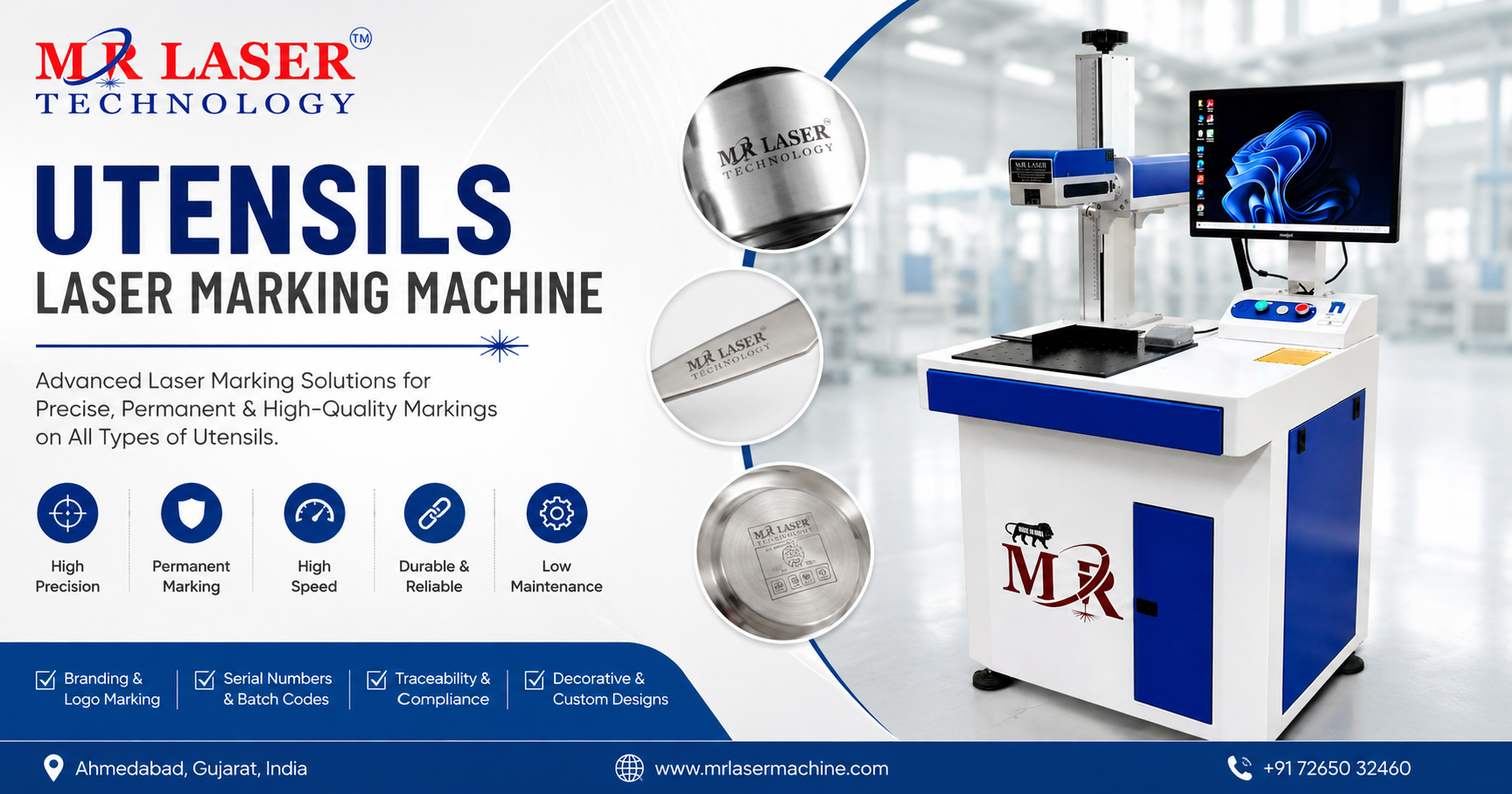
Utensils Laser Marking Machine
Precision utensils laser marking machines in Ahmedabad. Enhance branding and traceability with durable, high-quality markings. Expert solutions from MR Laser Te
What is a Utensils Laser Marking Machine? — Overview
A utensils laser marking machine utilizes a focused beam of laser light to alter the surface of a material, creating a permanent mark. Unlike older methods like stamping or etching, laser marking is non-contact, meaning no physical tool touches the utensil's surface. This process can achieve various effects, from annealing (changing the color of the metal through heat) to ablation (removing a thin layer of material) or engraving. The laser's precision allows for intricate logos, fine text, and serial numbers to be applied with exceptional clarity and consistency, making it ideal for the diverse range of materials and shapes found in utensil production.
Key Features and Technical Specifications
When evaluating a utensils laser marking machine, several technical aspects are critical for ensuring optimal performance and suitability for your specific needs:
- Laser Source Type: Fiber lasers are most common for metal marking due to their efficiency, longevity, and ability to mark a wide range of metals.
- Laser Power (Watts): Higher wattage generally allows for faster marking speeds and the ability to mark harder materials or achieve deeper engraving.
- Marking Area/Field Size: This determines the maximum size of the area that can be marked in a single operation, influencing throughput.
Beam Quality (M²): A lower M² value indicates a more focused beam, leading to finer detail and sharper marks.
- Marking Speed (mm/s): Crucial for high-volume production, a faster marking speed directly translates to increased output.
- Resolution and Repeatability: High resolution ensures fine details are captured, while high repeatability guarantees consistent results across thousands of parts.
- Cooling System: Air-cooled or water-cooled systems are essential for maintaining laser performance and longevity during continuous operation.
- Software Control: User-friendly software with advanced features for importing logos, creating text, and managing marking parameters is vital.
Industrial Applications and Use Cases
The versatility of a utensils laser marking machine extends across various applications within the kitchenware and related industries:
- Brand Logo Marking: Applying company logos onto spoons, forks, knives, pots, pans, and other cookware for brand recognition.
- Product Identification: Marking serial numbers, batch codes, or manufacturing dates for inventory management and traceability.
- Compliance Marking: Engraving necessary certifications, safety marks, or material composition details as required by regulations.
- Decorative Engraving: Creating intricate patterns or personalized designs on premium utensil sets for a luxury appeal.
- Barcoding and QR Codes: Applying scannable codes for supply chain management, quality control, and product authentication.
- Anti-Counterfeiting: Incorporating unique identifiers or micro-markings that are difficult to replicate.
- Promotional Markings: Adding special event logos or limited-edition branding for marketing campaigns.
- Material Identification: Marking material grades (e.g., SS304, SS316) on components for quality assurance.
How to Choose the Right Utensils Laser Marking Machine
Selecting the appropriate laser marking machine requires careful consideration of your operational needs and future growth. Here’s a checklist to guide your decision:
- Material Compatibility: Confirm the machine can effectively mark all types of metals and any non-metals you use (e.g., plastic handles).
- Production Volume: Assess your daily or monthly marking requirements to determine the necessary marking speed and automation level.
- Marking Complexity: If you require very fine details or intricate designs, ensure the machine's resolution and beam quality are sufficient.
- Integration Capabilities: Consider if the machine needs to be integrated into an existing production line or if it will be a standalone unit.
- Supplier Support and Training: Verify the availability of comprehensive installation, training, and ongoing technical support.
- Customization Options: Determine if the machine can be customized to fit specific workspace constraints or application needs.
- Safety Features: Ensure the machine complies with all relevant safety standards for laser operation.
- Budget and ROI: Evaluate the initial investment against the expected gains in efficiency, quality, and reduced consumables.
Quality Standards and Compliance
For any industrial equipment, especially those involved in product marking, adherence to quality standards and compliance is non-negotiable. Manufacturers of utensils laser marking machines should ideally adhere to international standards such as ISO 9001 for quality management systems. The laser components themselves often meet standards like CE marking for European conformity, ensuring safety and performance. For users in India, understanding if the machine's electrical components comply with BIS (Bureau of Indian Standards) is also important. Verifying that the supplier can provide documentation for these standards builds confidence in the machine's reliability and safety, ensuring your marking process meets industry expectations.
Why MR Laser Technology's Experience and Capability Matters
At MR Laser Technology, our extensive experience in manufacturing advanced laser machines, including specialized solutions for utensils, forms the bedrock of our customer commitment. Based in Ahmedabad, we understand the unique demands of the local and national industrial landscape. Our manufacturing process is driven by a deep technical capability, honed over years of innovation and client collaboration. We focus on robust quality control at every stage, from component selection to final testing, ensuring each machine delivers consistent, high-precision results.
Our team of skilled engineers possesses the expertise to not only build reliable machines but also to offer tailored solutions. We pride ourselves on our ability to customize machines to meet specific application requirements, ensuring optimal integration into your production workflow. This dedication to technical excellence, combined with a proven track record of reliable delivery and comprehensive after-sales support, makes MR Laser Technology a trusted partner for your utensil marking needs. We are committed to providing solutions that enhance your productivity and product quality.
Installation, Maintenance, and Care Tips
Proper installation and regular maintenance are key to maximizing the lifespan and performance of your utensils laser marking machine.
- Installation: Ensure the machine is installed in a clean, dry, and well-ventilated area, away from excessive dust or vibrations. Proper electrical grounding is essential for safety and machine longevity. Follow the manufacturer's guidelines for initial setup and calibration.
- Daily Checks: Before operation, visually inspect the machine for any loose connections or debris. Ensure the laser safety enclosure is functioning correctly.
- Lens and Mirror Cleaning: The optical components, particularly the focusing lens and mirrors, are critical for beam quality. Clean them regularly using appropriate lens cleaning solutions and lint-free cloths, following the manufacturer's recommended procedure.
- Ventilation System: Keep the exhaust and filtration system clean and functional to remove fumes and particulate matter generated during marking. This protects both the machine and the operator.
- Software Updates: Periodically check for and install software updates from the manufacturer, as these often include performance enhancements and bug fixes.
- Scheduled Maintenance: Adhere to the manufacturer's recommended maintenance schedule, which may include checking laser source performance, cooling system efficiency, and mechanical component wear.
Frequently Asked Questions
A1: Laser marking machines are highly versatile and can effectively mark a wide range of metals commonly used in utensils, such as stainless steel, aluminum, brass, copper, and titanium. For certain plastics or coated materials, specific laser types like CO2 or UV lasers might be more suitable, so it's important to specify your materials when choosing a machine.
A2: The marking speed depends on several factors, including the laser power, the complexity of the design, the material being marked, and the desired mark depth or quality. High-power fiber laser marking machines can mark thousands of small marks per hour, making them suitable for high-volume production environments.
A3: Yes, laser marking creates a permanent change to the material's surface. It's not a surface coating that can be worn off. The process alters the material itself, either by changing its color through heat or by slightly ablating the surface, ensuring the mark remains legible throughout the product's lifespan.
A4: Routine maintenance typically involves cleaning the optical components (lens, mirrors), ensuring the ventilation system is clear, checking electrical connections, and performing software updates. Periodic professional servicing may be recommended by the manufacturer to check the laser source and other critical components.
A5: Absolutely. Laser marking machines are renowned for their precision, allowing for the application of highly detailed logos, fine text, serial numbers, and even complex graphical designs with exceptional clarity and accuracy, far surpassing traditional marking methods.
A6: Safety is paramount. Operators must wear appropriate laser safety eyewear, and the machine should be operated within its safety enclosure. Ensure proper ventilation to remove fumes. Familiarize yourself with the machine's emergency stop procedures and follow all manufacturer safety guidelines.
Conclusion
For utensil manufacturers in Ahmedabad and beyond, investing in a high-quality utensils laser marking machine is a strategic decision that enhances brand value, ensures product traceability, and streamlines production. The precision, permanence, and versatility offered by laser technology provide a distinct advantage in today's competitive market. By carefully considering technical specifications, application needs, and the reliability of the supplier, businesses can select a machine that not only meets their current demands but also supports future growth. Partnering with an experienced manufacturer like MR Laser Technology ensures you receive expert guidance and dependable solutions tailored to your specific requirements, empowering you to achieve superior marking results.
Get In Touch
Mr Laser Technology