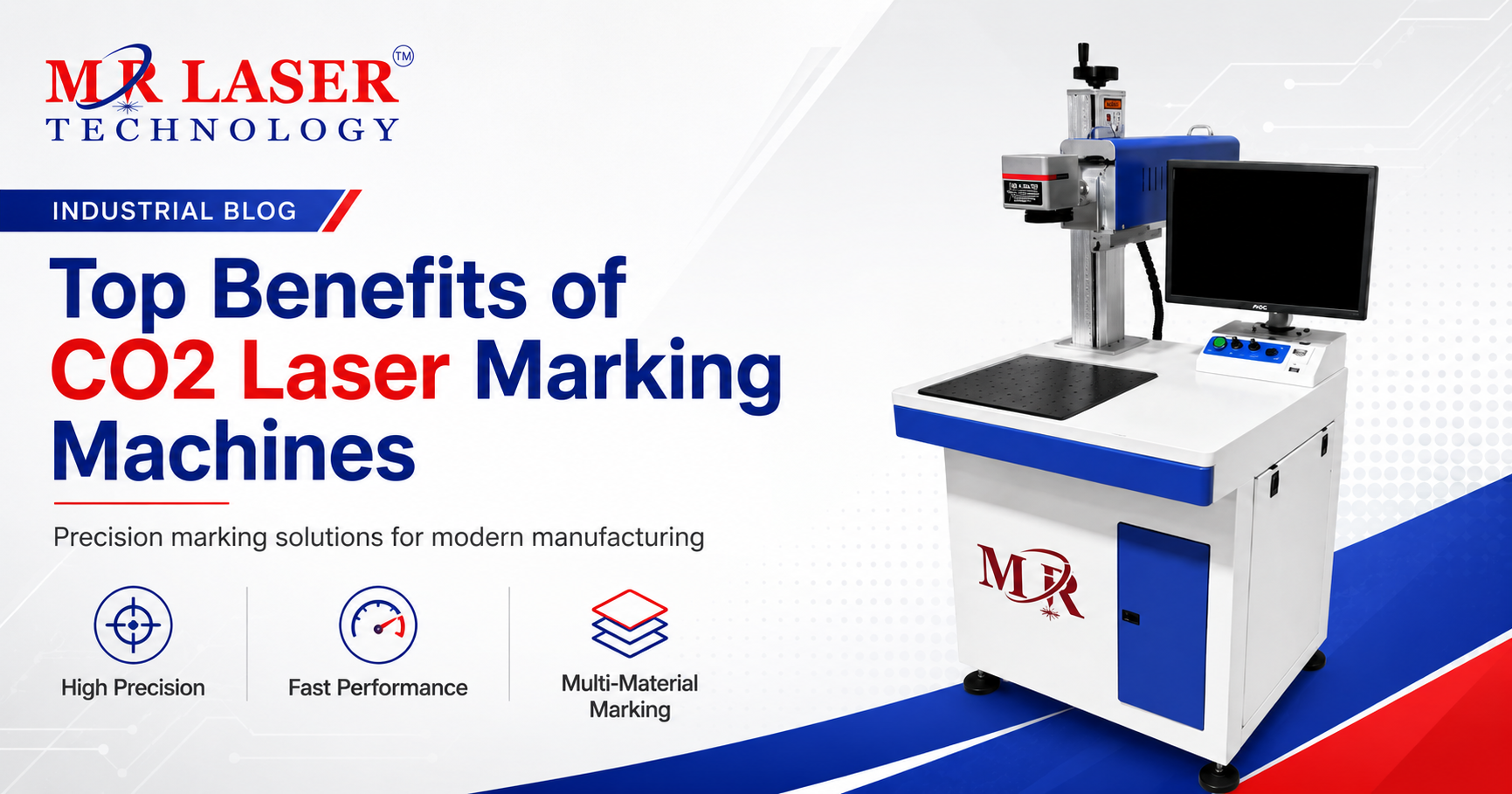
Top Benefits of CO2 Laser Marking Machines
Discover the key benefits of CO2 laser marking machines for your Ahmedabad business. Enhance precision, versatility, and efficiency with advanced marking soluti
Key Features and Technical Specifications
CO2 laser marking machines are engineered with several key features that contribute to their effectiveness and versatility:
- Wavelength: Typically operates at a 10.6 µm wavelength, which is highly absorbed by many non-metal materials.
- Power Options: Available in various power levels (e.g., 30W, 50W, 60W, 80W) to suit different material thicknesses and marking speeds.
- Marking Area: Offers customizable marking fields to accommodate varying part sizes and production layouts.
- Beam Quality: High-quality beam ensures fine detail and sharp edges for intricate designs and small text.
- Speed: Capable of high-speed marking, significantly increasing production throughput.
- Durability: Robust construction designed for continuous industrial operation.
- Software Control: User-friendly software allows for easy design creation, parameter adjustment, and job management.
- Cooling System: Integrated cooling systems (air or water) maintain optimal operating temperatures for longevity.
Industrial Applications and Use Cases
The versatility of CO2 laser marking machines makes them indispensable across numerous industries:
- Plastics Industry: Marking serial numbers, logos, and date codes on plastic components for automotive, electronics, and consumer goods.
- Packaging: Directly marking variable data, batch codes, and expiry dates onto flexible packaging, cardboard, and labels.
- Textile and Apparel: Engraving designs, logos, and patterns onto fabrics, leather, and synthetic materials.
- Woodworking: Creating intricate designs, logos, and text on wooden products, furniture, and decorative items.
- Paper and Cardboard: Marking and engraving on paper products, invitations, and packaging materials for aesthetic and informational purposes.
- Glass and Ceramics: Etching logos, designs, and serial numbers onto glass bottles, decorative items, and ceramic tiles.
- Rubber and Silicone: Marking components used in medical devices, seals, and industrial parts.
- Promotional Items: Personalizing pens, keychains, phone cases, and other promotional merchandise.
How to Choose the Right CO2 Laser Marking Machine
Selecting the appropriate CO2 laser marking machine involves considering several critical factors to ensure it aligns with your specific production needs:
- Material Type: Confirm the machine is optimized for the non-metal materials you intend to mark.
- Power Requirements: Determine the laser power needed based on material thickness, desired marking depth, and speed.
- Marking Area Size: Ensure the machine's working field can accommodate your typical part dimensions.
- Speed and Throughput: Evaluate the machine's marking speed against your production volume requirements.
- Software Compatibility: Check if the control software is intuitive and supports your design file formats.
- Integration Needs: Consider if the machine needs to be integrated into an existing production line or automated system.
- Supplier Support: Look for a supplier offering reliable installation, training, and after-sales service.
- Certifications: Verify that the machine meets relevant safety and quality standards.
Quality Standards and Compliance
When investing in a CO2 laser marking machine, it's essential to ensure it adheres to recognized quality standards and compliance regulations. Look for machines that are CE certified, indicating they meet European safety, health, and environmental protection requirements. While specific Indian standards like BIS might not directly apply to laser machine manufacturing in the same way as other industrial goods, adherence to international norms for electrical safety, laser safety (e.g., IEC standards), and component quality is paramount. A reputable manufacturer will provide documentation confirming compliance and will have robust internal quality control processes in place.
Why MR Laser Technology's Experience and Capability Matters
At MR Laser Technology, our extensive experience in laser machine manufacturing, particularly with CO2 systems, translates directly into tangible benefits for our clients in Ahmedabad and beyond. We understand the nuances of marking diverse non-metal materials and have refined our manufacturing processes over years of dedicated operation. Our technical team possesses deep expertise, enabling us to not only provide standard solutions but also to engineer customized machines tailored to unique application requirements.
Our commitment to quality control is rigorous, ensuring each CO2 laser marking machine leaving our facility meets high performance and reliability benchmarks. We focus on delivering machines that offer consistent, high-contrast marks with exceptional detail, thereby enhancing your product's appeal and traceability. Furthermore, our proactive approach to after-sales support ensures that your investment continues to perform optimally throughout its lifecycle.
Installation, Maintenance, and Care Tips
Proper installation, regular maintenance, and careful operation are key to maximizing the lifespan and performance of your CO2 laser marking machine.
- Installation: Ensure the machine is installed in a well-ventilated area, away from excessive dust and moisture. Proper grounding is essential for electrical safety.
- Ventilation: The marking process can produce fumes and particulate matter. Always use an effective exhaust and filtration system to maintain air quality and protect the machine's optics.
- Optics Cleaning: Regularly clean the laser lens and mirrors according to the manufacturer's guidelines. Dust and debris on optical components can reduce beam power and mark quality.
- Cooling System: For water-cooled systems, monitor coolant levels and quality. For air-cooled systems, ensure vents are clear and fans are functioning correctly.
- Software Updates: Keep the machine's control software updated to benefit from performance enhancements and bug fixes.
- Routine Checks: Perform daily visual inspections for any signs of wear or damage. Schedule periodic professional servicing as recommended by the manufacturer.
- Material Handling: Handle materials carefully to avoid introducing contaminants that could affect the marking process.
Frequently Asked Questions
A CO2 laser marking machine is primarily designed for non-metal materials. This includes plastics, acrylic, wood, leather, rubber, silicone, glass, ceramics, paper, cardboard, and certain coated metals where the coating can be ablated.
The main difference lies in the laser source and wavelength. CO2 lasers operate at 10.6 µm and are ideal for non-metals, while fiber lasers operate at 1.06 µm and are best suited for marking metals and some plastics.
Generally, CO2 lasers are not the preferred choice for marking bare metals due to poor absorption of the 10.6 µm wavelength. However, they can mark anodized or painted metal surfaces by ablating the surface layer. For bare metals, fiber lasers are more effective.
The lifespan of a CO2 laser tube varies depending on its power, usage, and maintenance, but typically ranges from 10,000 to 45,000 operating hours. Regular maintenance and proper operation can help extend this lifespan.
While CO2 lasers can achieve some depth of engraving, especially on softer materials like wood or acrylic, they are generally more suited for surface marking and shallow engraving. For deeper engraving on certain materials, higher power lasers or different laser types might be considered.
Routine maintenance includes cleaning optical components (lenses, mirrors), checking and topping up coolant (if applicable), ensuring proper ventilation, and keeping the machine's exterior clean. Periodic professional servicing is also recommended.
Conclusion
For businesses in Ahmedabad looking to enhance their product marking capabilities with precision, versatility, and efficiency, CO2 laser marking machines present a compelling solution. Their ability to create high-quality, permanent marks on a wide array of non-metal materials addresses critical needs in traceability, branding, and customization. By carefully considering the specific material, power, and application requirements, and partnering with an experienced manufacturer like MR Laser Technology, you can select a machine that significantly boosts your production quality and operational effectiveness.
Get In Touch
Mr Laser Technology