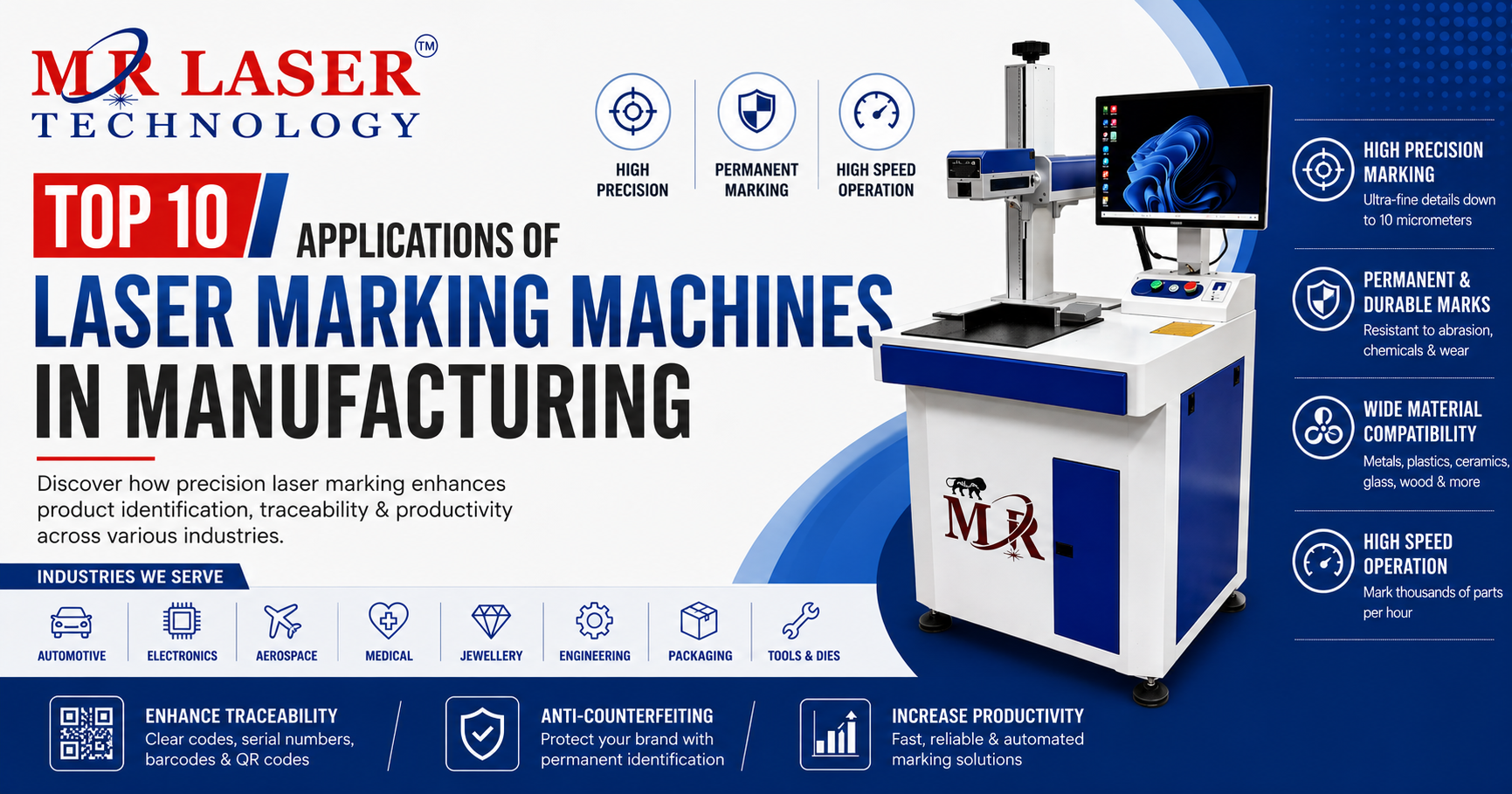
Top 10 Applications of Laser Marking Machines in Manufacturing
Discover the top 10 applications of laser marking machines in manufacturing. Learn how precision laser marking enhances product identification and traceability
What is Laser Marking? An Overview
Laser marking is a non-contact industrial process that uses a focused laser beam to alter the surface of a material. This alteration creates a permanent mark, which can be text, logos, serial numbers, barcodes, or QR codes. The laser beam precisely removes or modifies the surface layer, creating a visible contrast without damaging the underlying material. This process is highly controllable, allowing for intricate details and high-speed application across various substrates like metals, plastics, ceramics, and even some organic materials.
Key Features and Technical Specifications
Laser marking machines offer a range of capabilities designed for industrial environments. Understanding these features is crucial for selecting the right equipment for specific manufacturing needs.
- High Precision Marking: Capable of marking extremely fine details with resolutions down to 10 micrometers.
- Permanent and Durable Marks: Creates marks that are resistant to abrasion, chemicals, and environmental degradation.
- Non-Contact Process: Eliminates tool wear and contamination, preserving the integrity of the workpiece.
- Wide Material Compatibility: Suitable for marking metals, plastics, glass, ceramics, wood, and coated surfaces.
- Variable Marking Depth: Allows for surface etching or deeper engraving depending on the application requirements.
- High Speed Operation: Capable of marking thousands of parts per hour, significantly boosting production throughput.
- Integrated Vision Systems: Optional features for automated alignment and quality inspection of marked parts.
- Customizable Beam Parameters: Adjustable laser power, frequency, and pulse duration for optimal results on different materials.
Industrial Applications and Use Cases
The versatility of laser marking machines makes them applicable across a broad spectrum of manufacturing industries. Their ability to provide clear, permanent marks enhances traceability, branding, and functional identification.
- Automotive Industry: Marking VIN numbers, part numbers, and manufacturing dates on engine components, chassis, and electronic parts for traceability and anti-counterfeiting.
- Electronics Manufacturing: Marking serial numbers, logos, and compliance marks on circuit boards, semiconductors, and electronic components.
- Aerospace: Engraving part numbers, specifications, and traceability codes on critical components where durability and accuracy are essential.
- Medical Device Manufacturing: Marking unique device identifiers (UDIs), serial numbers, and sterilization indicators on surgical instruments and implants, ensuring patient safety and regulatory compliance.
- Jewellery and Watchmaking: Engraving intricate designs, logos, hallmarks, and serial numbers on precious metals and watch components with high precision.
- Tool and Die Making: Marking identification codes, material specifications, and ownership details on industrial tools and molds.
- Packaging Industry: Marking batch codes, expiry dates, and logos on plastic films, glass bottles, and metal cans for product authentication and tracking.
- General Engineering: Marking components with identification codes, assembly instructions, or quality control stamps for better inventory management and assembly accuracy.
How to Choose the Right Laser Marking Machine
Selecting the appropriate laser marking machine depends on several critical factors related to your specific production environment and marking requirements.
- Material Type: Determine if you are marking metals, plastics, glass, or other materials, as different laser sources (fiber, CO2, UV) are optimized for specific substrates.
- Marking Content and Size: Assess the complexity, font size, and area required for your marks. This influences the laser’s power and beam quality.
- Production Throughput: Consider the speed at which you need to mark parts. Higher power lasers and optimized scanning heads can achieve faster marking cycles.
- Environmental Conditions: Evaluate the operating environment. Some machines are designed for harsh industrial settings, while others are more suited for cleanroom applications.
- Integration Needs: Determine if the machine needs to be integrated into an existing production line, requiring specific automation features or physical dimensions.
- Budget and Total Cost of Ownership: Consider not only the initial purchase price but also ongoing operational costs, maintenance, and potential consumables.
- Supplier Support and Service: Look for a reputable supplier offering reliable installation, training, and after-sales technical support.
Quality Standards and Compliance
For industrial applications, especially in sectors like automotive, aerospace, and medical devices, adhering to stringent quality standards and compliance is non-negotiable. Laser marking machines themselves should meet international standards for safety and performance, such as CE certification. The marks produced must also comply with industry-specific regulations. For instance, automotive parts require permanent marks that can withstand harsh operating conditions and regulatory audits.
Manufacturers should verify that the laser marking equipment they choose is capable of producing marks that meet these required standards. This includes ensuring the longevity and legibility of the marks over the product's lifecycle. Reputable suppliers will be able to provide documentation and demonstrate how their machines meet these critical compliance requirements, ensuring that your products will pass necessary inspections and maintain their integrity in the market.
Why MR Laser Technology's Experience and Capability Matter
With over 8 years of dedicated experience in laser technology, MR Laser Technology has established a strong foundation in manufacturing high-precision laser marking machines. Our expertise is built on a deep understanding of various industrial applications and material properties. We focus on delivering reliable solutions through meticulous design, advanced manufacturing processes, and stringent quality control.
Our technical team comprises skilled engineers who are adept at customizing machines to meet unique client specifications. This capability ensures that whether you require a standard marking solution or a highly specialized setup, MR Laser Technology can deliver a machine tailored to your exact needs. Our commitment extends beyond manufacturing to providing comprehensive after-sales support, ensuring that our clients in Ahmedabad and across India receive ongoing assistance for optimal machine performance and longevity.
Installation, Maintenance, and Care Tips
Proper installation, regular maintenance, and careful operation are key to maximizing the lifespan and performance of your laser marking machine.
- Installation: Ensure the machine is installed in a clean, dry, and well-ventilated area, away from excessive dust or vibration. Proper electrical grounding is essential for safety and machine longevity.
- Operator Training: Thoroughly train all operators on the machine's functions, safety protocols, and software operation. Understanding the parameters for different materials is crucial.
- Regular Cleaning: Keep the laser optics clean. Dust and debris on lenses or mirrors can reduce beam quality and potentially damage components. Follow the manufacturer's recommended cleaning procedures.
- System Checks: Periodically check all connections, cables, and mechanical components for wear or damage.
- Software Updates: Ensure your marking software is up-to-date to benefit from performance enhancements and bug fixes.
- Ventilation: Always ensure the fume extraction system is operational to remove any fumes or particles generated during the marking process, protecting both the machine and the operator.
- Scheduled Maintenance: Adhere to the manufacturer's recommended maintenance schedule, which may include checks on the laser source, cooling system, and scanning galvanometer.
Frequently Asked Questions
Laser marking machines can effectively mark a wide range of materials, including most metals (steel, aluminum, brass, titanium), plastics, glass, ceramics, wood, leather, and rubber. The specific type of laser (fiber, CO2, UV) will determine the optimal material compatibility and marking result.
Laser marks are generally considered permanent. They are created by physically altering the surface of the material, making them resistant to abrasion, chemicals, and fading over time, unlike printed or etched labels.
Laser marking typically involves altering the surface layer to create a contrast, such as changing its color or creating a shallow etch. Laser engraving, on the other hand, removes material to create a deeper cavity or cut into the workpiece.
The speed of a laser marking machine depends on the complexity of the mark, the material being marked, and the laser's power and scanning speed. High-speed machines can mark thousands of parts per hour, making them suitable for mass production environments.
Safety is paramount. Operators must wear appropriate laser safety glasses to protect their eyes from direct or reflected laser beams. The machine should be enclosed or have safety interlocks to prevent accidental exposure. Proper ventilation is also crucial to remove any fumes generated.
Yes, laser marking machines are highly adaptable and can be easily integrated into automated production lines. They can be equipped with automated loading/unloading systems, conveyor belts, and robotic arms to facilitate seamless integration with other manufacturing processes.
Conclusion
For manufacturers in Ahmedabad and beyond, laser marking machines represent a significant advancement in product identification, traceability, and branding. The ability to create precise, permanent marks on diverse materials enhances operational efficiency, ensures compliance, and strengthens product authenticity. When selecting a laser marking solution, considering factors like material compatibility, throughput requirements, and supplier expertise is crucial. MR Laser Technology, with its proven experience and commitment to quality, offers reliable and customizable laser marking solutions designed to meet the evolving demands of modern industrial production.
Get In Touch
Mr Laser Technology