The Complete Guide to CNC Router Technology
Delve into the world of Computer Numerical Control (CNC) routing and understand how this advanced technology transforms digital designs into tangible products. Explore its applications, benefits, and the precision solutions available from MR LASER TECHNOLOGY.
What is CNC Router Technology?
CNC router technology represents a pivotal advancement in modern manufacturing, enabling automated control over cutting, shaping, drilling, and carving processes. At its core, CNC routing is a subtractive manufacturing method where a computer controls a high-speed rotating tool to precisely remove material from a workpiece. This process starts with a digital design, typically created using Computer-Aided Design (CAD) software. This design is then translated into a set of machine instructions, often in the form of G-code, which dictates the movement of the cutting tool along multiple axes (commonly X, Y, and Z) to achieve intricate shapes and detailed finishes with exceptional accuracy. The computer's precise control ensures high repeatability, minimizing human error and material waste, making it an indispensable tool across a vast spectrum of industries.
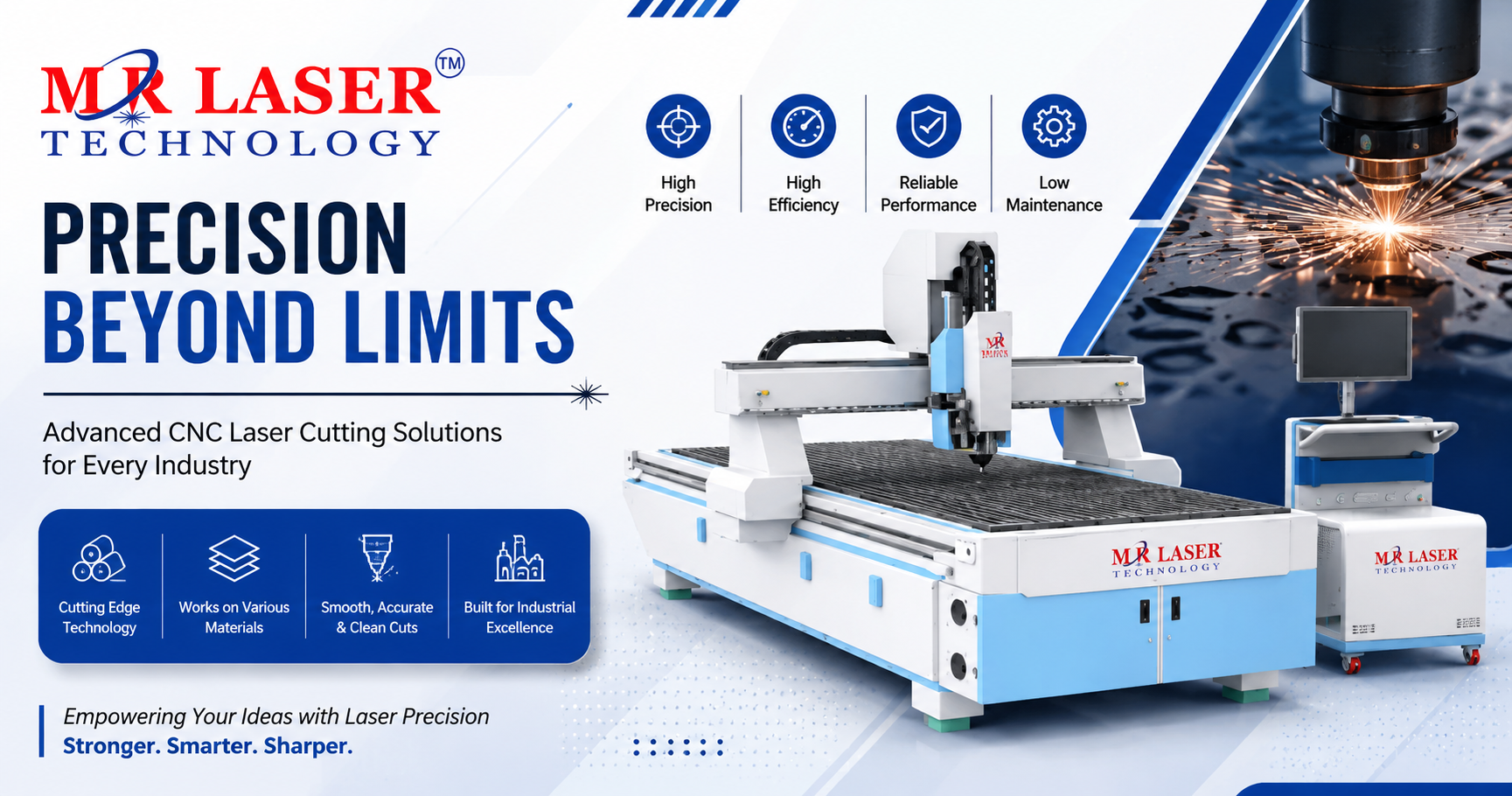
MR LASER TECHNOLOGY, a recognized manufacturer of industrial laser machines, also provides robust CNC router solutions. Leveraging advanced technology and a commitment to high precision, the company offers machines tailored for demanding applications, particularly in working with wood and stone materials. Their focus on delivering quality solutions is backed by an experienced technical team and reliable after-sales support, aiming to meet the evolving needs of modern manufacturing.
How CNC Routers Work: The Process Unveiled
The operation of a CNC router involves a systematic workflow that ensures precision and efficiency:
- Design Creation: The process begins with creating a digital blueprint of the desired object using CAD software. This design can be as simple as a basic shape or as complex as a multi-dimensional sculpture.
- CAM Software Processing: The CAD file is then imported into Computer-Aided Manufacturing (CAM) software. This software translates the design into toolpaths and generates the specific machine code (G-code) that the CNC router will follow. It defines cutting speeds, feed rates, tool selection, and depth of cut.
- Machine Setup: The raw material (e.g., wood, stone, plastic) is securely clamped onto the CNC router's worktable. The appropriate cutting tool is installed in the spindle, and the machine is calibrated.
- Execution: The G-code is loaded into the CNC controller. The controller then directs the motors and actuators that move the cutting head and the worktable along the programmed axes, executing the cutting operations precisely as designed.
- Finishing: Once the routing process is complete, the workpiece is removed from the machine. Depending on the application, further finishing steps like sanding, polishing, or assembly may be required.
This automated sequence allows for consistent quality and complex designs that would be challenging or impossible to achieve with manual methods. MR LASER TECHNOLOGY emphasizes the use of advanced technology to ensure the performance and reliability of their CNC router systems.
Versatile Applications of CNC Router Technology
The adaptability of CNC routers makes them invaluable across a wide array of industries and applications. Their ability to precisely cut, shape, and engrave materials like wood, plastics, carbon fiber, light metals (such as aluminum), and stone opens up numerous possibilities:
Woodworking & Furniture Making
Creating intricate cabinet components, custom furniture, decorative elements, and structural wood parts.
Sign Making
Producing dimensional letters, intricate logos, and detailed signage for commercial and personal use.
Packaging
Manufacturing custom molds and prototypes for packaging designs, as well as creating specialized packaging materials.
Prototyping & Custom Fabrication
Rapidly creating functional prototypes and one-off custom parts for various engineering and design projects.
Aerospace & Automotive
Fabricating lightweight components, interior trim, and specialized parts requiring high accuracy.
Engineering & Manufacturing
Producing precision components, jigs, fixtures, and tooling for industrial processes.
Stone Working
Carving intricate designs into stone for monuments, architectural elements, and decorative pieces, a specialization offered by MR LASER TECHNOLOGY's stone CNC routers.
Key Benefits of Adopting CNC Router Technology
Integrating CNC router technology into your operations offers significant advantages:
- Enhanced Precision & Accuracy: Computer control ensures high repeatability and minimal deviations, leading to consistent product quality.
- Increased Efficiency: Automation reduces manual labor requirements and speeds up production cycles, especially for repetitive tasks.
- Material Optimization: Precise cutting paths minimize waste, reducing material costs and environmental impact.
- Design Flexibility: Enables the creation of complex geometries and intricate details that are difficult or impossible with manual methods.
- Reduced Errors: Automation significantly lowers the risk of human error, leading to fewer defects and higher customer satisfaction.
- Versatility: A single machine can perform multiple operations like cutting, drilling, and engraving, often with interchangeable tooling.
MR LASER TECHNOLOGY is committed to providing high-precision solutions that embody these benefits, utilizing advanced technology to ensure performance and reliability for their clients.
Choosing the Right CNC Router
Selecting the appropriate CNC router depends on several factors, including the materials to be processed, the complexity of the jobs, the required precision, and the production volume. Consider the following:
- Material Compatibility: Ensure the router's spindle power and rigidity are suitable for your primary materials. MR LASER TECHNOLOGY offers specialized routers for demanding materials like stone and wood.
- Working Area (Axes & Size): Determine the maximum dimensions of the parts you need to produce. Standard routers offer 3-axis movement (X, Y, Z), while more advanced models may include rotary axes for 4th or 5th-axis machining.
- Spindle Power & Speed: Higher spindle power is needed for cutting harder materials or performing heavy-duty operations. Spindle speed (RPM) affects the quality of cut and the types of materials that can be efficiently processed.
- Accuracy & Repeatability: For intricate designs and tight tolerances, look for machines with high positional accuracy and repeatability ratings.
- Software Compatibility: Ensure the machine's controller is compatible with your preferred CAD/CAM software.
- Support & Service: Reliable after-sales support and readily available technical assistance are crucial for minimizing downtime. MR LASER TECHNOLOGY emphasizes its experienced technical team and dependable support.
With over 8 years of experience and a proven track record of delivering over 1200 projects across India, MR LASER TECHNOLOGY understands the importance of matching the right machine to the application.
Frequently Asked Questions (FAQ)
What is the primary difference between a CNC router and a CNC mill?
While both are CNC machines, CNC routers typically have lighter-duty spindles and are designed for softer materials like wood, plastics, and aluminum, focusing on cutting and carving. CNC mills are generally more robust, designed for harder metals, and often operate with a fixed workpiece and moving spindle, focusing on precision milling and drilling.
Can CNC routers cut metal?
Yes, CNC routers can cut lighter metals like aluminum and brass. For heavier metals or high-precision metal machining, a CNC mill or a more specialized metal router might be necessary. The spindle power and machine rigidity are key factors.
What materials can be processed by a CNC router?
CNC routers are highly versatile and can process a wide range of materials including various types of wood, plywood, MDF, plastics, acrylics, foam, composites like carbon fiber, and light metals such as aluminum.
What does 'ISO & CE Certified' mean for a CNC router?
Being ISO 9001:2015 and CE certified indicates that MR LASER TECHNOLOGY adheres to international standards for quality management systems and product safety, respectively. This assures customers of consistent quality and compliance with regulatory requirements.
Experience Precision with MR LASER TECHNOLOGY
MR LASER TECHNOLOGY is dedicated to providing advanced, high-precision CNC router solutions tailored to your manufacturing needs. Whether you're working with wood, stone, or other materials, our machines are designed for efficiency, reliability, and superior performance. Backed by an experienced technical team and robust after-sales support, we are your trusted partner in achieving manufacturing excellence.
Contact us today to learn more about our CNC router offerings and discover how we can empower your business.
Visit MR LASER TECHNOLOGY