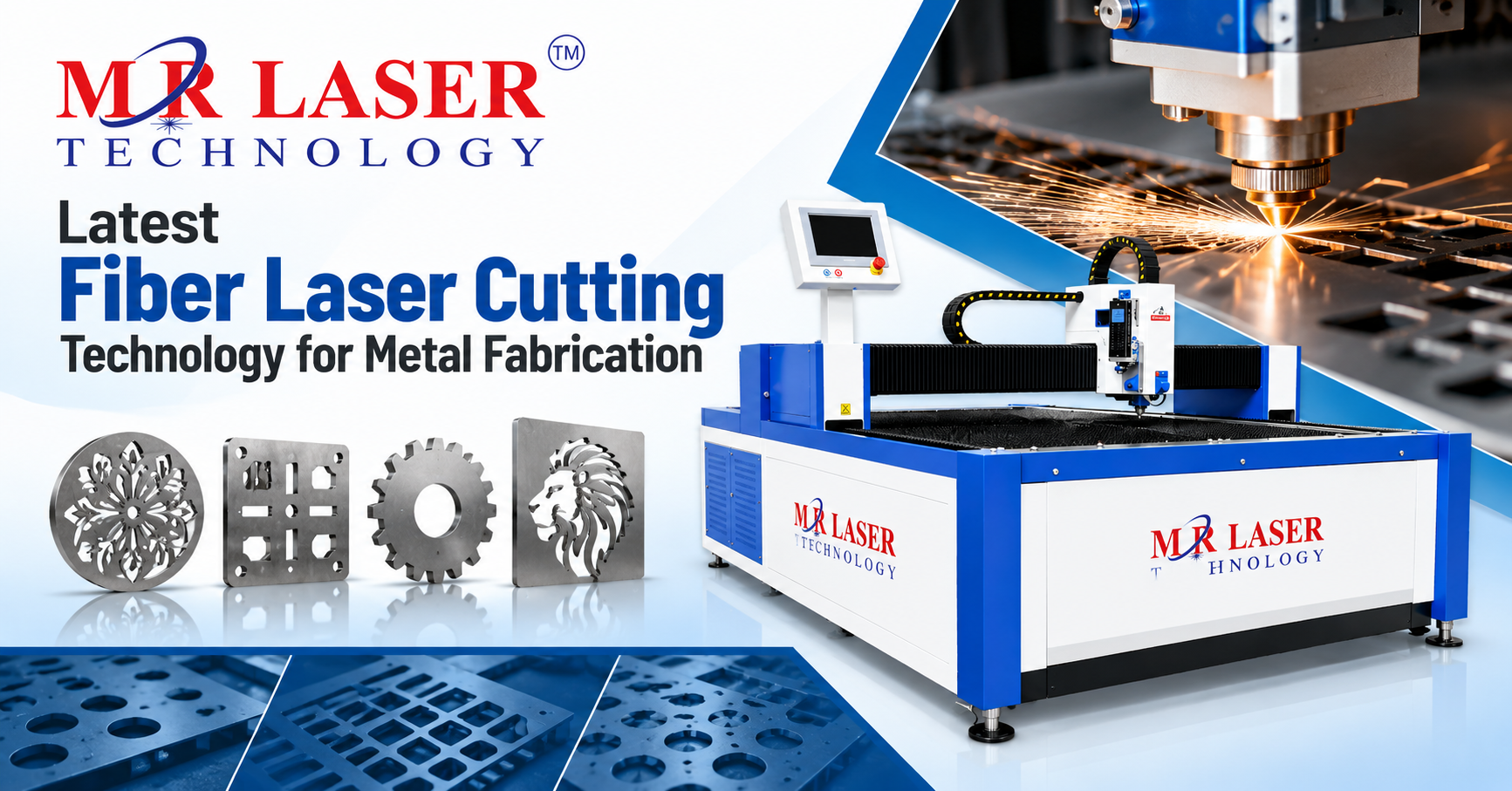
Latest Fiber Laser Cutting Technology for Metal Fabrication
In the dynamic world of metal fabrication, staying ahead means embracing cutting-edge technology. Fiber laser cutting represents a significant leap forward, offering unparalleled precision, speed, and efficiency over traditional methods. This advanced technology is transforming how businesses work with metals, from intricate designs to high-volume production. MR LASER TECHNOLOGY, based in Ahmedabad, Gujarat, India, is at the forefront of providing these advanced solutions, empowering industries with state-of-the-art fiber laser machines.
Understanding Fiber Laser Cutting Technology
Fiber laser cutting is a sophisticated process that uses a highly concentrated laser beam, generated by a solid-state fiber laser source, to cut through various metal materials. Unlike older technologies like CO2 lasers, fiber lasers utilize a shorter wavelength, which is exceptionally well-absorbed by metals. This characteristic enables faster, cleaner, and more precise cuts, making it the industry standard for many metal fabrication applications.
The core of fiber laser technology lies in its solid-state design. This means there are no moving parts within the laser beam path, leading to exceptional reliability, minimal maintenance requirements, and a longer operational lifespan. The high energy efficiency of fiber lasers also translates into lower power consumption, reducing operational costs for manufacturers.
Key Advantages of Fiber Laser Cutting
The adoption of fiber laser cutting technology brings a multitude of benefits to metal fabrication businesses:
- Unmatched Precision and Cut Quality: Fiber lasers deliver a superior beam quality, allowing for incredibly fine details and intricate cuts with minimal heat-affected zones (HAZ). This results in clean, dross-free edges, often eliminating the need for secondary finishing processes like grinding or deburring.
- Exceptional Speed and Efficiency: For thin materials, fiber lasers can cut up to three times faster than CO2 lasers, significantly boosting production throughput. Their non-contact cutting method also prevents bottlenecks on complex designs.
- Versatility in Materials: This technology excels at cutting a wide array of metals, including stainless steel, mild steel, aluminum, brass, and copper, and can handle varying material thicknesses effectively.
- High Energy Efficiency: Fiber lasers consume up to 50% less power than comparable CO2 laser systems, leading to substantial cost savings on electricity and a reduced environmental footprint.
- Low Maintenance and High Reliability: The robust, solid-state design with no moving optical parts in the beam path ensures greater reliability and significantly lower maintenance needs compared to other laser technologies.
- Cost-Effectiveness: When considering the total cost of ownership – including acquisition, energy consumption, consumables, and maintenance – fiber laser cutting emerges as a practical and economical choice for diverse production environments.
Diverse Applications Across Industries
The adaptability and performance of fiber laser cutting machines make them indispensable in numerous sectors. MR LASER TECHNOLOGY provides solutions tailored for:
Advertising & Signage
Creating precise logos, custom lettering, and decorative elements with high aesthetic quality.
Aerospace & Defence
Fabricating lightweight, high-strength components requiring extreme precision and material integrity.
Automobile & Auto Parts
Manufacturing intricate parts, chassis components, and custom automotive elements efficiently.
Electrical & Electronics
Producing precise components for electronic devices, enclosures, and connectors.
Metal Fabrication
General metal cutting, structural components, custom fabrication projects, and architectural metalwork.
General Manufacturing
Enabling rapid prototyping, custom part production, and efficient manufacturing workflows.
Choosing the Right Fiber Laser Cutting Solution
Selecting the appropriate fiber laser cutting machine is crucial for optimizing your production process and achieving the desired outcomes. Consider these factors when making your decision:
Buyer Insight: Evaluate the total cost of ownership, not just the initial purchase price. Factor in energy consumption, required assist gases, potential consumables, and anticipated maintenance. A reliable machine with low running costs will offer better long-term value.
Key Selection Criteria:
- Material Compatibility: Ensure the machine is capable of efficiently cutting the types and thicknesses of metals you primarily work with.
- Precision Requirements: Assess the level of detail and accuracy needed for your applications. Higher beam quality generally translates to finer precision.
- Production Volume: For high-volume production, speed and efficiency are paramount. Consider machines designed for rapid cutting of thin sheets.
- Automation and Ease of Use: Look for intuitive control systems and features that streamline your workflow, reduce setup times, and enhance operator efficiency.
- Supplier Support and Service: Reliable after-sales support, readily available spare parts, and responsive technical assistance are vital for minimizing downtime.
Questions to Ask Before Buying:
What is the typical maintenance schedule for a fiber laser cutting machine?
Due to their robust design with fewer moving parts, fiber laser cutters generally require less frequent and less intensive maintenance compared to older technologies. Regular cleaning of optics and ensuring proper operation of cooling and exhaust systems are key. Specifics depend on the model and usage, but generally, maintenance is significantly reduced.
How does fiber laser cutting compare to plasma cutting in terms of edge quality?
Fiber laser cutting typically offers a much cleaner and more precise edge quality with a smaller kerf width and minimal heat-affected zone compared to plasma cutting. This often results in a dross-free finish that requires little to no post-processing, whereas plasma cutting can leave a rougher edge with more dross.
What types of assist gases are commonly used with fiber laser cutting?
Common assist gases include oxygen, nitrogen, and compressed air. Oxygen is often used for cutting mild steel to enhance speed and efficiency, while nitrogen and air are typically used for cutting stainless steel and aluminum to achieve a clean, bright edge without oxidation.
How do fiber lasers handle different metal thicknesses?
Fiber lasers are highly effective across a broad range of metal thicknesses. While they excel at cutting thin materials rapidly, advancements in laser power and cutting head technology allow them to effectively cut thicker metals as well. The optimal power source and cutting parameters will vary based on the material and its thickness.
MR LASER TECHNOLOGY: Your Partner in Laser Innovation
Based in Ahmedabad, Gujarat, India, MR LASER TECHNOLOGY is a dedicated manufacturer of laser machines with over 8 years of experience. Holding ISO 9001:2015 and CE certifications, the company is committed to delivering high-quality, reliable laser solutions. MR LASER TECHNOLOGY offers a comprehensive range of machines, including advanced Fiber Laser Metal Sheet Cutting Machines and Fiber Laser Pipe & Tube Cutting Machines.
With a proven track record of delivering over 1200 projects across India, MR LASER TECHNOLOGY understands the diverse needs of modern manufacturing. Their expertise spans industries such as advertising, aerospace, automotive, electronics, and general metal fabrication. They focus on providing efficient, precise, and versatile laser cutting solutions that empower businesses to enhance their production capabilities and achieve superior results.
Frequently Asked Questions about Fiber Laser Cutting
What makes fiber laser technology superior to CO2 lasers for metal cutting?
Fiber lasers have a shorter wavelength, which is absorbed more efficiently by metals, leading to faster cutting speeds and cleaner edges. They are also significantly more energy-efficient, require less maintenance due to their solid-state design, and offer higher beam quality for greater precision.
Can fiber lasers cut non-metallic materials?
While fiber lasers are primarily optimized for cutting metals due to their efficient absorption of the laser wavelength by metallic materials, they may be used for some non-metallic applications under specific conditions. However, their main advantage and widespread use are in metal fabrication.
What is the role of assist gas in fiber laser cutting?
Assist gas is used during the cutting process to help expel molten material from the cut zone, cool the material, and improve the cut quality. The choice of gas (e.g., oxygen, nitrogen, air) depends on the material being cut and the desired edge finish.
How does the non-contact nature of fiber laser cutting benefit production?
The non-contact process means there is no physical wear on the cutting tool and no mechanical stress on the workpiece. This prevents material distortion on intricate cuts, ensures a highly predictable production schedule, and minimizes the risk of damaging the material surface.
Empower Your Metal Fabrication with Advanced Technology
Embrace the future of metal fabrication with the latest fiber laser cutting technology. Experience enhanced precision, superior speed, and significant cost savings. MR LASER TECHNOLOGY offers a range of ISO 9001:2015 and CE certified fiber laser machines designed to meet the demanding needs of modern industry. Discover how our cutting-edge solutions can elevate your manufacturing capabilities.