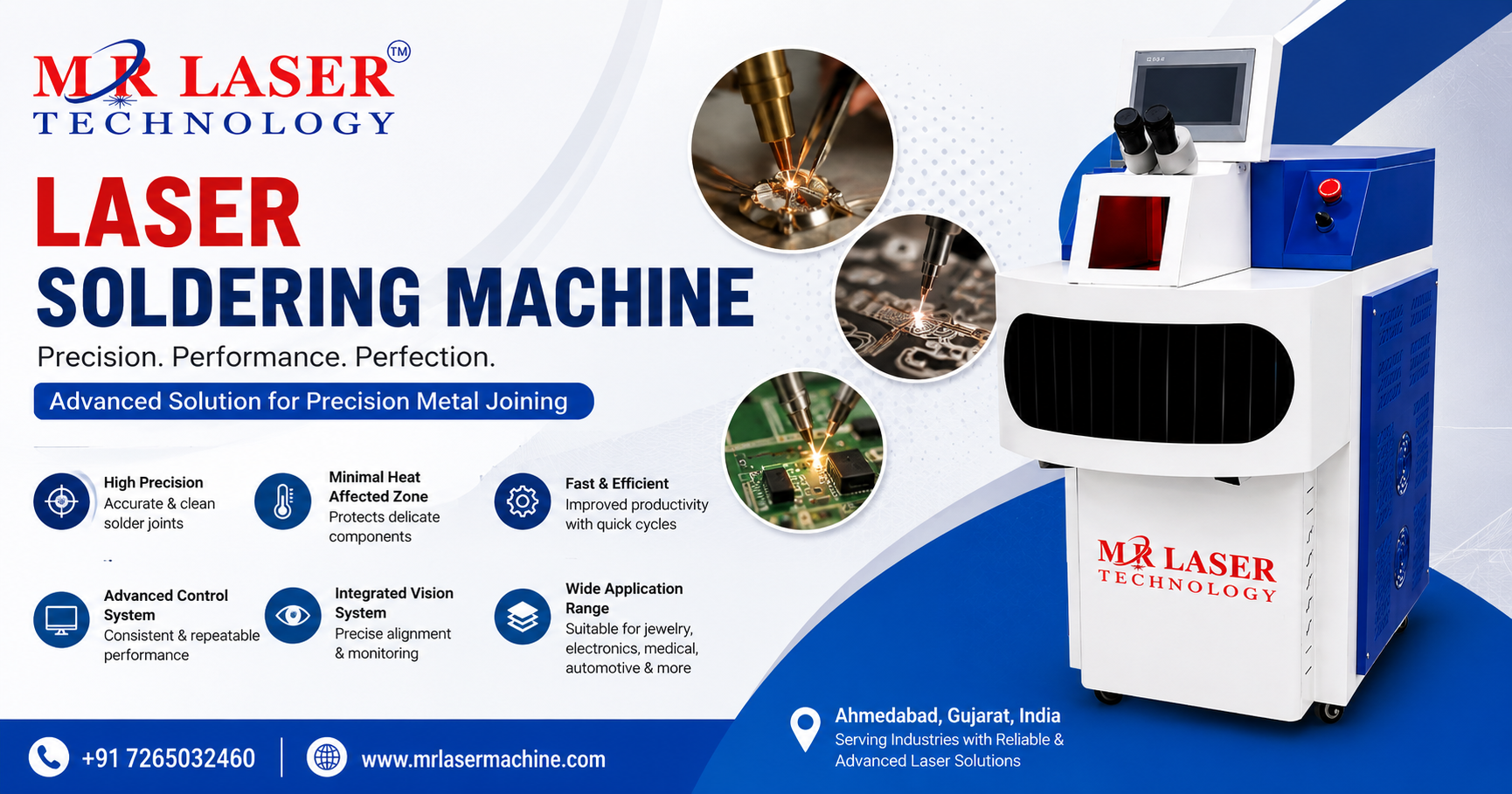
Laser Soldering Machine
Explore advanced laser soldering machines for precision metal joining in Ahmedabad, Gujarat. Understand features, applications, and selection criteria for relia
Why This Matters in Ahmedabad, Gujarat
Ahmedabad and the broader Gujarat region form a significant industrial and manufacturing hub in India. Sectors like jewelry manufacturing, electronics, automotive components, and general precision engineering thrive here, all requiring sophisticated joining processes. The demand for high-quality, efficient production tools is constant. Laser soldering machines address this need by offering a reliable solution for intricate work, enhancing productivity, and ensuring consistent quality across diverse manufacturing operations within the state.
What is a Laser Soldering Machine — Overview
A laser soldering machine utilizes a focused laser beam as a heat source to melt solder material, creating a strong metallurgical bond between components. Unlike conventional methods that heat the entire workpiece, laser soldering directs energy precisely to the joint area, minimizing thermal stress on surrounding materials. This process allows for extremely fine and clean solder joints, making it suitable for delicate parts, heat-sensitive components, and applications requiring high aesthetic standards. The system typically includes a laser source, optics for beam delivery, a work stage, and often a vision system for precise alignment and monitoring.
Key Features and Technical Specifications
- High Precision Beam Delivery: Focused laser spot for accurate heat application to small areas.
- Minimal Heat Affected Zone (HAZ): Reduces thermal impact on surrounding components and materials.
- Non-Contact Process: Eliminates mechanical stress and contamination risks associated with physical contact.
- Fast Heating and Cooling Cycles: Enables rapid processing and reduces overall production time.
- Automated Control Systems: Programmable parameters for consistent and repeatable soldering quality.
- Versatile Material Compatibility: Effective on various metals, including gold, silver, brass, and stainless steel.
- Integrated Vision System: Provides real-time monitoring and precise alignment for intricate tasks.
- Compact Footprint: Designed for integration into diverse workshop or production line environments.
Industrial Applications and Use Cases
- Jewelry Manufacturing: Precision soldering of gold, silver, and imitation jewelry components, including intricate designs and delicate settings.
- Electronics Assembly: Joining small electronic components, circuit board repair, and micro-soldering tasks where conventional methods are too coarse.
- Medical Device Production: Creating sterile, precise joints for instruments and implants, often with biocompatible materials.
- Automotive Electronics: Soldering sensors, connectors, and other delicate electronic parts within vehicle systems.
- Watchmaking and Fine Mechanics: Assembling miniature components with high aesthetic and functional requirements.
- Optical Component Assembly: Joining delicate lenses or fiber optic elements without thermal distortion.
- Aerospace Components: Precision soldering for critical parts where reliability and minimal thermal stress are paramount.
How to Choose the Right Laser Soldering Machine
Selecting an appropriate laser soldering machine involves evaluating several critical factors to ensure it aligns with your specific production needs. A careful assessment helps in making an informed investment that delivers long-term value and operational efficiency.
- Laser Power and Wavelength: Match the laser power and wavelength to the materials you intend to solder and the required joint strength.
- Work Area and Axis Capabilities: Consider the size of your workpieces and whether you need 2D or 3D soldering capabilities.
- Automation and Software Integration: Evaluate the level of automation, ease of programming, and compatibility with existing production systems.
- Safety Features: Verify that the machine includes comprehensive safety interlocks, enclosures, and fume extraction systems.
- Supplier Experience and Support: Choose a supplier with a proven track record in laser technology and reliable after-sales service.
- Certifications and Compliance: Ensure the machine meets relevant industry standards and safety regulations.
- Customization Options: Determine if the machine can be tailored to unique material handling or process requirements.
- Maintenance and Consumables: Understand the routine maintenance schedule and the availability and cost of replacement parts.
Quality Standards and Compliance
Adherence to established quality standards and compliance is crucial when investing in industrial equipment like a laser soldering machine. Buyers should verify that the machine and its manufacturer meet recognized international and national benchmarks. For instance, ISO 9001 certification indicates a commitment to quality management systems, ensuring consistent product and service delivery. CE marking signifies compliance with European health, safety, and environmental protection standards, which are often globally respected. Additionally, specific industry standards for laser safety (e.g., IEC 60825-1) are vital to protect operators and ensure safe operation. Verifying these certifications provides assurance of the machine's reliability, safety, and performance.
Why Company Experience and Capability Matters
The long-term performance and reliability of a laser soldering machine are significantly influenced by the manufacturer's experience and technical capability. A company with extensive experience, such as Mr Laser Technology with over 8 years in the field, understands the nuances of laser technology and its application in diverse industrial settings. This experience translates into robust machine design, precise manufacturing processes, and rigorous quality control measures. Mr Laser Technology's ISO & CE certifications further demonstrate their commitment to international quality standards. Their expert technical team is crucial for providing tailored solutions, offering customization based on specific material types and application requirements. Furthermore, a manufacturer's capability in providing reliable after-sales support, including installation, operator training, and ongoing maintenance, ensures smooth and efficient operations for the buyer. With over 1200 projects delivered across India, Mr Laser Technology has a demonstrated history of supporting clients effectively.
Installation, Maintenance and Care Tips
Proper installation and consistent maintenance are essential for maximizing the lifespan and performance of your laser soldering machine. Initial installation should always be performed by qualified technicians to ensure correct setup and calibration.
- Environmental Control: Operate the machine in a clean, dust-free environment with stable temperature and humidity to protect sensitive optical and electronic components.
- Regular Cleaning: Periodically clean the laser optics, protective windows, and work area to prevent contamination that can degrade beam quality and soldering performance.
- Cooling System Checks: Monitor the chiller unit for proper coolant levels and temperature. Ensure air filters are clean to maintain efficient cooling of the laser source.
- Software Updates: Keep the machine's operating software and firmware updated to benefit from performance enhancements and bug fixes.
- Calibration: Periodically check and recalibrate the laser beam alignment and focus to maintain precision soldering.
- Safety Protocols: Always follow established safety procedures, including wearing appropriate laser safety eyewear and ensuring all interlocks are functional.
- Consumable Management: Replace protective windows, nozzles, and other consumables as recommended by the manufacturer to prevent damage to internal components.
FREQUENTLY ASKED QUESTIONS
Laser soldering machines are highly versatile and can effectively join a wide range of metallic materials. This includes precious metals like gold, silver, and platinum, commonly used in jewelry. They also perform well on various industrial metals such as stainless steel, copper, brass, and certain alloys, making them suitable for electronics, medical devices, and other precision manufacturing applications. The specific material compatibility can depend on the laser's wavelength and power.
Laser soldering offers significantly higher precision compared to traditional methods like iron soldering or torch soldering. The focused laser beam allows for heat application to extremely small and specific areas, minimizing the heat-affected zone. This precision prevents damage to surrounding components, reduces material distortion, and enables the creation of very fine, clean, and aesthetically superior solder joints, which is crucial for delicate work.
Yes, specialized training is typically required to operate a laser soldering machine safely and effectively. Operators need to understand the machine's software, parameter settings, material handling, and safety protocols. A reputable supplier will provide comprehensive on-site training covering operational procedures, basic maintenance, and emergency protocols. This ensures operators can maximize the machine's capabilities while adhering to safety guidelines.
Safety is paramount when operating laser equipment. Key considerations include wearing certified laser safety eyewear to protect against laser radiation, ensuring the machine's interlocks and protective enclosures are functional, and implementing proper fume extraction systems to remove harmful soldering fumes. Operators should also be trained on emergency shutdown procedures and understand the laser classification of the machine to mitigate risks.
Many laser soldering machines are designed with integration in mind, allowing them to be incorporated into existing automated production lines. They often feature communication interfaces and compact designs that facilitate seamless integration with robotic arms, conveyor systems, and other manufacturing equipment. This capability enhances overall production efficiency and throughput, making them a valuable asset in modern industrial settings.
A laser soldering machine generally requires a structured maintenance schedule to ensure optimal performance and longevity. This typically includes daily checks of the work area and optics, weekly cleaning of filters and protective windows, and monthly or quarterly inspections of the cooling system and laser beam alignment. Annual professional servicing by a qualified technician is also recommended for thorough calibration and component checks.
Conclusion
The adoption of laser soldering machine technology represents a significant advancement for industries demanding high precision, efficiency, and consistent quality in metal joining. For businesses in Ahmedabad, Gujarat, this technology offers a robust solution for intricate work across sectors like jewelry, electronics, and automotive. When considering an investment, focusing on factors such as machine capabilities, adherence to quality standards, and the manufacturer's proven experience and support infrastructure is essential. Choosing a reliable partner ensures access to advanced technology, expert guidance, and dependable after-sales service, ultimately contributing to enhanced operational performance and product integrity.
Get In Touch
Mr Laser Technology