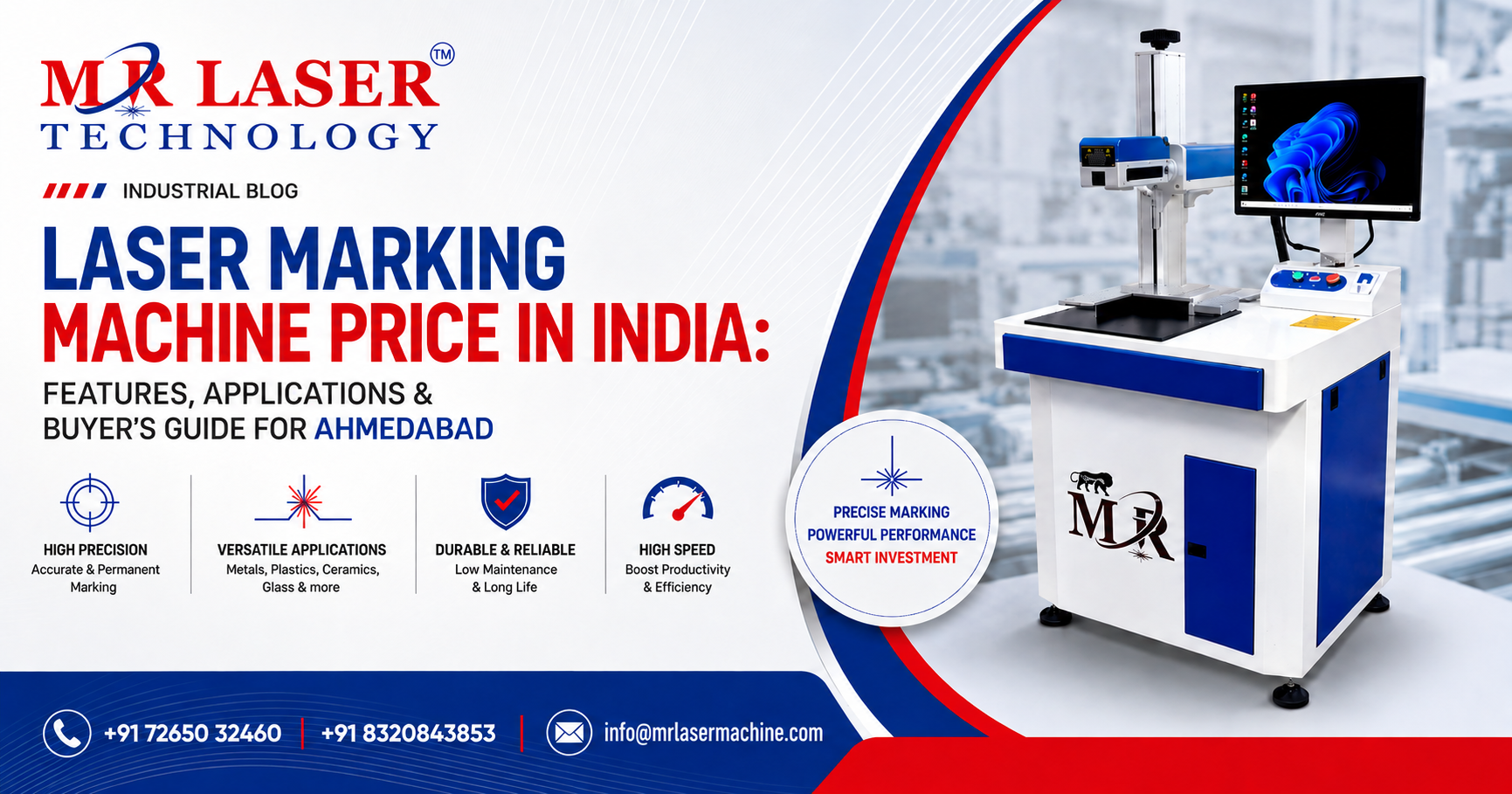
Laser Marking Machine Price in India: Features, Applications & Buyer's Guide
Find laser marking machine prices, features, and applications in India. Your guide to selecting the right machine in Ahmedabad.
What is a Laser Marking Machine? An Overview
A laser marking machine utilizes a focused beam of laser light to alter the surface of a material. This alteration can manifest in several ways: it might vaporize the surface to create a visible mark, change the color of the material through thermal effects, or engrave a permanent indentation. The process is highly controlled, allowing for intricate designs and precise placement of marks. These machines are versatile, capable of marking metals, plastics, ceramics, glass, and even some organic materials, making them indispensable tools in modern manufacturing.
Key Features and Technical Specifications
When evaluating laser marking machines, several technical specifications and features are critical for performance and suitability:
- Laser Source Type: Fiber, CO2, or UV lasers, each suited for different materials and applications.
- Wavelength: Determines how the laser interacts with the material (e.g., 1064nm for fiber, 10.6µm for CO2, 355nm for UV).
- Power Output (Watts): Influences marking speed and depth, typically ranging from 20W to 100W or more.
- Marking Area/Field Size: The maximum dimensions within which the machine can mark.
- Marking Speed (mm/s): How quickly the laser can traverse the marking area.
Beam Quality (M²): Affects the focus and precision of the laser spot.
- Repetition Rate (kHz): For pulsed lasers, this impacts marking speed and depth.
- Cooling System: Air-cooled or water-cooled, essential for machine longevity and consistent performance.
Industrial Applications and Use Cases
Laser marking machines find extensive application across numerous industries, providing essential functionality for product identification and customization:
- Automotive: Marking VIN numbers, part numbers, and logos on engine components, chassis, and accessories for traceability and anti-counterfeiting.
- Electronics: Engraving serial numbers, model numbers, and QR codes on circuit boards, semiconductors, and electronic casings.
- Jewelry: Precisely marking hallmarks, brand logos, and intricate designs on gold, silver, and other precious metals.
- Medical Devices: Marking unique device identifiers (UDI) and sterilization information on surgical instruments and implants, ensuring compliance and patient safety.
- Aerospace: Marking critical part identification and traceability codes on aircraft components, often under stringent quality control.
- Promotional Items: Personalizing pens, keychains, and other corporate gifts with logos and custom text.
- Tool Manufacturing: Marking tool identification, sizes, and manufacturer logos on metal tools for inventory and quality control.
- Packaging: Marking batch codes, expiry dates, and barcodes on various packaging materials for product tracking.
How to Choose the Right Laser Marking Machine
Selecting the appropriate laser marking machine requires careful consideration of your specific needs. Use this checklist to guide your decision:
- Material Compatibility: Identify the primary materials you need to mark (metals, plastics, glass, etc.) and choose a laser source (Fiber, CO2, UV) that is most effective for them.
- Application Requirements: Determine if you need deep engraving, surface marking, color change, or high-speed coding.
- Production Volume & Speed: Assess your daily or hourly marking needs to select a machine with adequate marking speed and power.
- Marking Area Size: Ensure the machine's working area is sufficient for your typical part sizes and marking layouts.
- Precision and Resolution: For intricate designs or small text, look for machines with high beam quality and fine spot size.
- Budget and Total Cost of Ownership: Consider not just the initial purchase price but also running costs, maintenance, and potential consumables.
- Supplier Support and Service: Evaluate the availability of technical support, training, spare parts, and after-sales service.
- Certifications and Compliance: Verify if the machine meets relevant industry standards and safety regulations.
Quality Standards and Compliance
Ensuring the quality and reliability of a laser marking machine is paramount for consistent performance and operational safety. Reputable manufacturers adhere to international quality standards. Look for machines that are CE certified, indicating compliance with European health, safety, and environmental protection standards. In India, while specific laser marking machine standards might be evolving, adherence to ISO certifications (like ISO 9001 for quality management systems) by the manufacturer is a strong indicator of their commitment to quality.
When selecting a supplier, inquire about their internal quality control processes during manufacturing. Understanding how they test their components and final assembled machines will provide confidence in their product's durability and performance. Verification of safety features, such as interlocks and emergency stop buttons, is also crucial for user protection.
Why Manufacturer Experience and Capability Matters
The experience and manufacturing capability of the company providing your laser marking machine significantly impact your investment's long-term value. A manufacturer with a proven track record, like MR Laser Technology, demonstrates a deep understanding of laser technology and its practical applications. Their capability in precision manufacturing ensures that each machine is built to exacting standards, utilizing high-quality components.
This expertise translates into machines that offer consistent marking quality, higher uptime, and greater reliability. A company that invests in skilled engineers and technicians can offer robust design, effective customization to meet unique industrial needs, and thorough quality control. Furthermore, their experience in after-sales support, including installation, training, and prompt maintenance, is vital for ensuring your operations run smoothly and efficiently without prolonged downtime.
Installation, Maintenance, and Care Tips
Proper installation and regular maintenance are key to maximizing the lifespan and performance of your laser marking machine.
- Installation: Ensure the machine is installed on a stable, level surface in a well-ventilated area, away from excessive dust or humidity. Connect it to a stable power source and ensure proper grounding. Follow the manufacturer's guidelines for initial setup and calibration.
- Daily Checks: Before operation, visually inspect the machine for any loose connections or obvious damage. Ensure the exhaust system is functioning correctly to remove fumes.
- Lens and Mirror Cleaning: The optical components (lenses and mirrors) are critical for beam quality. Clean them regularly using specialized optical cleaning solutions and lint-free wipes. Avoid touching the lenses with bare hands.
- Ventilation System: Regularly check and clean the exhaust and filtration system to prevent buildup, which can reduce efficiency and pose a safety hazard.
- Software Updates: Keep the machine's control software updated to benefit from performance improvements and bug fixes.
- Scheduled Maintenance: Adhere to the manufacturer's recommended maintenance schedule for component checks, lubrication, and potential part replacements.
Frequently Asked Questions
Laser marking machines can mark a wide array of materials, including most metals (steel, aluminum, brass, gold, silver), plastics, ceramics, glass, wood, leather, and some fabrics. The specific type of laser (Fiber, CO2, UV) will determine the optimal material compatibility.
The laser beam interacts with the material's surface, causing a physical or chemical change. This can involve vaporizing material to create an engraved mark, annealing to change color, foaming to create a raised mark, or ablating to remove a surface layer.
Laser marking typically involves altering the surface of the material without removing significant material, often resulting in a color change or shallow surface modification. Laser engraving, on the other hand, removes material to create a deeper, three-dimensional cavity or cut into the material.
The price is influenced by several factors, including the type and power of the laser source, the size of the marking area, the speed and precision capabilities, the brand reputation, included features (like rotary attachments or automation), and after-sales support.
Routine maintenance includes cleaning optical components (lenses, mirrors), checking and cleaning the exhaust system, ensuring proper ventilation, and performing software updates. Periodic maintenance as per the manufacturer's schedule involves checking electrical connections, cooling systems, and other mechanical parts.
Yes, while the machines are designed for industrial use, proper operation requires training. This ensures the operator understands the machine's controls, safety procedures, software interface, and how to achieve optimal marking results for different materials and applications.
Conclusion
Investing in a laser marking machine is a strategic decision that can significantly enhance your manufacturing capabilities in Ahmedabad and across India. By understanding the core technology, its diverse applications, and the critical factors influencing machine selection and pricing, you can make a choice that aligns with your production goals. Prioritizing a reputable manufacturer with strong technical expertise, a commitment to quality standards, and reliable after-sales support, such as MR Laser Technology, ensures you receive a durable, high-performance solution tailored to your specific industrial needs.
Get In Touch
Mr Laser Technology