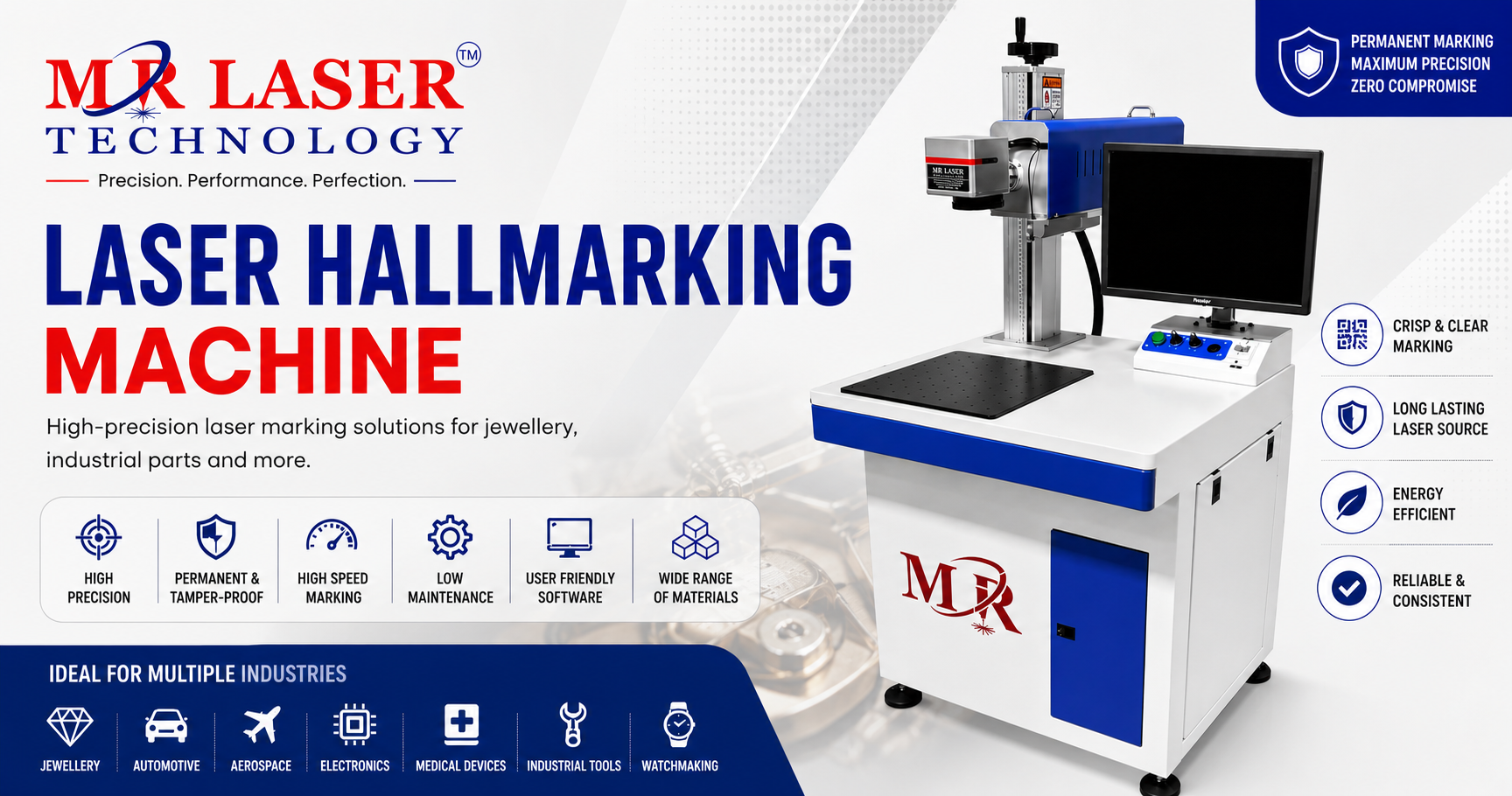
Laser Hallmarking Machine
Discover high-precision laser hallmarking machines in Ahmedabad by MR Laser Technology. Ensure accurate, permanent marking for jewellery and industrial parts.
What is a Laser Hallmarking Machine? — Overview
A laser hallmarking machine utilizes a focused beam of laser light to engrave or mark information onto a material's surface. This process creates a permanent, high-resolution mark without physically touching the material, thus preventing damage or deformation. The laser beam is precisely controlled by computer software, allowing for the creation of complex designs, serial numbers, logos, purity marks, and date codes. These machines are particularly adept at marking hard materials like metals, including gold, silver, platinum, stainless steel, and various industrial alloys, as well as some plastics.
Key Features and Technical Specifications
- High-Resolution Marking: Capable of producing extremely fine details and sharp edges for intricate designs and small text.
- Adjustable Laser Power: Allows for precise control over marking depth and intensity, suitable for various material thicknesses and types.
- Variable Marking Speed: Optimized for high-throughput production environments, ensuring efficiency without compromising mark quality.
- Integrated Safety Features: Designed with enclosed workstations and safety interlocks to protect operators.
- User-Friendly Interface: Intuitive software for easy design input, parameter setting, and job management.
- Wide Material Compatibility: Effectively marks a broad range of metals and some non-metals.
- Compact Footprint: Designed to fit into existing production lines or workshops with limited space.
- Long Lifespan Laser Source: Utilizes durable laser sources (e.g., fiber lasers) for extended operational life and minimal maintenance.
Industrial Applications and Use Cases
- Jewellery Industry: Marking purity marks (e.g., 22K, 18K, 925), maker's marks, serial numbers, and intricate logos on rings, necklaces, bracelets, and earrings.
- Automotive Sector: Engraving part numbers, VIN codes, and manufacturing dates on engine components, chassis parts, and tools for traceability.
- Aerospace: Marking critical identification data on aircraft components, ensuring compliance with strict industry standards.
- Electronics Manufacturing: Laser marking serial numbers, model numbers, and QR codes on microchips, circuit boards, and device casings.
- Medical Devices: Permanent marking of identification and sterilization information on surgical instruments and implants.
- Promotional Items: Customizing metal pens, keychains, and other corporate gifts with logos and text.
- Industrial Tools: Marking brand names, model numbers, and calibration dates on tools for inventory management and quality assurance.
- Watchmaking: Engraving serial numbers, brand logos, and intricate designs on watch cases and components.
How to Choose the Right Laser Hallmarking Machine
Selecting the appropriate laser hallmarking machine involves considering several critical factors to ensure it meets your specific operational needs and budget.
- Material Type and Purity: Confirm the machine's compatibility with the specific metals and alloys you intend to mark, especially precious metals like gold and silver.
- Marking Requirements: Define the complexity, size, and depth of the marks needed (e.g., simple purity marks vs. intricate logos, shallow vs. deep engraving).
- Production Volume: Assess your daily or hourly marking output requirements to determine the necessary speed and efficiency of the machine.
- Laser Source Type: Understand the differences between fiber, CO2, and UV lasers and select one suited for your primary materials and desired mark quality. Fiber lasers are generally preferred for metals.
- Accuracy and Resolution: Verify the machine's precision capabilities (e.g., ±0.01mm accuracy) to ensure it can achieve the required detail.
- Software and Control System: Evaluate the ease of use, flexibility, and features of the machine's control software for design import and parameter management.
- Supplier Support and Service: Consider the availability of installation, training, technical support, and spare parts from the manufacturer.
- Compliance and Certifications: Ensure the machine meets relevant industry standards and safety regulations.
Quality Standards and Compliance
For any industrial machine, especially one used for critical applications like hallmarking, adherence to quality standards and compliance is paramount. Reputable laser hallmarking machines are often manufactured in accordance with international standards such as ISO 9001 for quality management systems. Certifications like CE marking indicate that the product meets European health, safety, and environmental protection requirements. In India, while specific BIS standards for laser hallmarking machines might be evolving, manufacturers should demonstrate robust internal quality control processes. Buyers should inquire about the machine's build quality, the reliability of its components (like the laser source and galvanometer scanners), and the safety features implemented. Verifying the manufacturer's commitment to quality through their certifications and testing procedures is a crucial step before making a purchase.
Why MR Laser Technology's Experience and Capability Matters
At MR Laser Technology, our extensive experience in designing and manufacturing advanced laser machines forms the bedrock of our offerings. Based in Ahmedabad, we have honed our expertise over years of dedicated research and development, focusing on delivering high-precision, reliable solutions. Our manufacturing process adheres to stringent quality control measures, ensuring that every laser hallmarking machine leaving our facility meets exacting standards. Our technical team comprises skilled engineers with deep knowledge of laser technology and its applications, enabling us to provide customized solutions tailored to your unique requirements. We understand the critical nature of hallmarking for industries like jewellery and precision manufacturing, and our commitment to robust construction, advanced technology, and thorough testing ensures you receive a machine that performs consistently and reliably.
Installation, Maintenance, and Care Tips
Proper installation, regular maintenance, and careful operation are key to maximizing the lifespan and performance of your laser hallmarking machine.
- Installation: Ensure the machine is installed on a stable, level surface in a clean, dry environment with adequate ventilation. Connect it to a stable power supply and ensure proper grounding. Professional installation by MR Laser Technology's technicians is recommended to guarantee correct setup.
- Daily Checks: Before operation, check that the laser lens is clean and free from dust or debris. Ensure the exhaust system is functioning correctly to remove fumes.
- Cleaning: Regularly clean the machine's exterior surfaces with a soft, dry cloth. The laser lens and mirrors should be cleaned periodically using specialized optical cleaning solutions and lint-free wipes, following manufacturer guidelines.
- Software Updates: Keep the machine's control software updated to benefit from performance enhancements and bug fixes.
- Ventilation and Fume Extraction: Always operate the machine with the fume extraction system running to remove harmful particles and gases generated during the marking process.
- Cooling System: If your machine has a water-cooling system, monitor the coolant level and temperature regularly to prevent overheating of the laser source.
- Professional Servicing: Schedule periodic maintenance checks with our technical team to ensure all components are functioning optimally and to address any potential issues proactively.
Frequently Asked Questions
A laser hallmarking machine is highly versatile, capable of marking a wide array of metals including gold, silver, platinum, stainless steel, brass, copper, and aluminum. It can also mark certain plastics and coated materials, depending on the laser type and settings.
Laser hallmarking creates a permanent, high-resolution mark that is difficult to alter or remove without damaging the material. This allows for the precise application of purity marks, maker's marks, and unique serial numbers, making it a reliable method for verifying authenticity and tracking products.
Yes, laser hallmarking is a non-contact process, meaning the laser beam marks the surface without physically touching it. This minimizes the risk of material deformation or damage, making it exceptionally safe for delicate and valuable items like jewellery.
Modern laser sources, particularly fiber lasers commonly used in these machines, are designed for longevity. They typically offer tens of thousands of operating hours, often lasting for many years of regular industrial use before requiring replacement.
Absolutely. Laser hallmarking machines are controlled by sophisticated software that allows for the import and precise engraving of complex vector graphics, logos, intricate patterns, and detailed text, providing a high degree of customization.
MR Laser Technology provides comprehensive after-sales support, including installation, operator training, technical assistance, and readily available spare parts. Our dedicated team ensures your machine operates efficiently and reliably throughout its lifecycle.
Conclusion
For businesses in Ahmedabad and across Gujarat seeking to enhance product authenticity, ensure regulatory compliance, and improve operational efficiency, a laser hallmarking machine is an indispensable tool. MR Laser Technology offers robust, high-precision solutions designed to meet the demanding requirements of the jewellery and industrial sectors. By understanding your specific material needs, marking requirements, and production volumes, you can select a machine that delivers consistent, high-quality results. Partnering with an experienced manufacturer like MR Laser Technology ensures you receive not only a superior machine but also the expert support necessary for long-term success.
Get In Touch
Mr Laser Technology