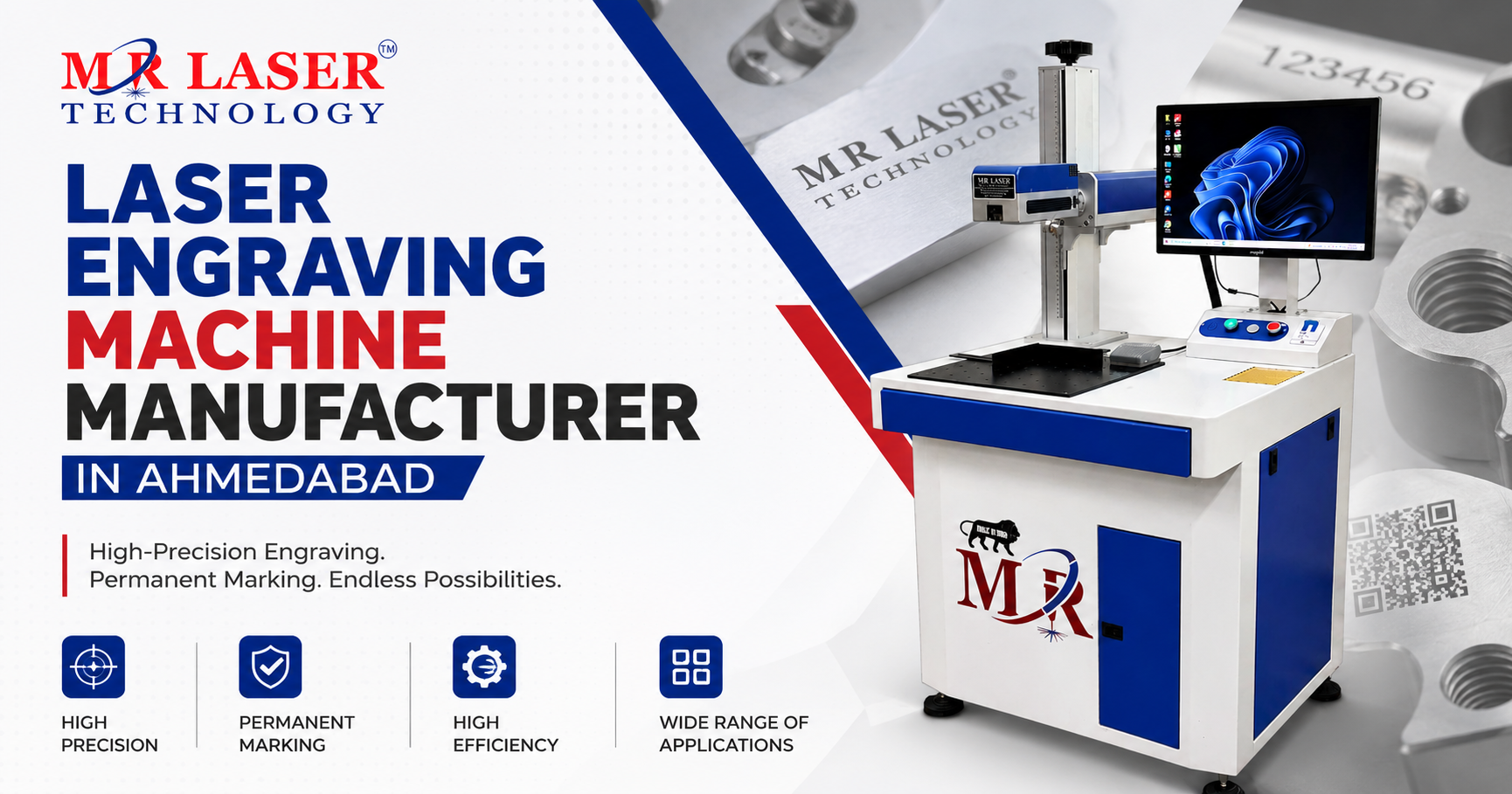
Laser Engraving Machine Manufacturer
Expert laser engraving machine manufacturer in Ahmedabad. Discover high-precision, reliable solutions for your industrial marking needs.
What is a Laser Engraving Machine? — Overview
A laser engraving machine utilizes a focused beam of light to alter the surface of a material. This process works by either vaporizing material to create depth (engraving) or by changing the surface's color or texture without removing material (marking). The laser's energy precisely removes or modifies the material according to a digital design. This allows for incredibly detailed and permanent marks on a wide array of substances, including metals, plastics, wood, glass, and ceramics.
Key Features and Technical Specifications
When evaluating laser engraving machines, several technical aspects are crucial for ensuring performance and suitability for your specific applications.
- Laser Source Power: Typically ranging from 20W to 100W or more, this determines the speed and depth of engraving, especially on harder materials.
- Wavelength: Common wavelengths like 1064nm (Fiber lasers) are ideal for metals and some plastics, while others like 10.6µm (CO2 lasers) are better suited for non-metals.
- Marking Area/Field Size: This defines the maximum dimensions of the workpiece that can be engraved in a single pass, ranging from small areas for intricate parts to larger fields for broader applications.
- Resolution and Accuracy: High resolution ensures fine details and sharp edges, while accuracy (often measured in mm or µm) guarantees precise placement of marks.
Beam Quality (M²): A lower M² value indicates a more focused and efficient laser beam, leading to finer engraving and faster processing.
- Cooling System: Effective cooling (air or water) is vital for maintaining laser stability and longevity during continuous operation.
- Software Interface: User-friendly software with intuitive controls and compatibility with common design file formats (like DXF, AI, PLT) is essential for ease of use.
- Z-Axis Adjustment: A motorized or manual Z-axis allows for easy adjustment of the focal distance, accommodating workpieces of varying heights and ensuring optimal focus.
Industrial Applications and Use Cases
Laser engraving machines offer versatile solutions across numerous industrial sectors, providing permanent and high-quality marking.
- Automotive: Engraving VIN numbers, part numbers, and logos on engine components, dashboards, and chassis for traceability and branding.
- Electronics: Marking serial numbers, model numbers, and QR codes on circuit boards, casings, and components for inventory management and anti-counterfeiting.
- Jewelry: Creating intricate designs, monograms, and hallmarks on rings, pendants, and watches with exceptional precision.
- Medical Devices: Marking sterilization indicators, serial numbers, and logos on surgical instruments and implants, ensuring compliance and traceability.
- Aerospace: Engraving part identification, material traceability codes, and performance data on critical aerospace components where durability is key.
- Promotional Items & Gifts: Personalizing pens, keychains, trophies, and other corporate gifts with custom logos and messages.
- Tool & Die Making: Marking identification codes, sizes, and manufacturer marks on tools and dies for easy identification and management.
- Signage and Plaques: Creating durable and detailed text and graphics for industrial signs, nameplates, and commemorative plaques.
How to Choose the Right Laser Engraving Machine
Selecting the appropriate laser engraving machine involves considering your specific operational needs and future requirements.
- Material Compatibility: Identify the primary materials you will be engraving (metals, plastics, wood, etc.) as this dictates the type of laser source needed (e.g., Fiber for metals, CO2 for non-metals).
- Application Requirements: Determine the type of marking needed – deep engraving, surface marking, serialization, or decorative patterns. This influences the required laser power and beam quality.
- Production Volume & Speed: Assess your throughput needs. Higher power lasers and faster scanning galvos are necessary for high-volume production environments.
- Accuracy and Detail: For intricate designs or small components, prioritize machines with high resolution and precise beam control.
- Workpiece Size and Shape: Consider the dimensions of the items you need to engrave and whether they require a standard or custom-sized work area.
- Budget and Total Cost of Ownership: Beyond the initial purchase price, factor in operational costs, maintenance, and potential consumables.
- Supplier Support and Service: Evaluate the manufacturer's reputation for after-sales support, training, spare parts availability, and technical assistance.
- Certifications and Compliance: Ensure the machine meets relevant safety and quality standards for your industry.
Quality Standards and Compliance
For any industrial machinery, adherence to recognized quality standards and compliance with regulatory requirements is non-negotiable. Manufacturers like MR Laser Technology prioritize these aspects to ensure their machines are safe, reliable, and perform to expectations. Look for certifications such as ISO 9001 for quality management systems, and CE marking, which indicates conformity with health, safety, and environmental protection standards within the European Economic Area. These certifications are not just labels; they represent a commitment to rigorous manufacturing processes, quality control, and product safety. Verifying these credentials with a potential supplier provides confidence in the machine's build quality and operational integrity.
Why MR Laser Technology's Experience and Capability Matters
With over 8 years of dedicated experience in laser technology, MR Laser Technology has established itself as a trusted manufacturer in Ahmedabad. Our expertise is built on a foundation of understanding diverse industrial needs and translating them into robust, high-performance laser engraving machines. We focus on precision manufacturing processes, utilizing advanced laser sources and components to ensure consistent quality and reliability. Our technical team comprises skilled engineers who are adept at machine design, customization, and ensuring optimal performance.
We pride ourselves on our stringent quality control measures throughout the manufacturing cycle, from component selection to final testing. This meticulous approach allows us to offer machines that meet demanding industrial standards. Furthermore, our capability extends to providing customized solutions tailored to unique client applications, ensuring you receive a machine that perfectly fits your operational workflow. Our commitment to delivering reliable machines and comprehensive after-sales support underscores our dedication to customer satisfaction and long-term partnerships.
Installation, Maintenance, and Care Tips
Proper installation, regular maintenance, and careful operation are key to maximizing the lifespan and performance of your laser engraving machine.
- Installation: Ensure the machine is installed on a stable, level surface in a well-ventilated area, away from excessive dust or humidity. Connect it to a stable power supply and ensure proper grounding. Follow the manufacturer's guidelines for initial setup and alignment.
- Daily Checks: Before operation, inspect the laser lens and mirrors for cleanliness. Ensure all safety interlocks are functioning correctly. Check coolant levels if your machine uses a water-cooling system.
- Regular Cleaning: Keep the machine's interior and exterior clean, especially the optical path components (lenses, mirrors) which should be cleaned with specialized optical cleaning solutions and lint-free wipes. Regularly clean the exhaust system to prevent buildup.
- Software Updates: Keep your machine's control software updated to benefit from performance enhancements and bug fixes.
- Lubrication: Periodically lubricate moving parts like guide rails and lead screws according to the manufacturer's recommendations to ensure smooth operation.
- Professional Servicing: Schedule periodic professional maintenance checks with your supplier. This often includes calibration, inspection of critical components, and performance testing to catch potential issues early.
- Operator Training: Ensure all operators are thoroughly trained on the machine's functions, safety procedures, and basic troubleshooting.
Frequently Asked Questions
Laser engraving machines are versatile and can engrave a wide range of materials including metals (steel, aluminum, brass, gold, silver), plastics (ABS, acrylic, POM), wood, leather, glass, ceramic, stone, and even some fabrics. The specific material compatibility often depends on the type of laser source used.
Laser engraving typically involves removing material to create a recessed mark, resulting in a deeper and more textured finish. Laser marking, on the other hand, often modifies the surface color or texture without significant material removal, creating a shallower, often smoother mark. Both processes use a laser beam but differ in their intensity and effect on the material.
The lifespan of a laser engraving machine depends on its build quality, components, usage, and maintenance. High-quality machines from reputable manufacturers, with proper care and regular maintenance, can last for many years, often with the laser source itself having a rated operational life of tens of thousands of hours.
Regular maintenance includes cleaning optical components (lenses, mirrors), ensuring proper cooling system function, lubricating moving parts, keeping the machine clean, and performing software updates. Periodic professional servicing by the manufacturer is also recommended for calibration and inspection of critical systems.
Yes, absolutely. Laser engraving machines are controlled by digital designs. You can import your custom logos, artwork, text, or any vector or raster image files into the machine's software for precise engraving. This makes them ideal for personalization and branding.
Key factors include the types of materials you'll be working with, the required precision and detail, your production volume, the size of the items to be engraved, and the level of after-sales support offered by the manufacturer. It's also important to consider the supplier's experience and reputation in the local market.
Conclusion
For businesses in Ahmedabad seeking to enhance their product traceability, branding, or customization capabilities, a high-quality laser engraving machine is an invaluable asset. The precision, permanence, and versatility offered by these machines can significantly elevate product quality and operational efficiency. When selecting a manufacturer, prioritize experience, technical expertise, adherence to quality standards, and robust after-sales support. MR Laser Technology, with its deep understanding of industrial needs and commitment to delivering reliable, high-performance laser engraving solutions, stands ready to partner with your business to achieve your manufacturing goals.
---
Get In Touch
Mr Laser Technology