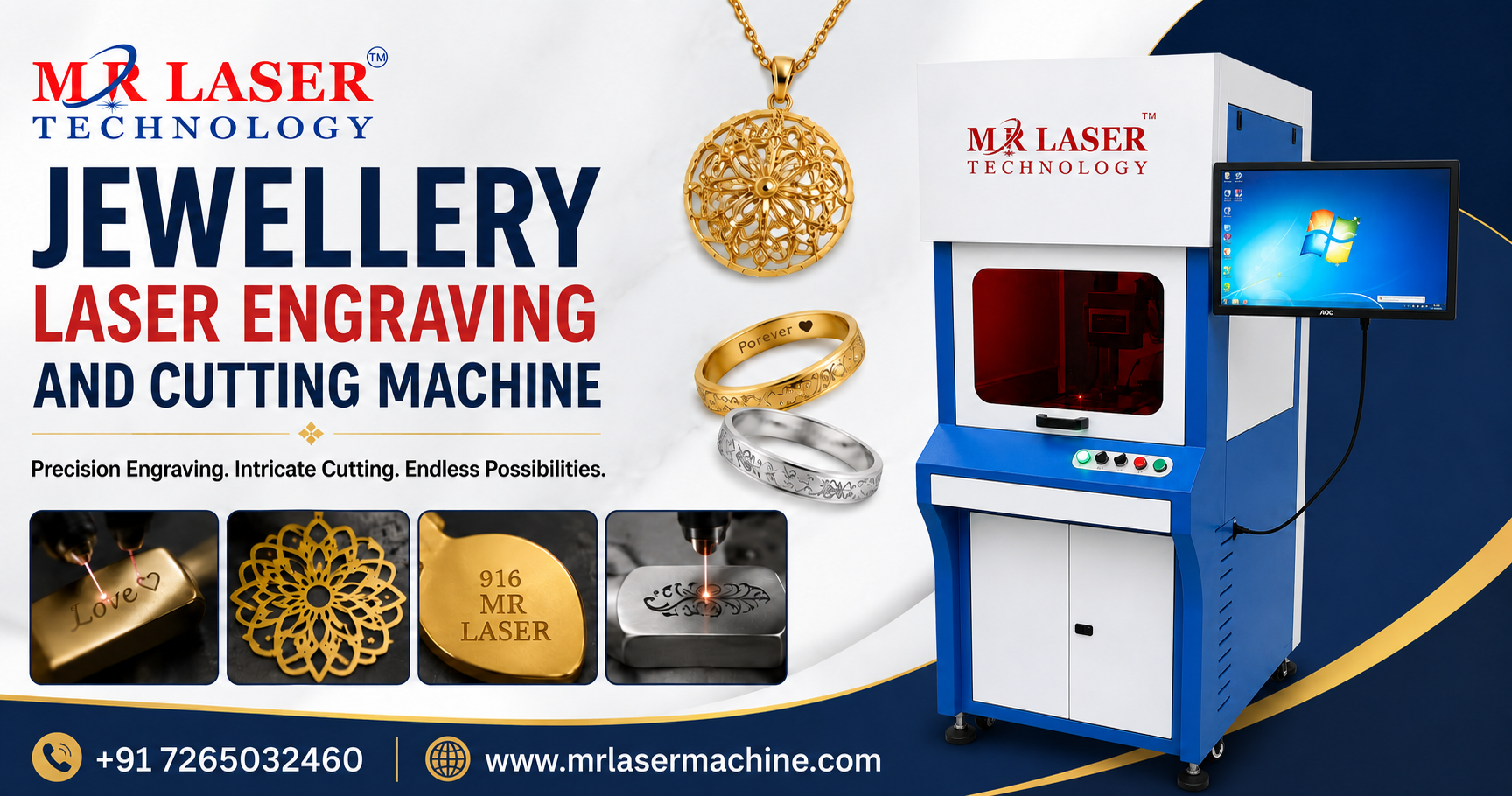
Jewellery Laser Engraving and Cutting Machine
Explore precision jewellery laser engraving and cutting machines for gold, silver, and brass in Ahmedabad, Gujarat. Enhance design and production efficiency.
Why This Matters in Ahmedabad, Gujarat
Ahmedabad, situated in Gujarat, stands as a significant hub for jewellery manufacturing and trade within India. The region's rich heritage in craftsmanship, combined with a growing demand for both traditional and contemporary designs, necessitates continuous innovation in production techniques. Jewellery businesses in Ahmedabad are increasingly seeking ways to enhance productivity, reduce material loss, and offer highly customized products. Integrating modern laser engraving and cutting technology allows local manufacturers to meet these specific industry needs, ensuring finer details and faster turnaround times for their diverse clientele.
What is a Jewellery Laser Engraving and Cutting Machine — Overview
A jewellery laser engraving and cutting machine utilizes a focused laser beam to precisely modify or separate materials. For engraving, the laser removes a thin layer from the surface, creating intricate patterns, text, or images without physical contact. In cutting applications, the laser beam melts, vaporizes, or burns through the material, producing clean, accurate cuts with minimal heat-affected zones. These machines are specifically optimized for the delicate nature and high value of precious metals like gold, silver, platinum, and brass, as well as various non-metal components used in fashion jewellery.
Key Features and Technical Specifications
High-precision fiber or UV laser source for fine detail work.
Small spot size and controlled beam quality for intricate designs.
High-speed galvanometer scanning system for rapid processing.
Minimal material ablation and waste, crucial for precious metals.
Non-contact processing prevents tool wear and material deformation.
Advanced software interface for design import and parameter control.
Integrated vision system for precise alignment and positioning.
Compact footprint suitable for jewellery workshop environments.
Industrial Applications and Use Cases
- Custom Jewellery Design: Engraving names, dates, messages, or intricate patterns on rings, pendants, bracelets, and watches.
- Intricate Filigree Cutting: Producing delicate and complex filigree designs in gold and silver sheets with high accuracy.
- Hallmarking and Branding: Precisely marking logos, purity stamps, and serial numbers on finished jewellery pieces.
- Personalized Gifts: Creating unique, engraved jewellery items for special occasions and corporate gifting.
- Prototyping and Sample Production: Rapidly producing new jewellery designs and samples for client approval.
- Repair and Restoration: Carefully removing material or engraving details during the repair of antique or damaged jewellery.
- Cutting Gemstone Settings: Fabricating precise settings and components for various gemstones.
- Fashion Jewellery Production: Engraving and cutting acrylic, wood, or other non-metal materials for contemporary designs.
How to Choose the Right Jewellery Laser Engraving and Cutting Machine
Selecting the appropriate laser machine involves evaluating several critical factors to ensure it aligns with your production needs and business objectives. A careful assessment will help you invest in technology that delivers long-term value and operational efficiency.
- Material Compatibility: Verify the machine's ability to process your primary materials, such as gold, silver, platinum, or brass, and any non-metals.
- Precision and Resolution: Assess the minimum feature size and engraving depth the machine can consistently achieve for intricate designs.
- Laser Source Type and Power: Determine if a fiber laser (for metals) or a UV laser (for heat-sensitive materials and fine marks) with adequate power is suitable for your applications.
- Software and User Interface: Look for intuitive software that supports common design file formats and offers comprehensive control over laser parameters.
- Safety Features: Ensure the machine includes robust safety enclosures, interlocks, and emergency stops to protect operators.
- Supplier Experience and Support: Choose a supplier with a proven track record in laser technology and reliable after-sales service, including training and technical assistance.
- Customization Options: Consider if the machine can be configured with specific work area sizes, rotary attachments, or automation features to match your workflow.
Quality Standards and Compliance
Adherence to established quality standards and compliance certifications is paramount when investing in industrial machinery. For jewellery laser engraving and cutting machines, buyers should look for certifications such as ISO (International Organization for Standardization) for quality management systems and CE marking, indicating conformity with European health, safety, and environmental protection standards. These certifications confirm that the machine has undergone rigorous testing and meets specific operational and safety benchmarks. Verifying these standards ensures the equipment is built to reliable specifications, operates safely, and delivers consistent performance, protecting both your investment and your workforce.
Why Company Experience and Capability Matters
The long-term success of integrating a jewellery laser engraving and cutting machine into your operations depends significantly on the experience and capability of your chosen supplier. Mr Laser Technology, with over 8 years of experience in laser technology, understands the nuances of precision manufacturing. Our team is ISO & CE Certified, reflecting a commitment to international quality standards. We have successfully delivered over 1200 projects across India, demonstrating extensive practical application knowledge.
Our approach begins with a thorough understanding of client requirements, material types, and specific applications. This allows us to design and configure machines with appropriate power selection and technical specifications, ensuring a tailored solution. We emphasize precision manufacturing using advanced laser technology and perform strict quality testing to guarantee high performance and reliability. Furthermore, our dedicated technical team provides comprehensive on-site installation, operator training, and complete after-sales support, ensuring smooth and efficient operations for your jewellery manufacturing business.
Installation, Maintenance and Care Tips
Proper installation and consistent maintenance are vital for maximizing the lifespan and performance of your jewellery laser engraving and cutting machine. Following recommended care procedures helps ensure continuous precision and efficiency.
- Site Preparation: Install the machine in a clean, temperature-controlled environment with adequate ventilation to manage fumes and dissipate heat. Ensure a stable power supply free from fluctuations.
- Initial Calibration: Upon installation, ensure the laser beam is precisely aligned and calibrated according to the manufacturer's guidelines for optimal cutting and engraving accuracy.
- Regular Cleaning: Routinely clean the laser optics, focusing lens, and protective windows using appropriate cleaning solutions and lint-free wipes to prevent dust and debris from affecting beam quality.
- Cooling System Check: Monitor the chiller unit's water level and temperature regularly. Replace the cooling water as recommended by the manufacturer to prevent overheating of the laser source.
- Software and Firmware Updates: Keep the machine's operating software and firmware updated to benefit from performance enhancements, new features, and security patches.
- Operator Training: Ensure all operators are thoroughly trained on the machine's operation, safety protocols, and basic troubleshooting to prevent errors and ensure safe usage.
- Preventive Maintenance: Schedule periodic professional maintenance checks to inspect critical components, verify alignments, and address any potential wear and tear before it impacts performance.
Frequently Asked Questions
Jewellery laser engraving and cutting machines are highly versatile, capable of processing a wide range of materials commonly used in the industry. This includes precious metals such as gold, silver, platinum, and palladium, as well as non-precious metals like brass and copper. Many machines can also work with non-metal materials like acrylic, wood, and certain plastics for fashion jewellery or prototyping.
Laser engraving is a non-contact process that uses a focused laser beam to vaporize or melt material from the surface, creating a permanent mark. Traditional engraving, in contrast, involves a physical tool that cuts into the material. Laser engraving offers superior precision for intricate designs, minimal material distortion, and the ability to engrave on delicate or irregular surfaces without clamping.
Modern jewellery laser cutting machines are designed with multiple safety features to ensure operator protection. These typically include fully enclosed work areas, interlock systems that prevent operation when the enclosure is open, emergency stop buttons, and exhaust systems to remove fumes. Proper training and adherence to safety protocols are essential for safe operation.
These machines offer exceptional precision, often achieving tolerances down to a few microns (0.001 mm). This level of accuracy allows for the creation of extremely fine details, intricate patterns, and precise cuts that are difficult, if not impossible, to achieve with traditional methods. The exact precision can vary based on the laser source, machine calibration, and material properties.
The time required to engrave or cut a jewellery piece depends on several factors, including the complexity of the design, the material type and thickness, and the laser power settings. Simple engravings might take seconds, while highly intricate cutting or deep engraving on larger pieces could take several minutes. Laser machines significantly reduce production times compared to manual processes.
The lifespan of a laser source, particularly a fiber laser, in a jewellery laser engraving and cutting machine is quite substantial. Many fiber laser sources are rated for 100,000 hours or more of operation, which translates to many years of continuous use under normal operating conditions. Regular maintenance and proper environmental controls help extend the life of the laser source.
Conclusion
The integration of a jewellery laser engraving and cutting machine represents a significant advancement for manufacturers and artisans in Ahmedabad and beyond. These machines offer the precision, speed, and versatility required to meet the demands of modern jewellery design and production, from intricate filigree work to personalized engravings on precious metals. Choosing the right equipment involves a careful evaluation of technical specifications, material compatibility, and the support capabilities of the supplier. By focusing on quality standards and partnering with an experienced provider, businesses can enhance their operational efficiency, expand their creative offerings, and maintain a competitive edge in the dynamic jewellery market.
Get In Touch
Mr Laser Technology