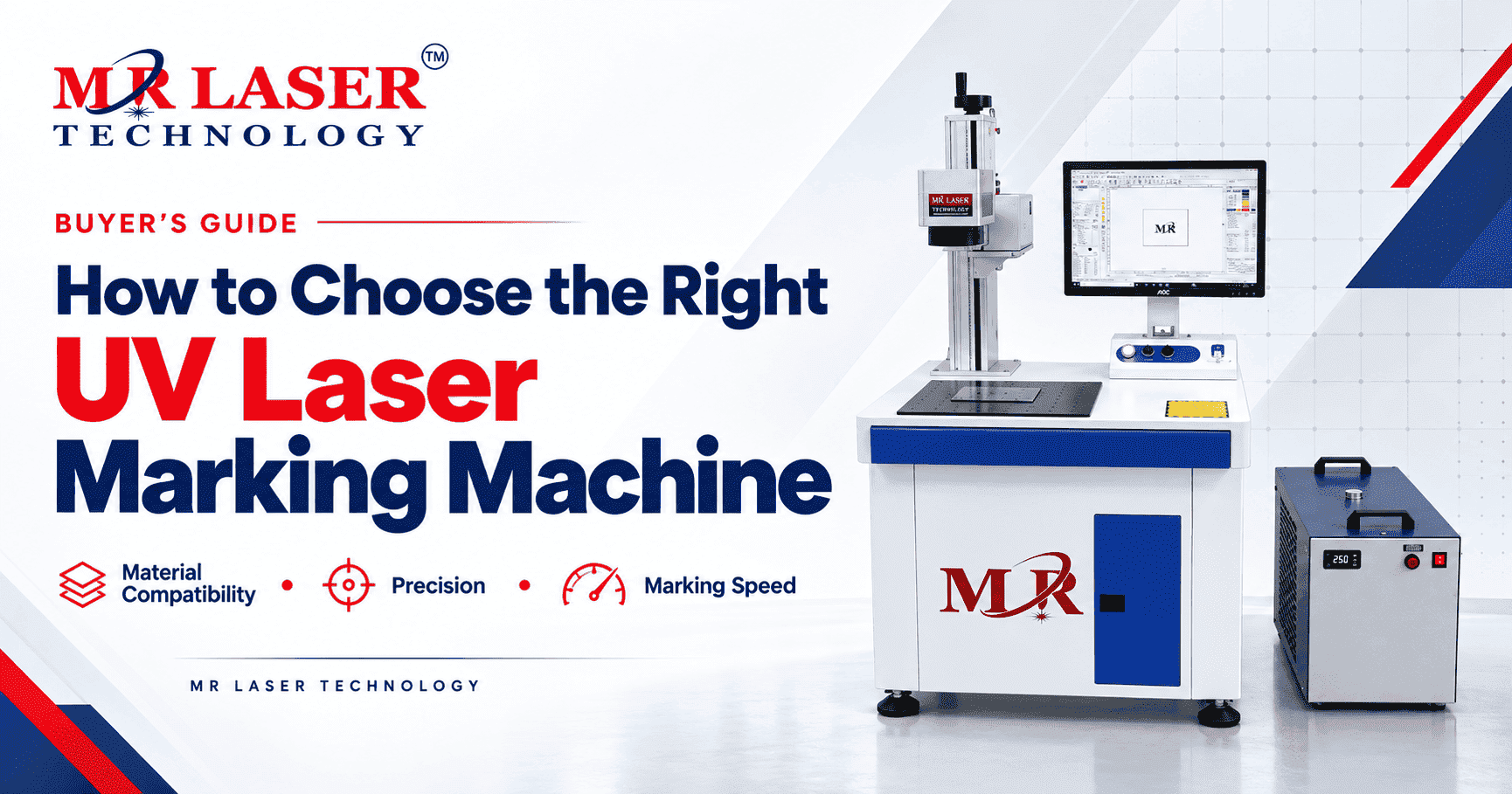
How to Choose the Right UV Laser Marking Machine
Selecting the appropriate UV laser marking machine is a critical decision for any business seeking high-precision, permanent, and non-damaging marking solutions. These advanced machines are instrumental in various industrial sectors, from electronics manufacturing to medical device production. However, with numerous options and technical specifications, making the right choice can seem daunting. This comprehensive guide, brought to you by MR LASER TECHNOLOGY, will help you understand the key factors involved in choosing the ideal UV laser marking machine to meet your specific operational needs and material requirements.
Understanding UV Laser Marking Technology ?
UV laser marking machines utilize ultraviolet (UV) light, typically with a wavelength of 355nm, to create marks on a wide array of materials. Unlike other laser marking technologies that rely on heat (like CO2 or fiber lasers), UV lasers work through a photochemical process. This involves breaking the molecular bonds of the material surface, resulting in a permanent mark with minimal heat input. This cold marking process is particularly advantageous for sensitive, heat-affected, or transparent materials where thermal damage, discoloration, or material degradation must be avoided.
The precision offered by UV lasers allows for intricate designs, small text, and high-resolution graphics to be marked with exceptional clarity. This makes them indispensable for applications demanding strict traceability, intricate component identification, and aesthetic permanence.
Key Applications and Use Cases ?
The versatility of UV laser marking machines opens doors to a multitude of applications across diverse industries:
Electronics Manufacturing
Ideal for marking delicate electronic components, PCBs, semiconductors, and integrated circuits where heat sensitivity is paramount. Ensures component traceability and anti-counterfeiting measures.
Medical Devices
Used for marking surgical instruments, implants, diagnostic tools, and pharmaceutical packaging. The non-contact, sterile process ensures material integrity and regulatory compliance.
Glass and Ceramics
Provides high-contrast, permanent marking on glass bottles, awards, laboratory glassware, and ceramic components without causing thermal shock or micro-cracks.
Plastics and Polymers
Effective for marking various plastics, including transparent, colored, and highly sensitive polymers, often used for product identification, branding, and batch coding.
Consumer Goods & Packaging
Suitable for marking logos, serial numbers, expiry dates, and compliance information on premium packaging, cosmetic containers, and other consumer products where aesthetics matter.
Benefits of UV Laser Marking ?
Choosing a UV laser marking solution offers several distinct advantages:
- Minimal Heat Affected Zone (HAZ): Dramatically reduces the risk of material damage, deformation, or discoloration.
- High Contrast Marks: Achieves sharp, easily readable marks on a variety of substrates.
- Versatile Material Compatibility: Effective on plastics, glass, metals, ceramics, and sensitive organic materials.
- Precision and Fine Detail: Capable of marking intricate designs and small text with exceptional accuracy.
- Permanent and Durable Marking: Creates marks that withstand environmental factors, wear, and chemical exposure.
- Non-Contact Process: Ensures no physical stress or contamination of the marked item.
Buyer Selection Guide: Key Features to Consider ?
When evaluating UV laser marking machines, MR LASER TECHNOLOGY recommends focusing on these critical features to ensure you select a system that aligns with your production needs:
1. Laser Power and Energy
Laser power (measured in Watts) influences marking speed and depth. Higher power can often mean faster marking times or the ability to mark harder materials more effectively. Consider the required throughput and material thickness.
2. Marking Speed and Frequency
The speed at which the laser can mark (often measured in mm/s or characters per second) and the laser's pulse frequency are crucial for high-volume production. Ensure the machine can keep up with your production line demands.
3. Beam Quality and Spot Size
A high beam quality results in a finer, more focused laser spot. This is essential for achieving intricate details, sharp edges, and high-resolution marks. The spot size dictates the level of detail achievable.
4. Software and Control Interface
User-friendly and flexible marking software is vital for ease of operation, design creation, and integration with existing systems. Look for compatibility with common design files and robust control features for precise parameter adjustment.
5. Material Compatibility
While UV lasers are versatile, their effectiveness can vary based on specific material compositions, colors, and surface finishes. It’s crucial to confirm the machine’s suitability for your primary materials. Testing samples is highly recommended.
6. Integration and Automation
Consider how the UV laser marking machine will integrate into your existing workflow. Options for integration with conveyor belts, robotic arms, or other automated systems can significantly enhance efficiency.
7. Cooling System
Ensure the machine has an adequate and reliable cooling system to maintain optimal operating temperatures, which is crucial for performance consistency and the longevity of the laser source.
Quality Checks and Validation Before Purchase ?
Before finalizing your decision, MR LASER TECHNOLOGY strongly advises performing thorough quality checks:
Buyer Insight: Ensure sample marking tests are conducted on your actual materials to verify mark quality, depth, contrast, and speed. This practical validation is the most reliable way to confirm system performance for your specific application.
- Request Sample Marks: Ask for samples marked with your own parts or materials to assess results firsthand.
- Review Technical Documentation: Understand the specifications and operational parameters provided by the manufacturer.
- Assess Manufacturer Support: Inquire about technical support, training, and after-sales service availability.
- Check System Reliability: Discuss expected maintenance and operational uptime.
Questions to Ask Your UV Laser Marking Machine Supplier ?
Engage with your supplier by asking targeted questions to ensure clarity and confidence in your purchase:
What are the typical marking speeds for my specific material and desired mark quality?
Understanding expected performance benchmarks for your materials is crucial for production planning.
Can you provide sample markings of my specific parts or materials?
Directly seeing your material marked is the best way to evaluate quality and suitability.
What level of technical support and after-sales service do you offer?
Reliable support ensures minimal downtime and ongoing operational success.
How easy is the software to use, and what are its capabilities for integration?
A user-friendly interface and integration options can greatly impact operational efficiency.
What are the recommended maintenance procedures and expected lifespan of key components?
Proactive maintenance and understanding component longevity are key to long-term investment value.
Partner with MR LASER TECHNOLOGY for Your Marking Needs ?
At MR LASER TECHNOLOGY, we understand the critical role that precise and reliable marking plays in your industrial operations. We design, manufacture, and sell a range of industrial laser marking machines, including advanced UV laser marking systems tailored for demanding applications. Our commitment extends beyond providing quality machinery; we offer dedicated technical support and comprehensive after-sales service to ensure your system operates at peak performance.
We are focused on providing robust laser marking solutions that enhance traceability, product quality, and operational efficiency for businesses across various sectors. Our team is ready to assist you in identifying the UV laser marking machine that precisely fits your material requirements and production goals.
Frequently Asked Questions (FAQ)
What makes UV laser marking ideal for heat-sensitive materials?
UV laser marking works via a photochemical process, breaking molecular bonds with minimal heat input. This "cold marking" prevents thermal damage, discoloration, or deformation often associated with other laser types on sensitive substrates like certain plastics, glass, or medical-grade materials.
Can UV laser marking machines mark on transparent materials?
Yes, UV laser marking is particularly effective for marking on transparent materials such as glass and certain clear plastics, often producing high-contrast, durable marks where other laser technologies might struggle or cause etching.
How does marking speed affect the choice of a UV laser marking machine?
Marking speed is crucial for production efficiency. If you have high-volume requirements, you'll need a machine capable of faster marking cycles to keep up with your production line. Machine specifications will detail throughput capabilities.
What is the typical wavelength of a UV laser marking machine?
The most common wavelength for UV laser marking machines is 355nm. This specific wavelength is key to enabling the photochemical marking process that offers precision and minimal heat impact.
Ready to Find Your Ideal UV Laser Marking Solution?
Don't let the complexity of choosing a UV laser marking machine hold back your production. MR LASER TECHNOLOGY is here to guide you. Contact us today to discuss your specific application, request a sample marking, or learn more about our range of industrial laser marking solutions.
Explore Solutions with MR LASER TECHNOLOGY