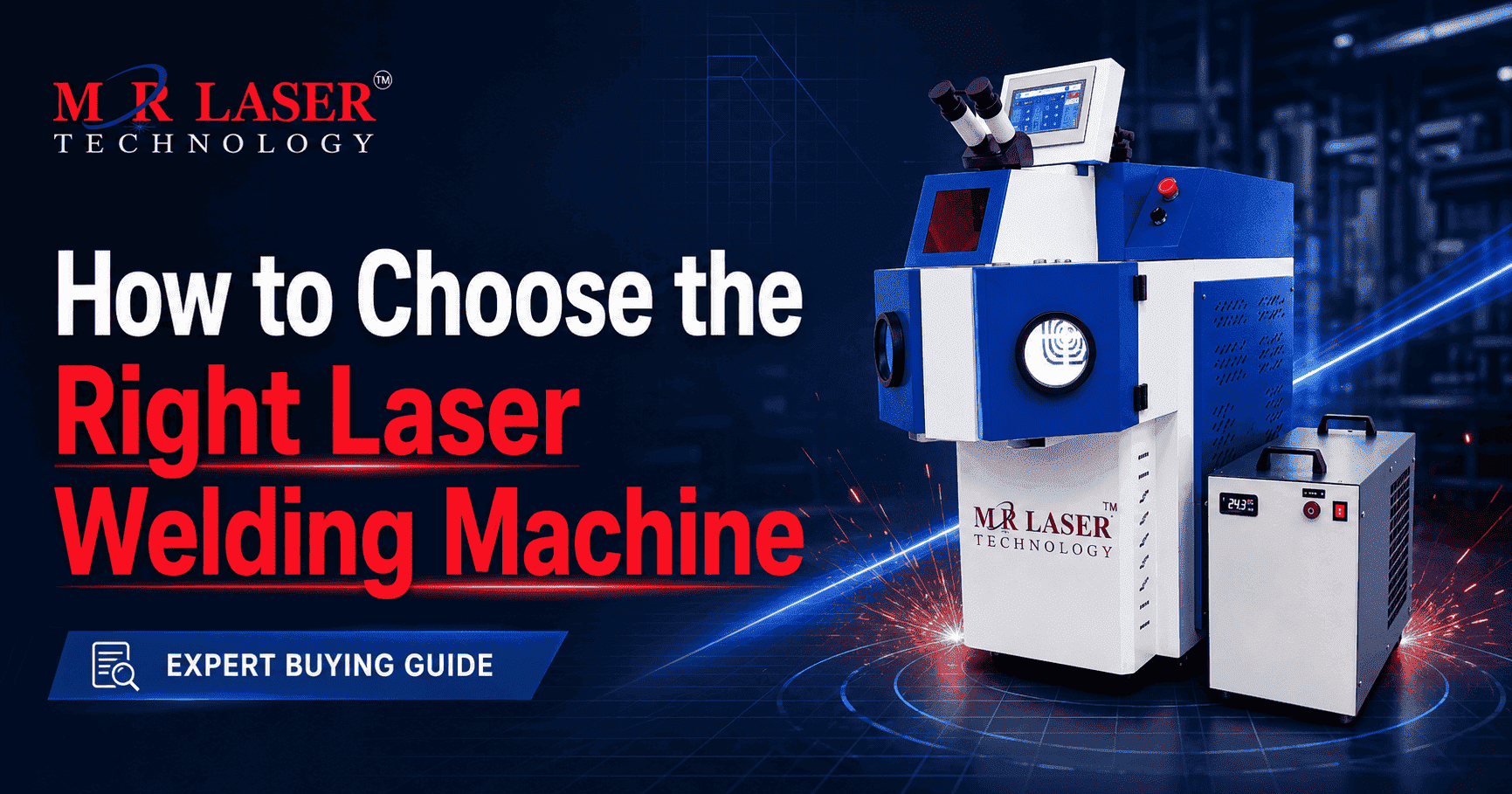
How to Choose the Right Laser Welding Machine
Laser welding technology offers unparalleled precision and efficiency for a wide range of industrial applications. Whether you're in jewelry manufacturing, medical device production, aerospace, or general fabrication, selecting the right laser welding machine is paramount to achieving superior results. This comprehensive guide will walk you through the essential considerations, helping you navigate the technical specifications and application demands to find the ideal solution for your business.
Understanding Laser Welding Technology
Laser welding machines utilize a concentrated beam of light to melt and fuse materials. This process is renowned for its speed, accuracy, and minimal heat input, which significantly reduces distortion and damage to surrounding components. Unlike traditional welding methods, laser welding allows for the joining of delicate or heat-sensitive materials with exceptional control. The focused energy creates a narrow heat-affected zone (HAZ), resulting in clean, strong, and often aesthetically superior welds. This makes it an indispensable tool for industries requiring intricate work and high-quality finishes.
The versatility of industrial laser welding machines extends across numerous sectors, including:
- Jewelry Manufacturing and Repair: Enabling intricate designs and precise repairs on precious metals.
- Medical Device Manufacturing: For welding small, complex components where sterility and precision are critical.
- Aerospace: Joining lightweight alloys and complex structures with high integrity.
- Automotive: For precise welding in dashboards, sensors, and other small components.
- General Manufacturing: Applications requiring fine detail, speed, and clean aesthetic finishes.
Key Applications and Use Cases
The unique advantages of laser welding make it the preferred method for specific demanding applications:
- High Precision and Accuracy: Ideal for micro-welding and applications where tight tolerances are essential.
- Minimal Heat Input: Crucial for preventing distortion or damage to heat-sensitive materials and adjacent components.
- Aesthetic Weld Requirements: Produces clean, smooth welds that often require little to no post-weld finishing.
- Small Batch Production and Prototyping: Offers flexibility and rapid setup for diverse project needs.
- Automated Welding Systems: Integrates seamlessly into production lines for high-volume manufacturing.
Benefits of Choosing a Laser Welding Machine
Investing in a laser welding machine from MR LASER TECHNOLOGY brings significant advantages to your manufacturing process:
Enhanced Precision
Achieve microscopic accuracy and intricate weld details impossible with traditional methods.
Increased Speed
Faster welding cycles translate to higher throughput and improved productivity.
Reduced Heat Distortion
Minimize material warping and damage due to the highly focused and controlled heat source.
Superior Weld Quality
Obtain clean, strong, and aesthetically pleasing welds with minimal post-processing.
Material Versatility
Weld a wide array of metals and alloys with optimal settings.
Operational Efficiency
Lower operational costs through reduced material waste and less need for post-weld finishing.
Buyer's Guide: Selecting Your Laser Welding Machine
Choosing the right laser welding machine involves carefully evaluating several technical specifications and application requirements. MR LASER TECHNOLOGY recommends considering the following factors:
Essential Features to Consider:
- Beam Quality: This refers to how well the laser beam can be focused to a small spot size. Higher beam quality (lower M-squared value) leads to a more concentrated energy density, crucial for fine welding.
- Power (Average Power Output): The total energy output of the laser, measured in Watts. Higher power generally allows for welding thicker materials or achieving faster speeds.
- Pulse Energy: The amount of energy delivered in a single pulse, measured in Joules. This is critical for controlling the heat input on a pulse-by-pulse basis, especially for thin materials or sensitive applications.
- Repetition Rate: The number of pulses the laser can emit per second (Hz). A higher repetition rate can increase the speed of continuous welds.
- Wavelength: The specific wavelength of the laser light (e.g., 1064nm for Nd:YAG or fiber lasers). Different wavelengths interact with materials differently, affecting absorption and reflectivity.
- Beam Delivery: How the laser beam is directed to the workpiece. This can include fiber optics, articulated arms, or specialized optics, each suited for different working envelopes and dexterity needs.
Buyer Insight:
Don't solely focus on peak power. For many precision applications, pulse energy, pulse duration, and beam quality are more critical factors in achieving the desired weld outcome without damaging the material.
When evaluating potential machines, it's important to think about the materials you'll be welding, the thickness of those materials, and the specific tolerances and aesthetic requirements of your products. A machine optimized for welding thick stainless steel might be overkill or inappropriate for delicate jewelry repair, and vice-versa.
Partner with MR LASER TECHNOLOGY
At MR LASER TECHNOLOGY, we understand the critical role precision laser welding plays in modern manufacturing. We offer a range of industrial laser welding solutions designed to meet the diverse needs of industries such as jewelry, medical device manufacturing, aerospace, and general fabrication. Our expertise lies in providing reliable, high-quality laser welding equipment that enhances your production capabilities. We are committed to helping you find the right laser welding machine that aligns with your specific application demands, ensuring optimal performance and superior weld results. Let us help you select a machine that delivers the precision, speed, and quality your projects require.
Frequently Asked Questions
What types of materials can be laser welded?
Laser welding machines can effectively join a wide variety of metals, including stainless steel, mild steel, aluminum, titanium, nickel alloys, precious metals like gold and platinum, and some dissimilar metal combinations. The specific material compatibility depends on the laser's power, wavelength, and the welding parameters used.
How does beam quality affect welding?
Beam quality determines how tightly the laser beam can be focused. A higher beam quality (lower M-squared value) allows for a smaller spot size, resulting in a higher power density. This is crucial for achieving very fine, precise welds, especially on thin materials or intricate components, while minimizing the heat-affected zone.
What is the difference between power and pulse energy?
Average power (measured in Watts) is the total energy the laser outputs over time. Pulse energy (measured in Joules) is the discrete amount of energy delivered in a single pulse. For applications requiring precise control over heat input, such as welding thin materials or avoiding thermal damage, pulse energy and pulse duration are often more critical than average power alone.
Can laser welding be automated?
Yes, laser welding systems are highly adaptable to automation. They can be integrated with robotic arms, CNC machinery, and custom fixtures to achieve high-volume production, consistent quality, and enhanced safety in automated manufacturing environments.
Ready to Find Your Ideal Laser Welding Solution?
Don't let uncertainty hinder your production quality. Contact MR LASER TECHNOLOGY today to discuss your specific application needs. Our experts are ready to help you choose the perfect laser welding machine to enhance your manufacturing capabilities and achieve superior results.
Explore Solutions Now