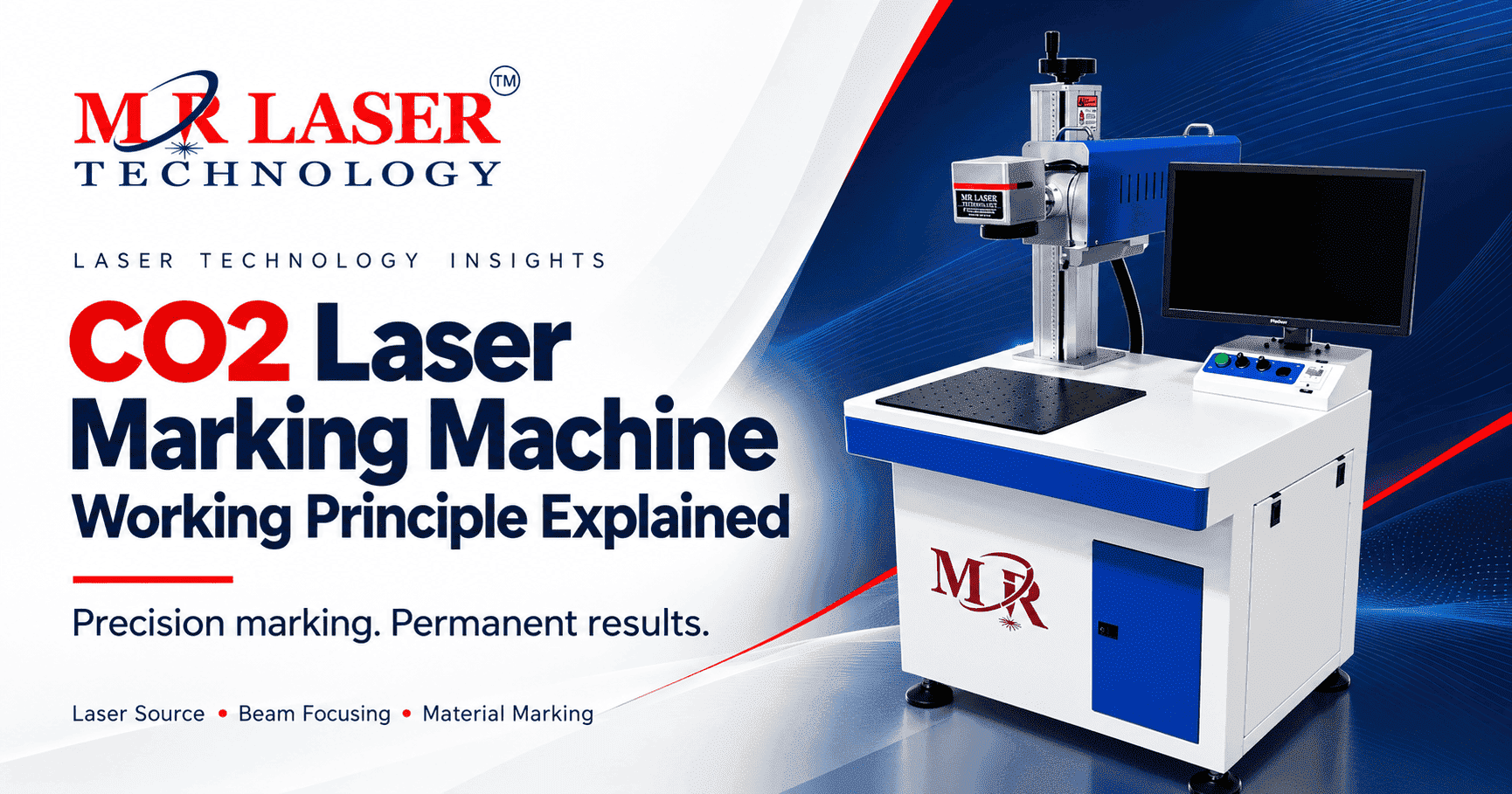
CO2 Laser Marking Machine Working Principle Explained
In the realm of industrial marking and material processing, CO2 laser marking machines stand out for their versatility and precision. These sophisticated systems offer a non-contact method for creating permanent marks on a broad spectrum of materials. Understanding the core working principle of a CO2 laser marking machine is crucial for businesses seeking efficient and reliable marking solutions. This guide delves into the science behind these machines, their applications, and what to consider when choosing one.
What is a CO2 Laser Marking Machine?
A CO2 laser marking machine is an industrial tool that utilizes a CO2 gas mixture as its laser medium to engrave, mark, or cut materials. Unlike other laser types, CO2 lasers emit infrared light, typically at a wavelength of 10.6 micrometers (μm). This specific wavelength is highly effective for processing non-metallic materials and certain plastics. The process involves directing a focused beam of this laser light onto the material's surface, where its energy is absorbed, causing localized heating and a desired alteration to the material.
MR LASER TECHNOLOGY, based in Ahmedabad, Gujarat, India, is a manufacturer specializing in laser machines, including advanced CO2 Laser Marking Machines. With over 8 years of experience and ISO & CE certifications, they provide robust solutions for various industrial marking needs.
The CO2 Laser Marking Machine Working Principle Demystified
The operation of a CO2 laser marking machine is a precise interplay of optics, energy, and material science. Here's a breakdown of the fundamental working principle:
- Laser Generation: At the heart of the machine is the CO2 laser source. Inside a sealed tube, a mixture of carbon dioxide gas, nitrogen, and helium is excited by an electrical discharge. This excitation causes the CO2 molecules to release energy in the form of photons, generating a powerful, invisible infrared laser beam.
- Beam Delivery and Optics: The generated laser beam is then guided through a series of mirrors. These mirrors direct the beam towards a scanning system.
- Scanning System (Galvo Scanner): A high-speed galvanometer (galvo) scanner system, equipped with mirrors, precisely controls the direction and position of the laser beam. This system allows the beam to be steered rapidly across the material's surface, forming intricate patterns, text, or graphics as programmed.
- Focusing: Before reaching the material, the laser beam passes through a focusing lens. This lens concentrates the beam's energy into a small spot, increasing its power density and enabling a precise, localized interaction with the surface.
- Material Interaction: When the focused laser beam strikes the material, its energy is absorbed. This absorption converts the light energy into thermal energy (heat). The intense, localized heat causes a physical or chemical change in the material at the point of impact. This can result in vaporization (removing material), melting, or a change in the material's color, creating a permanent mark.
- Non-Contact Marking: Crucially, the entire process is non-contact. The laser beam itself performs the marking without any physical touching of the workpiece, preventing damage and contamination.
Key Components of a CO2 Laser Marking Machine
To achieve the precise marking described, a CO2 laser marking machine relies on several critical components:
- Laser Source: The core unit that generates the CO2 laser beam. Quality and stability of the source significantly impact marking consistency.
- Optical System: Includes mirrors for beam guidance and a focusing lens to concentrate the laser energy onto the material surface.
- Scanning System (Galvo Scanner): High-precision motors and mirrors that steer the laser beam to create the desired mark.
- Control System: Software and hardware that translate the design into instructions for the galvo scanner, controlling the laser power, speed, and beam path.
- Worktable/Platform: The surface where the material is placed for marking.
Versatile Applications of CO2 Laser Marking
The ability of CO2 laser marking machines to interact with a wide range of materials makes them indispensable across numerous industries. The working principle allows for high-resolution, permanent marking suitable for various applications:
Wood & Paper
Used for engraving intricate designs, logos, and text on wooden products, packaging, and paper items. For organic materials, it essentially burns the surface.
Plastics
Ideal for marking serial numbers, component identification, and branding on various plastic components used in automotive, electronics, and consumer goods.
Glass & Ceramics
Creates frosted or etched marks on glass bottles, containers, and ceramic tiles, often used for decorative or identification purposes. The heat induces micro-fractures for a frosted effect.
Textiles & Leather
Can be used for precise engraving on leather goods, denim, and other fabrics for branding or decorative elements.
Packaging
Marks batch codes, expiry dates, logos, and barcodes directly onto packaging materials for traceability and branding.
Pharmaceuticals & Medical Devices
Marks critical information like batch numbers, expiry dates, and unique identifiers on drug packaging and medical instruments, ensuring compliance and traceability.
Key Benefits of CO2 Laser Marking
Leveraging the CO2 laser marking machine working principle offers several significant advantages:
- High Precision and Resolution: Capable of marking fine details, small text, and complex graphics with exceptional clarity.
- Permanent and Durable Marks: The marking is integrated into the material surface, making it resistant to wear, fading, and chemicals.
- Versatile Material Compatibility: Effective on a broad range of non-metallic materials, including many plastics, wood, glass, leather, and organic substances.
- Non-Contact Process: Eliminates the risk of damaging delicate materials and avoids tool wear associated with contact methods.
- Speed and Efficiency: Capable of high-speed marking, suitable for continuous production lines.
- Cost-Effectiveness: Often presents a lower initial acquisition cost compared to some other laser technologies, making it an accessible option for many businesses.
Choosing the Right CO2 Laser Marking Machine
Selecting the appropriate CO2 laser marking machine requires careful consideration of your specific needs. MR LASER TECHNOLOGY, with its experience in manufacturing, understands the nuances that go into choosing the right solution.
Buyer Insight:
Consider the primary materials you will be marking and the complexity of the designs. A machine's power, focal length of the lens, and software capabilities are critical factors that directly influence the quality and speed of your marks.
Here are key factors to evaluate:
Key Considerations:
- Material Type: Ensure the machine's laser wavelength and power are suitable for your primary materials (e.g., specific plastics, wood, glass).
- Marking Area: Determine the maximum size of the mark required. This influences the choice of the galvo scanner and lens.
- Marking Speed: For production environments, the speed at which the machine can effectively mark is crucial.
- Resolution and Detail: If you require very fine details, look for machines with high-resolution scanning systems and appropriate optics.
- Software and Usability: User-friendly software that allows easy design import and parameter adjustment is essential.
- Durability and Reliability: Look for robust construction and components known for longevity, especially for industrial use. MR LASER TECHNOLOGY's commitment to quality is reflected in their ISO & CE certified manufacturing processes.
- After-Sales Support: Consider the availability of technical support, training, and maintenance services.
Ensuring Quality and Longevity
To maintain the performance and extend the life of your CO2 laser marking machine, regular quality checks and maintenance are vital. Understanding the working principle helps in identifying potential issues:
- Optical System Cleaning: Dust and debris on mirrors and lenses can degrade beam quality and marking performance. Regular cleaning is essential.
- Laser Source Health: CO2 laser sources have a finite lifespan. Monitor performance and plan for eventual replacement.
- Galvo Scanner Calibration: Ensure the scanner maintains its precision for accurate marking.
- Cooling System: CO2 lasers generate heat, so an efficient cooling system is critical for stable operation and longevity.
- Software Updates: Keep the control software updated for optimal performance and new features.
Investing in a machine from a reputable manufacturer like MR LASER TECHNOLOGY, which has over 1200 projects delivered and over 315 machines installed across India, ensures access to reliable equipment and support.
Frequently Asked Questions
What materials can a CO2 laser marking machine mark?
CO2 laser marking machines are most effective on non-metallic materials. This includes plastics, wood, glass (for a frosted effect), ceramics, paper, leather, rubber, and certain organic materials. They are generally not suitable for bare metals, though they can mark anodized or coated metals.
Is CO2 laser marking a permanent process?
Yes, the marks created by CO2 laser marking are permanent. The laser alters the surface of the material, either by vaporizing, melting, or causing a chemical/color change, making the mark highly durable and resistant to abrasion and fading.
What is the difference between CO2 laser marking and engraving?
While often used interchangeably, 'marking' typically refers to surface alteration like color change or frosting, while 'engraving' implies removing material to create depth. CO2 lasers can perform both, depending on the power, duration, and material interaction. The fundamental working principle of using a focused laser beam remains the same.
How long does a CO2 laser source typically last?
The lifespan of a CO2 laser source varies significantly based on its design, power, and usage. However, they are consumable components and typically rated in thousands of operating hours. It's important to factor in eventual replacement costs.
Are CO2 laser marking machines suitable for industrial production lines?
Yes, CO2 laser marking machines are widely used in industrial production due to their speed, precision, and relatively lower acquisition costs. Their non-contact nature is also beneficial for high-throughput environments.
Ready to Implement Precision Marking?
Understanding the CO2 laser marking machine working principle empowers you to make informed decisions for your business. Whether you need to mark intricate logos on plastics, serial numbers on glass, or designs on wood, the right CO2 laser marking machine can enhance your product quality and traceability.
MR LASER TECHNOLOGY, with its extensive experience and commitment to quality manufacturing, offers a range of CO2 Laser Marking Machines designed for industrial applications. Based in Ahmedabad, Gujarat, India, they provide reliable solutions backed by their ISO & CE certifications and a proven track record of over 1200 projects and 315+ machine installations.
Explore MR LASER TECHNOLOGY Solutions