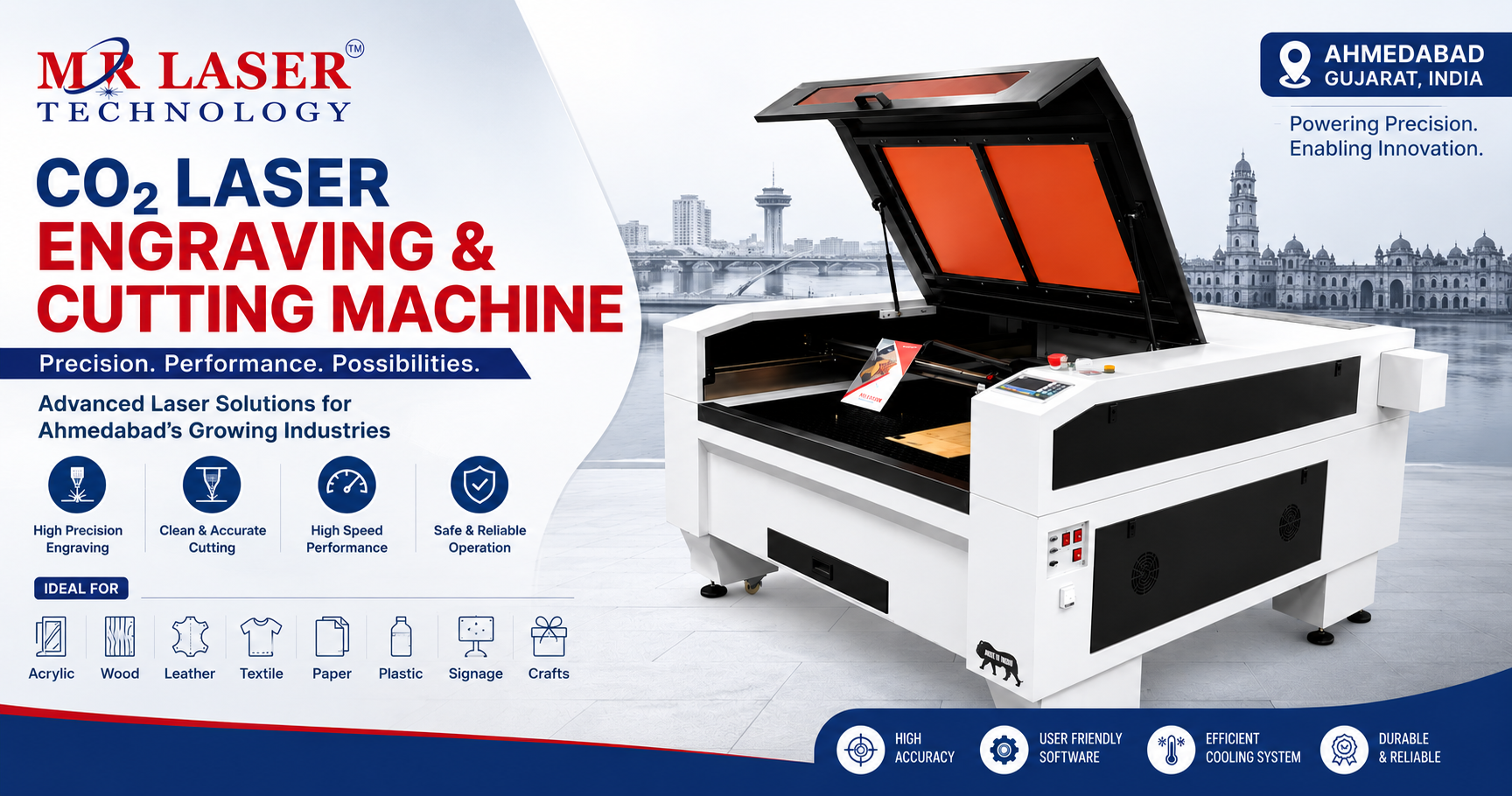
Co2 Laser Engraving & Cutting Machine
Explore Co2 laser engraving and cutting machines for diverse industrial applications in Ahmedabad, Gujarat. Understand features, uses, and selection criteria fo
Why This Matters in Ahmedabad, Gujarat
Gujarat's industrial sector, particularly around Ahmedabad, is characterized by diverse manufacturing, including textiles, handicrafts, signage, packaging, and automotive components. These industries frequently work with materials like acrylic, wood, leather, paper, and various plastics, where traditional cutting and engraving methods can be time-consuming or lack precision. The adoption of Co2 laser technology allows local businesses to enhance product quality, reduce waste, and meet tight production deadlines, supporting the region's economic growth and competitive edge. It enables innovation across multiple sectors.
What is a Co2 Laser Engraving & Cutting Machine — Overview
A Co2 laser engraving and cutting machine utilizes a carbon dioxide gas mixture to generate a powerful laser beam. This beam is directed through a series of mirrors and focused by a lens onto the material surface. The intense heat from the laser either vaporizes the material for cutting or ablates its surface for engraving, creating precise patterns and shapes. These machines are specifically designed for processing non-metallic materials, offering high speed, accuracy, and repeatability for complex designs. They are fundamental tools in many fabrication and design workshops.
Key Features and Technical Specifications
High-power Co2 laser tube for consistent performance and extended lifespan.
Integrated cooling system to maintain optimal operating temperature.
Precision stepper or servo motors for accurate movement and positioning.
Advanced control software for intuitive design import and job management.
Adjustable laser power and speed settings for material-specific processing.
Large working area options to accommodate various material sizes.
Red dot pointer for easy job setup and material alignment.
Emergency stop button and safety interlocks for operator protection.
Industrial Applications and Use Cases
- Textile and Garment Industry: Cutting patterns for apparel, engraving designs on fabric, and creating intricate lace.
- Signage and Display Production: Fabricating acrylic letters, cutting plastic sheets for displays, and engraving logos.
- Woodworking and Furniture: Engraving decorative patterns, cutting intricate joinery, and creating custom wooden components.
- Leather Goods Manufacturing: Cutting leather for bags, wallets, and shoes, and engraving personalized designs.
- Packaging and Prototyping: Cutting cardboard and paperboard for custom boxes, and rapid prototyping of packaging designs.
- Crafts and Hobbyists: Engraving personalized gifts, cutting models from various materials, and creating artistic pieces.
- Education and Research: Used in laboratories and technical institutes for material science studies and practical training.
How to Choose the Right Co2 Laser Engraving & Cutting Machine
Selecting an appropriate Co2 laser machine involves evaluating several critical factors to ensure it aligns with your operational needs. Consider the types of materials you will process and the scale of your production. A thorough assessment helps in making an informed investment that supports long-term efficiency and output quality.
- Laser Power (Wattage): Match the laser tube wattage to the thickness and density of materials you intend to cut or engrave. Higher wattage is suitable for thicker materials and faster cutting speeds.
- Working Area Dimensions: Ensure the machine's bed size can accommodate your largest material sheets or workpieces.
- Software Compatibility: Verify that the machine's control software integrates seamlessly with your existing design programs (e.g., CorelDRAW, AutoCAD, Illustrator).
- Motion System Accuracy: Look for machines with high-precision stepper or servo motors for consistent and repeatable results, especially for intricate designs.
- Ventilation and Exhaust System: A robust exhaust system is essential for safely removing fumes and debris generated during laser processing.
- After-Sales Support and Training: Confirm the supplier offers comprehensive installation, training, and ongoing technical support.
- Build Quality and Components: Evaluate the machine's construction, focusing on durable components that ensure stability and longevity.
- Safety Features: Prioritize machines equipped with safety interlocks, emergency stops, and protective enclosures.
Quality Standards and Compliance
Adherence to quality standards and compliance is paramount when investing in industrial machinery. For Co2 laser engraving and cutting machines, buyers should verify that the equipment meets relevant international and national certifications. These certifications indicate that the machine has undergone rigorous testing and adheres to specific safety, performance, and environmental guidelines. Key standards often include ISO 9001 for quality management systems and CE marking for European safety directives, which are widely recognized indicators of product reliability and safety. Buyers should also inquire about local Indian standards like BIS where applicable, ensuring the machine's electrical and mechanical components comply with regional regulations.
Why Company Experience and Capability Matters
Choosing a supplier with proven experience and technical capability is crucial for the long-term success of your laser operations. Mr Laser Technology, located in Ahmedabad, Gujarat, brings over 8 years of experience in the industrial laser machine sector. This background translates into a deep understanding of manufacturing processes, material interactions, and application-specific requirements. Our technical team is equipped to provide comprehensive support, from initial consultation to installation and ongoing maintenance.
We focus on delivering reliable Co2 laser engraving and cutting machines that integrate seamlessly into various production environments. Our approach includes rigorous quality control throughout the manufacturing process, ensuring each machine meets performance expectations. We also offer customized machine solutions, configuring power selection and technical specifications to match specific project needs. This commitment to precision, coupled with dependable after-sales support, helps ensure smooth and efficient operations for our clients.
Installation, Maintenance and Care Tips
Proper installation and routine maintenance are essential for maximizing the lifespan and performance of your Co2 laser engraving and cutting machine. Following these guidelines helps ensure consistent output quality and minimizes downtime.
Installation
Ensure the machine is placed on a stable, level surface in a well-ventilated area.
Connect the machine to a dedicated power supply with appropriate voltage and grounding.
Install the exhaust system correctly to effectively remove smoke and fumes.
Fill the chiller with distilled water and ensure proper circulation to the laser tube.
Calibrate mirrors and lenses according to the manufacturer's instructions for optimal beam alignment.
Maintenance
Regularly clean the laser lens and mirrors with specialized cleaning solutions and wipes to prevent beam degradation.
Inspect and clean the exhaust fan and ducts to maintain efficient fume extraction.
Check the water chiller for proper temperature and water level, replacing water as recommended.
Lubricate moving parts, such as guide rails and bearings, to ensure smooth operation.
Periodically inspect electrical connections and cables for wear or damage.
Keep the machine's working area clean from debris and material scraps.
Care Tips
Always use appropriate safety eyewear when operating the machine.
Never leave the machine unattended during operation.
Understand material properties and adjust laser settings accordingly to prevent damage or fire.
Perform regular software updates to benefit from new features and improvements.
Train all operators thoroughly on machine operation and safety protocols.
Frequently Asked Questions
A Co2 laser machine is highly effective for processing a wide range of non-metallic materials. This includes acrylic, wood, plywood, MDF, leather, fabric, paper, cardboard, rubber, various plastics, and some types of stone or ceramic. It is not suitable for cutting or engraving metals directly, as these materials reflect the Co2 laser wavelength.
The frequency of cleaning depends on the usage intensity and the types of materials being processed. For regular operation, it is advisable to inspect and clean the laser lens and mirrors weekly. Materials that produce more smoke or debris, like wood or rubber, may require more frequent cleaning to maintain optimal beam quality and prevent damage to the optics.
Operating a Co2 laser machine requires strict adherence to safety protocols. Always wear appropriate laser safety glasses to protect your eyes from stray reflections. Ensure the machine's enclosure is closed during operation and that the exhaust system is functioning correctly to remove harmful fumes. Never place flammable materials near the laser path.
The ability to cut thick materials depends primarily on the laser's wattage and the material type. Higher wattage Co2 lasers can cut thicker non-metals more effectively. For instance, a 100W laser can cut thicker acrylic or wood than a 60W laser. However, there are practical limits to thickness, beyond which multiple passes or alternative cutting methods become necessary.
The lifespan of a Co2 laser tube varies based on its wattage, usage patterns, and maintenance. Generally, a good quality Co2 laser tube can last between 1,500 to 10,000 hours of operation. Proper cooling, consistent power supply, and avoiding prolonged high-power usage can significantly extend the tube's operational life.
Yes, many suppliers offer customization options for Co2 laser machines to meet specific industrial requirements. This can include variations in laser power, working area dimensions, specialized material handling systems, and integration with automated production lines. Discussing your precise needs with the supplier helps in configuring a machine that aligns perfectly with your operational demands.
Conclusion
The Co2 laser engraving and cutting machine represents a valuable asset for businesses in Ahmedabad, Gujarat, and across India, offering precision and efficiency for processing non-metallic materials. From intricate engraving on wood to precise cutting of acrylics, this technology empowers manufacturers and artisans to achieve high-quality results. When considering an investment, prioritize factors such as laser power, working area, software compatibility, and the supplier's experience and after-sales support. A well-chosen Co2 laser system can significantly enhance production capabilities and open new avenues for product development.
Get In Touch
Mr Laser Technology