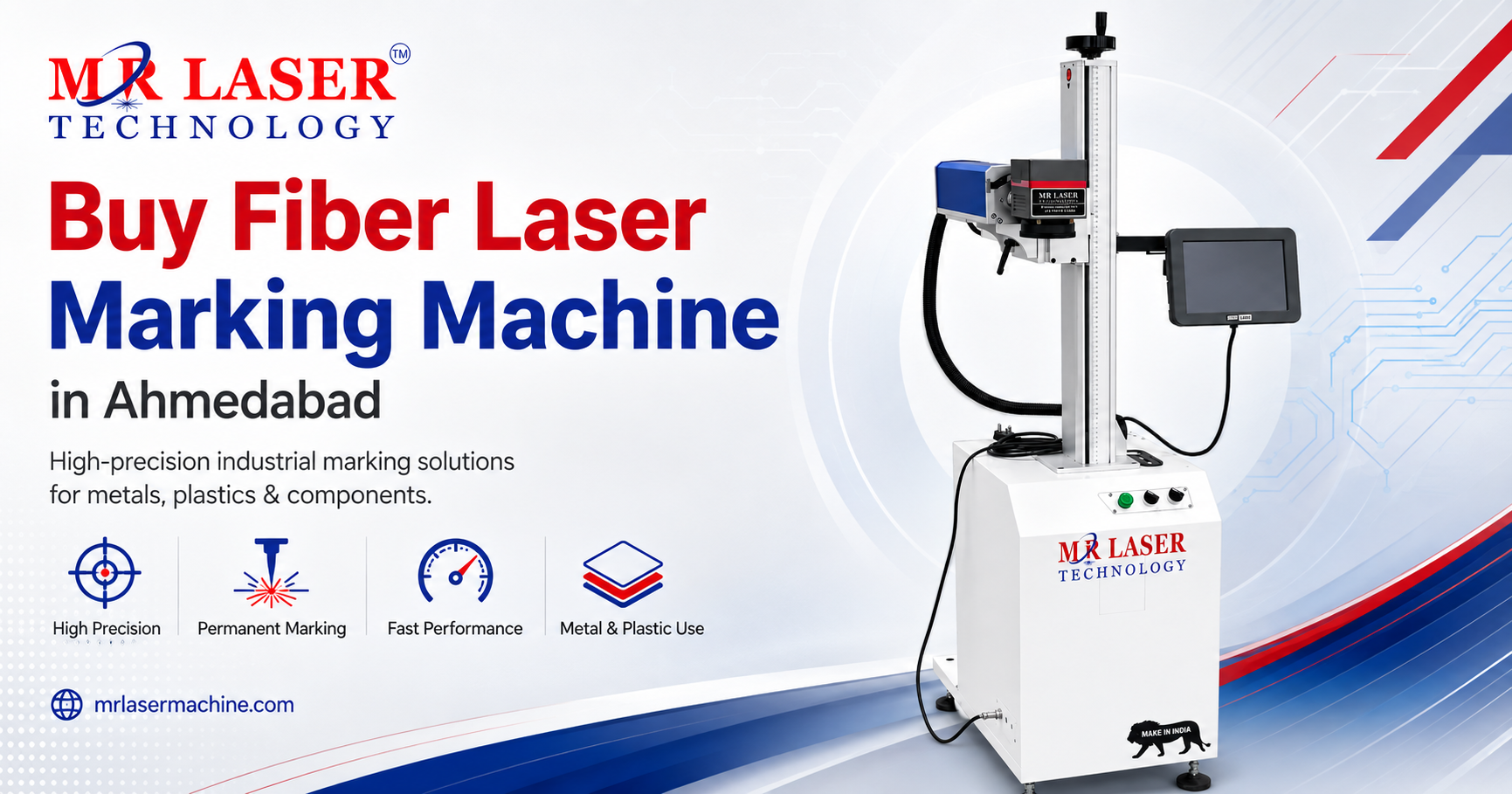
Buy Fiber Laser Marking Machine
Looking to buy a fiber laser marking machine in Ahmedabad? Discover high-precision, reliable machines from MR Laser Technology, your trusted local manufacturer.
What is a Fiber Laser Marking Machine? — Overview
A fiber laser marking machine utilizes a high-intensity laser beam generated by a fiber optic cable to engrave or mark surfaces. The laser beam is precisely controlled by a computer, allowing for intricate designs, text, and serial numbers to be applied to a wide variety of materials, including metals, plastics, and some non-metals. This process is non-contact, meaning the laser beam marks the material without physically touching it, preventing damage and ensuring high precision. The resulting marks are permanent, resistant to wear, and can be applied at high speeds.
Key Features and Technical Specifications
When evaluating a fiber laser marking machine, several technical specifications are crucial for ensuring it meets your production requirements:
- Laser Source Power: Typically ranging from 20W to 100W or more, determining marking speed and depth.
- Wavelength: Standard is 1064nm, suitable for most metals and some plastics.
- Marking Area: The maximum size of the area that can be marked in a single pass, often specified in millimeters (e.g., 110x110mm, 175x175mm, 300x300mm).
- Marking Speed: Measured in characters per second or millimeters per second, indicating how quickly marks can be applied.
Beam Quality (M²): A lower M² value indicates a more focused and precise beam, leading to finer detail.
- Repetition Rate: The frequency at which laser pulses are emitted, influencing marking speed and depth.
- Cooling System: Usually air-cooled for lower power units, but higher power machines may require water cooling.
- Software Compatibility: Ensuring the machine's software integrates seamlessly with your design and workflow.
Industrial Applications and Use Cases
Fiber laser marking machines are versatile tools with applications across numerous industries:
- Automotive: Marking engine parts, chassis numbers, and component identification for traceability and quality control.
- Electronics: Marking serial numbers, logos, and specifications on circuit boards, casings, and components.
- Jewelry: Engraving intricate designs, hallmarks, and personalized messages on gold, silver, and platinum.
- Medical Devices: Marking surgical instruments and implants with unique identifiers for regulatory compliance and sterilization tracking.
- Aerospace: Marking critical components with high-precision identifiers that withstand extreme conditions.
- General Manufacturing: Applying logos, barcodes, QR codes, and production dates on tools, hardware, and consumer goods.
- Promotional Items: Personalizing pens, keychains, and other corporate gifts with branding.
- Plastics: Marking durable serial numbers and logos on various plastic components where traditional methods fail.
How to Choose the Right Fiber Laser Marking Machine
Selecting the appropriate fiber laser marking machine involves careful consideration of your specific needs. Here’s a checklist to guide your decision:
- Material Compatibility: Confirm the machine can effectively mark your primary materials (metals, plastics, etc.).
- Required Mark Quality: Determine the level of detail, depth, and contrast needed for your application.
- Production Volume: Assess the speed and efficiency required to meet your output targets.
- Marking Area Size: Ensure the machine's working area accommodates the size of your components.
- Power Source Reliability: Look for reputable laser source manufacturers known for longevity and performance.
- Software Interface: Evaluate the ease of use and functionality of the control software.
- Supplier Support: Consider the availability of installation, training, and after-sales service.
- Customization Needs: Can the machine be adapted for specific fixtures or automated integration?
Quality Standards and Compliance
When investing in industrial machinery, adherence to quality standards and compliance is non-negotiable. Reputable manufacturers, like MR Laser Technology, ensure their machines meet international benchmarks. Look for certifications such as CE marking, which indicates conformity with health, safety, and environmental protection standards for products sold within the European Economic Area. While specific Indian standards like ISI might not directly apply to the laser machine itself, the components used should meet their respective industry standards. Verifying the supplier's commitment to quality control in their manufacturing process and their adherence to safety protocols is crucial for long-term operational reliability and safety.
Why MR Laser Technology's Experience and Capability Matters
With over 8 years of dedicated experience in laser technology, MR Laser Technology has established itself as a reliable manufacturer of advanced laser marking solutions. Our expertise lies in understanding the intricate requirements of modern manufacturing. We focus on building machines that offer exceptional precision, durability, and ease of use. Our manufacturing process incorporates stringent quality checks at every stage, from component selection to final assembly.
Our technical team comprises skilled engineers who possess deep knowledge of laser applications. This allows us to not only provide standard solutions but also to offer customized machine configurations tailored to unique client needs. We pride ourselves on delivering machines that are not just functional but also contribute to increased productivity and reduced operational costs for our clients in Ahmedabad and beyond. Our commitment extends to providing robust after-sales support, ensuring your investment continues to perform optimally.
Installation, Maintenance, and Care Tips
Proper installation and regular maintenance are key to maximizing the lifespan and performance of your fiber laser marking machine.
- Installation: Ensure the machine is placed on a stable, level surface in a clean environment, free from excessive dust or moisture. Proper electrical grounding is essential for safety and optimal performance.
- Initial Setup: Follow the manufacturer's guidelines for initial power-up and software configuration. If professional installation is provided, ensure you receive comprehensive training on operation.
- Daily Checks: Before operation, visually inspect the laser lens for cleanliness and check for any obstructions in the marking path.
- Lens Cleaning: The laser lens is a critical component. Clean it regularly using specialized lens cleaning solutions and lint-free wipes. Avoid touching the lens surface directly.
- Ventilation: Ensure the machine's ventilation system is functioning correctly to remove fumes generated during marking, especially when working with plastics.
- Software Updates: Keep the machine's control software updated to benefit from performance enhancements and bug fixes.
- Scheduled Maintenance: Adhere to the recommended maintenance schedule for components like the laser source and cooling system.
Frequently Asked Questions
A fiber laser marking machine is highly versatile and can effectively mark a wide range of materials. This includes all types of metals such as stainless steel, aluminum, brass, copper, titanium, and gold, as well as various plastics like ABS, PVC, and polycarbonate. It is also capable of marking certain coated materials and some ceramics.
The primary difference lies in the laser source and their suitability for different materials. Fiber lasers use a semiconductor material to generate the laser beam and are ideal for marking metals and some plastics due to their shorter wavelength. CO2 lasers use a gas mixture and are better suited for marking non-metal materials like wood, acrylic, leather, and glass.
The laser source is the heart of the machine, and fiber laser sources are known for their longevity. Reputable fiber laser sources typically have an operational lifespan of 50,000 to 100,000 hours, depending on usage and operating conditions. This significantly contributes to the machine's overall cost-effectiveness.
Yes, absolutely. Fiber laser marking machines are capable of marking intricate images, logos, graphics, and complex designs with high resolution and detail. The accompanying software allows users to import various image formats and adjust parameters to achieve the desired marking outcome.
Reputable suppliers typically offer comprehensive training, which often includes on-site installation and operation guidance. This training covers machine setup, software operation, basic maintenance procedures, safety protocols, and troubleshooting common issues, ensuring operators can use the machine efficiently and safely.
Safety is paramount. Operators must wear appropriate laser safety glasses to protect their eyes from stray reflections. Ensure proper ventilation to remove fumes. Never look directly into the laser beam or its reflection. Keep the work area clear of flammable materials and follow all manufacturer-specified safety guidelines.
Conclusion
Investing in a fiber laser marking machine is a strategic decision for any manufacturing business in Ahmedabad aiming to enhance precision, traceability, and product quality. Understanding the technical specifications, application suitability, and the importance of supplier reliability is key. By choosing a manufacturer with proven experience, a commitment to quality, and robust after-sales support, you ensure your investment delivers long-term value and operational efficiency. MR Laser Technology is dedicated to providing Ahmedabad's industries with advanced, reliable laser marking solutions that drive manufacturing excellence.
Get In Touch
Mr Laser Technology