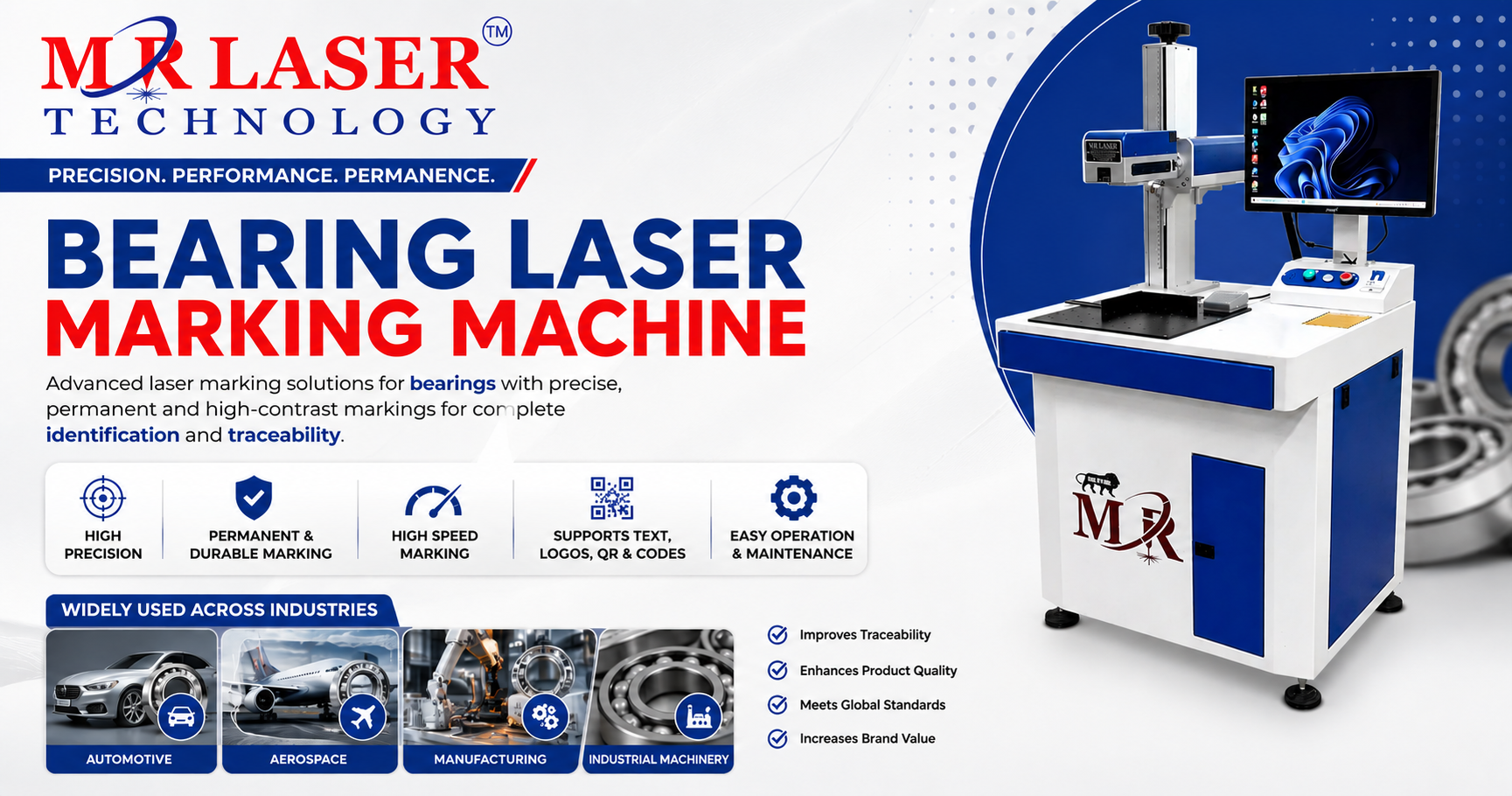
Bearing Laser Marking Machine
Expert bearing laser marking machines in Ahmedabad. Get precise, durable markings for identification and traceability. Contact MR Laser Technology today.
What is a Bearing Laser Marking Machine? — Overview
A bearing laser marking machine is a sophisticated piece of industrial equipment designed to etch permanent marks onto the surface of bearings. It uses a focused laser beam to alter the surface material of the bearing, creating text, serial numbers, logos, or barcodes. Unlike traditional methods like stamping or etching, laser marking is non-contact, meaning it doesn't apply physical pressure to the bearing, thus preserving its structural integrity. This process is highly accurate, fast, and capable of marking on various bearing materials, including steel, stainless steel, and ceramics.
Key Features and Technical Specifications
Bearing laser marking machines are engineered with specific features to handle the unique demands of marking these precision components:
- High-Resolution Optics: Ensures extremely fine and clear markings, even on small bearing surfaces.
- Adjustable Laser Power: Allows for precise control over marking depth and intensity, suitable for different material hardnesses.
- Automated Z-Axis Control: Facilitates automatic focusing, crucial for varying bearing geometries and ensuring consistent mark depth.
- Integrated Rotary Fixtures: Essential for marking cylindrical surfaces like the outer or inner rings of bearings.
- High-Speed Marking Capability: Capable of marking multiple bearings per minute to keep pace with production lines.
- Durable Laser Source: Typically utilizes fiber laser sources known for their long lifespan and low maintenance requirements.
- User-Friendly Software Interface: Simplifies the creation and application of marking data, including serial numbers and QR codes.
- Compact and Robust Design: Built for industrial environments, ensuring reliability and longevity.
Industrial Applications and Use Cases
The precision and permanence offered by bearing laser marking machines make them indispensable across several industrial applications:
- Automotive Industry: Marking part numbers, manufacturing dates, and batch codes on wheel bearings, engine bearings, and transmission bearings for traceability and warranty purposes.
- Aerospace Sector: Engraving critical identification data, serial numbers, and material specifications on high-precision aerospace bearings, ensuring compliance with stringent aviation standards.
- Manufacturing & Engineering: Marking general industrial bearings used in machinery, pumps, and equipment, facilitating inventory management and maintenance records.
- Medical Devices: Marking miniature bearings used in surgical instruments or diagnostic equipment, requiring high precision and biocompatible marking.
- Heavy Machinery: Identifying large industrial bearings used in construction equipment, mining machinery, and agricultural vehicles with robust, weather-resistant marks.
- Aftermarket Parts: Applying unique identifiers and branding to replacement bearings to ensure authenticity and prevent counterfeiting.
- Quality Control: Marking inspected bearings with QC codes or dates to track quality assurance processes.
How to Choose the Right Bearing Laser Marking Machine
Selecting the appropriate bearing laser marking machine involves considering several critical factors to ensure it meets your specific production needs:
- Bearing Material: Confirm the machine is compatible with the specific metals (e.g., hardened steel, stainless steel, aluminum) or ceramics of your bearings.
- Marking Content: Determine the type and complexity of information to be marked (alphanumeric, logos, 2D codes) and the required resolution.
- Production Volume: Assess the required marking speed and throughput to match your production line's output.
- Bearing Size and Geometry: Ensure the machine's working area and fixturing capabilities can accommodate the range of bearing sizes you process.
- Integration Requirements: Consider if the machine needs to integrate with existing automated production lines or ERP systems.
- Laser Source Type: Fiber lasers are generally preferred for metal marking due to their efficiency and durability.
- Supplier Support: Evaluate the availability of technical support, training, spare parts, and maintenance services.
- Compliance and Certifications: Verify that the machine meets relevant industry standards and safety certifications.
Quality Standards and Compliance
For components as critical as bearings, the quality of the marking process and the machine itself is non-negotiable. Reputable bearing laser marking machines adhere to international quality standards such as ISO 9001 for manufacturing processes and often carry CE certifications, indicating compliance with European safety, health, and environmental protection requirements. Buyers should look for machines that offer consistent marking depth, accuracy, and permanence, ensuring that the marks withstand harsh operating conditions, lubricants, and cleaning processes. Verification of the laser source's performance specifications and the machine's build quality is essential for long-term reliability.
Why MR Laser Technology's Experience and Capability Matters
At MR Laser Technology, our extensive experience in manufacturing advanced laser machines, including those specifically for bearing marking, sets us apart. We understand the critical nature of precision and reliability in industrial components. Our manufacturing process emphasizes robust construction, high-quality components, and rigorous testing to ensure each machine performs optimally. Our technical team possesses deep expertise in laser technology and its application across diverse materials, enabling us to offer tailored solutions.
We pride ourselves on our capability to customize machines to exact client specifications, whether it involves specialized fixturing for unique bearing types or integration with complex automated systems. Our commitment extends beyond delivery, with comprehensive after-sales support, including installation, training, and maintenance, ensuring our clients achieve consistent, high-quality results and maximize their investment. We focus on delivering dependable, high-performance solutions that genuinely enhance your manufacturing efficiency and product quality.
Installation, Maintenance, and Care Tips
Proper installation and regular maintenance are key to ensuring the longevity and optimal performance of your bearing laser marking machine.
- Installation: Ensure the machine is installed in a clean, dry, and well-ventilated area, away from excessive dust or vibration. Proper electrical grounding is crucial for stable operation. Follow the manufacturer's guidelines for initial setup and calibration.
- Daily Checks: Before operation, visually inspect the machine for any loose connections or debris. Ensure the laser safety enclosure is functioning correctly.
- Lens and Mirror Cleaning: The optical components are sensitive. Clean them regularly using specialized lens cleaning solutions and lint-free cloths, following the manufacturer's recommended procedure to avoid scratches.
- Ventilation System: Keep the exhaust and filtration system clean and functional to remove fumes and particulate matter generated during marking, protecting both the machine and the operator.
- Software Updates: Periodically check for and install software updates provided by the manufacturer to benefit from performance enhancements and bug fixes.
- Scheduled Maintenance: Adhere to the manufacturer's recommended maintenance schedule for laser source checks, cooling system servicing, and general system inspections.
- Operator Training: Ensure all operators are thoroughly trained on the machine's operation, safety procedures, and basic troubleshooting.
Frequently Asked Questions
Laser marking machines can effectively mark a wide range of bearing types, including ball bearings, roller bearings, thrust bearings, and tapered roller bearings, across various sizes and materials like steel, stainless steel, and ceramics.
Laser marking allows for the permanent etching of unique serial numbers, batch codes, QR codes, or data matrix codes onto bearings. This information can be linked to production logs, quality control data, and supply chain records, enabling precise tracking from manufacturing to end-use.
Yes, laser marking is highly suitable for small and miniature bearings due to its precision and ability to create very fine, detailed marks without physical contact, which could damage delicate components.
With proper maintenance, a high-quality fiber laser marking machine can have a laser source lifespan of 50,000 to 100,000 hours, with the overall machine life extending significantly beyond that.
No, laser marking is a non-contact process. The laser beam only affects the surface layer of the material, and when properly calibrated, it does not induce stress or alter the mechanical properties or structural integrity of the bearing.
Routine maintenance includes cleaning optical components, checking ventilation systems, ensuring proper cooling, and periodic software updates. Scheduled professional servicing by the manufacturer or a qualified technician is also recommended for optimal performance and longevity.
Conclusion
For manufacturers and users of bearings in Ahmedabad and beyond, investing in a reliable bearing laser marking machine is a strategic decision that enhances product quality, traceability, and operational efficiency. The ability to apply permanent, precise identification marks ensures compliance, combats counterfeiting, and streamlines inventory and quality control processes. By carefully considering machine specifications, supplier expertise, and ongoing support, businesses can select a solution that not only meets their current needs but also supports their future growth and commitment to excellence in manufacturing.
---
Get In Touch
Mr Laser Technology